Beginner Friendly

$14.95
View Review
You must be at least 18 years old to enter this site.
Psilocybe tampanensis is a rare psilocybin-containing fungus first collected in Tampa, Florida in 1977 by mycologist Steven Pollock during a single collection event. Unusually, it produces sclerotia — dense, rock-like underground storage organs colloquially called 'Philosopher's Stones' or 'magic truffles' — in addition to standard fruiting bodies. These sclerotia contain psilocybin and psilocin in concentrations comparable to or slightly lower than Psilocybe cubensis, making Tampanensis one of the mildest commercially available psilocybin truffle varieties. The species gained cultural prominence through the Dutch smartshop industry, where its sclerotia are legally cultivated and sold as a regulated product under Netherlands drug policy. Clinically, psilocybin research at institutions including Johns Hopkins and Imperial College London has demonstrated therapeutic potential for depression, anxiety, and addiction — findings that apply broadly to psilocybin-containing species regardless of cultivar.
#16
Popularitetsrangering
Moderate
Forskningsniveau
3
Referencer
3
Nøgleforbindelser
Independent Research Review · Sidst gennemgået 3. maj 2026
Tampanensis har moderat forskningsmæssig støtte med flere prækliniske studier og nogle kliniske forsøg. Mere forskning er nødvendig for at bekræfte fordelene.
Tampanensis is the gentlest of the psilocybin truffle family — the one most often recommended for first-timers and for people who want a reflective, manageable experience rather than an overwhelming...
Tampanensis har været brugt i traditionelle medicinske systemer i århundreder, især inden for Traditionel Kinesisk Medicin (TCM) og andre asiatiske helbredelsespraksisser.
Historisk kontekst: Traditionel brug garanterer ikke virkning eller sikkerhed. Moderne forskning er i gang for at validere traditionelle påstande.
Tampanensis is the gentlest of the psilocybin truffle family — the one most often recommended for first-timers and for people who want a reflective, manageable experience rather than an overwhelming one. Its nickname, the "Philosopher's Stone," wasn't chosen by accident. People consistently describe Tampanensis trips as contemplative and introspective: you find yourself turning inward, examining your thoughts, your relationships, your place in the world — but without feeling swept away. It's philosophical in the literal sense. You sit with questions rather than being blasted by answers.
The backstory of this mushroom is actually fascinating. It was discovered only once in the wild, in 1977, by mycologist Steven Pollock in Tampa, Florida — hence the name. Pollock, a physician and psychedelic researcher who would later become a controversial figure, recognized something unusual about this fungus: it produced sclerotia, the dense underground truffle-like structures that most Psilocybe species don't develop. From that single wild collection, virtually all of today's commercially cultivated Tampanensis stock descends. The species has never been reliably found in the wild again.
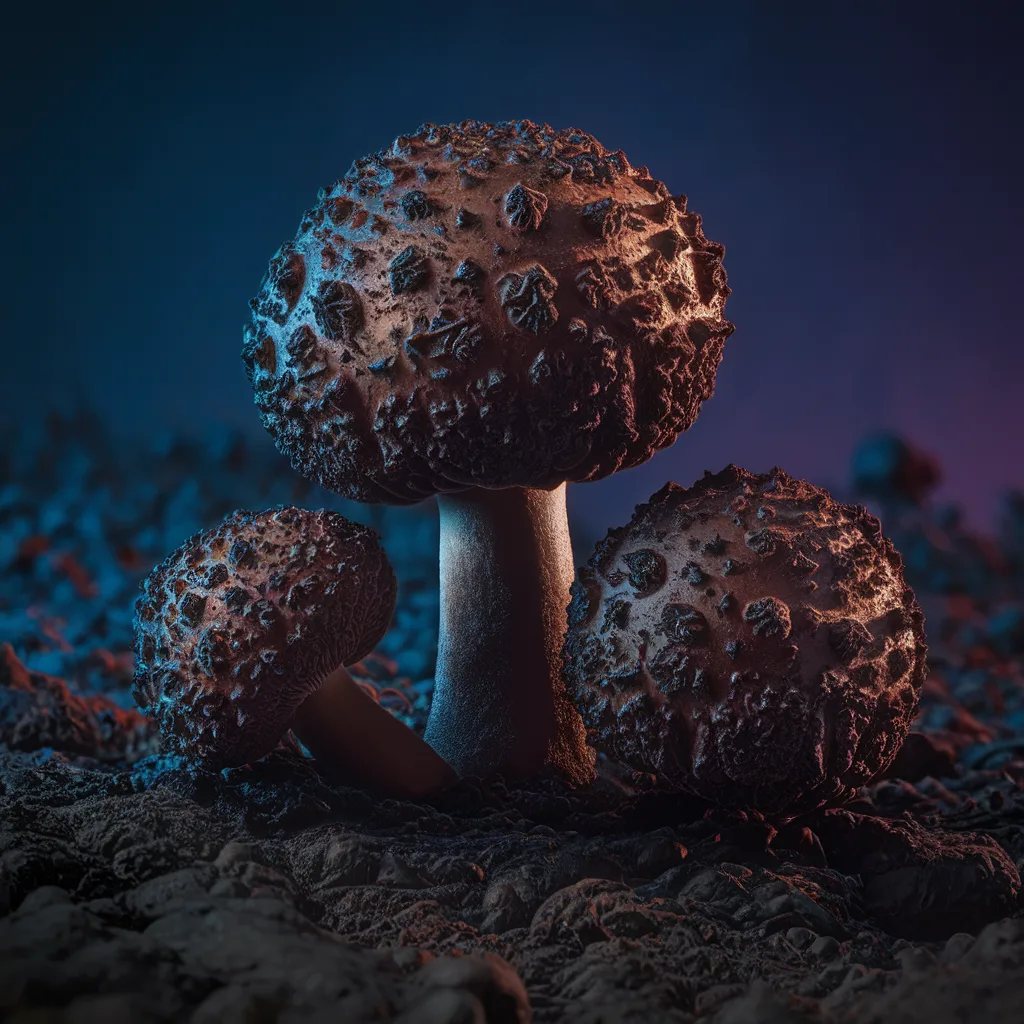
Those sclerotia — the "philosopher's stones" — are what gets sold in Dutch smartshops. They're brown, irregular, often described as resembling walnut pieces or small rocks. Unlike mushroom fruiting bodies, they have a slightly nutty, earthy flavor and a denser texture. The truffle form made them commercially ideal: they're easier to store, don't degrade as quickly as fresh mushrooms, and are legally sold in the Netherlands under a post-2008 regulatory framework that permits psilocybin-containing truffles while prohibiting dried mushroom fruiting bodies.
Effects typically begin 30–60 minutes after ingestion, building gradually over 2–3 hours to a peak, then tapering over another 2–3 hours. At standard doses (7–10 grams fresh weight), most people experience mild euphoria, a sense of warmth and connectedness, heightened sensitivity to music and art, some visual brightening (colors appear more vivid, edges more defined), and above all, a reflective, contemplative mental state. At higher doses (15+ grams), visuals can intensify to include geometric patterns and perceptual shifts, and the introspective quality deepens into territory that can feel genuinely profound — or, if you're unprepared, disorienting.
Tampanensis is often described as "heart-opening" rather than "mind-blowing" — a distinction that matters. Many users report that it surfaces emotions gently, making it popular for therapeutic self-exploration and couples' experiences. It's less likely than stronger varieties like Hollandia to produce ego dissolution or overwhelming visuals at common doses. For most people, it's simply a pleasant, thoughtful experience that leaves them feeling clear-headed and emotionally refreshed the next day.
If you're buying from a Dutch smartshop, expect Tampanensis truffles in foil packs of 10–15 grams fresh weight. Store in the fridge, eat them fresh (don't dry them — you'll lose potency and they'll taste terrible), and consider chewing thoroughly or making a tea if you're sensitive to nausea. Start with a half-dose if it's your first time. Set aside 5–6 hours, choose a comfortable, familiar environment, and — as with all psychedelics — your mindset and setting matter far more than the specific variety you chose.
Topprodukter med verificerede Psilocybe tampanensis ekstrakter.
Denne information er kun til undervisningsformål og bør ikke erstatte professionel medicinsk rådgivning. Konsulter altid en kvalificeret sundhedsudbyder.
Independent Research Review
Independent editorial team reviewing product labels, COAs, regulator records, and cited scientific literature. our editorial team reviews all mushroom encyclopedia entries for scientific accuracy, ensuring claims are supported by peer-reviewed research.
sidst gennemgået: 3. maj 2026
Click anywhere or press Escape to close
2-minute quiz
Get a personalized mushroom path for focus, sleep, anxiety, energy, or emotional reset before you buy.