💫 Premium Pick 💫

$59.95 $1.00/serving
View Profile You must be at least 21 years old to enter this site.
This is a legal, non-psychoactive functional mushroom guide. Talk with your clinician first if you take blood thinners, diabetes medications, immune-modulating drugs, or are in cancer treatment.
Best supplement form
Compare products that match the form most often recommended for Reishi.
Evidence summary
3 cited references reviewed for the Reishi guide.
For healthy aging
See how Reishi compares with Reishi, Chaga, and Turkey Tail for older adults.
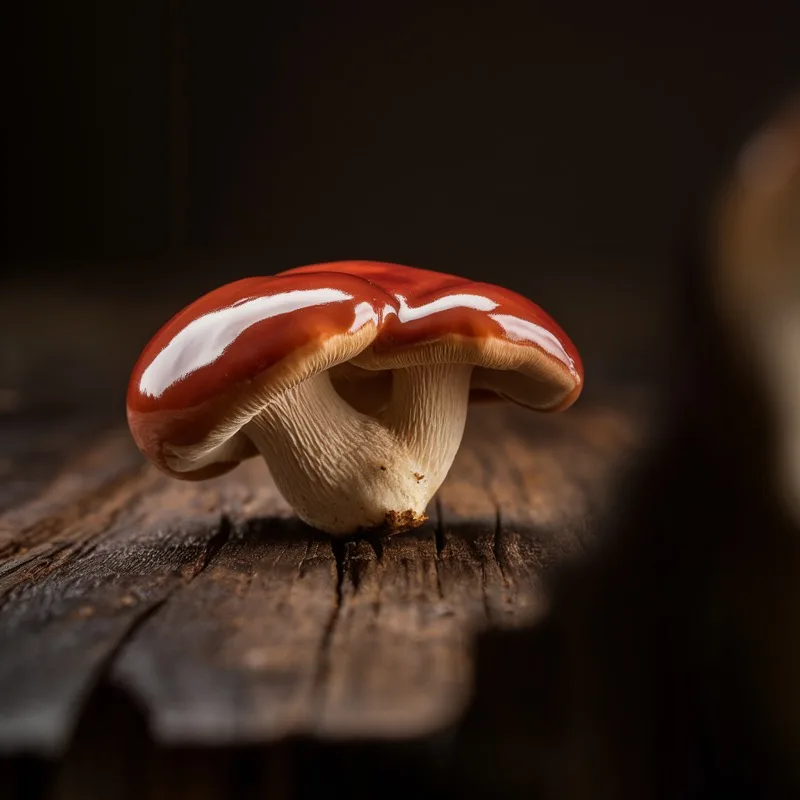
Ganoderma lucidum is a polypore basidiomycetous fungus belonging to the family Ganodermataceae, characterized by its laccate cap surface and double-walled basidiospores. This large, woody mushroom thrives in hot and humid subtropical climates, growing on decaying hardwood, and is identified by its distinct red-varnished, fan-like or kidney-shaped cap. Its key pharmacological properties include immunomodulation, hepatoprotection, and adaptogenic effects, primarily mediated by its rich content of polysaccharides and over 130 identified triterpenoid compounds.
#2
Popularity Rank
Extensive
Research Level
3
References
3
Key Compounds
Independent Research Review · Last Reviewed May 3, 2026
Reishi (Ganoderma lucidum) is a functional mushroom with a extensive level of scientific research supporting its use. Its primary bioactive compounds - Polysaccharides, Triterpenes, Beta-Glucans - have been studied for benefits including calm, sleep, stress relief, immunity. Multiple human clinical trials have investigated Reishi, making it one of the more evidence-backed functional mushrooms available. Reishi is ranked #2 in popularity among functional mushroom species, with 3 cited research references in our database. The most commonly recommended form is dual-extracted fruiting body with triterpene and beta-glucan testing. Typical supplemental dosages range from 500 mg to 3,000 mg per day depending on extract concentration and intended use.
Buyer decision guide
Use this section to compare evidence strength, active compounds, researched forms, and safety limits for reishi.
Small clinical studies report reishi polysaccharide extracts enhanced immune markers (IL-2, IL-6, interferon-gamma, natural killer cell activity) in advanced-stage cancer patients over 12 weeks. A 2024 review noted reduced fatigue, anxiety, and depression in people with cancer. Most other claimed benefits (blood sugar, cholesterol, LUTS) derive from limited human trials; preclinical findings do not confirm clinical benefit.
Beta-glucan polysaccharides and triterpenes are the identified bioactive compounds in reishi extracts, documented in pharmacologic studies. In vitro and animal models demonstrate immunomodulatory, anti-inflammatory, hepatoprotective, and renoprotective properties. Human clinical evidence for these mechanisms remains limited and inconsistent across populations.
Polysaccharide extracts and standardized fruiting-body preparations show the most clinical study support, typically in doses of 1,800 mg daily across multiple small trials. Commercial products vary widely in extraction method, part used (spore, mycelium, or fruit body), and polysaccharide concentration. Standardization and potency labeling are inconsistently regulated.
No established maximum safe intake documented in reviewed sources. Reishi is generally well-tolerated in studied populations. Potential interactions with immunosuppressant or anticoagulant medications warrant screening. Pregnant or nursing individuals and those with active medical conditions should consult a healthcare provider before use due to limited safety data in these populations.
Reishi has been extensively studied in both preclinical and clinical research. Multiple human trials have investigated its potential benefits.
In 2005, a randomized controlled trial enrolled 132 patients with neurasthenia — persistent fatigue, irritability, and inability to relax — and gave half of them a Ganoderma lucidum polysaccharide...
Reishi has been used in traditional medicine systems for centuries, particularly in Traditional Chinese Medicine (TCM) and other Asian healing practices.
Historical Context: Traditional use does not guarantee efficacy or safety. Modern research is ongoing to validate traditional claims.
In 2005, a randomized controlled trial enrolled 132 patients with neurasthenia — persistent fatigue, irritability, and inability to relax — and gave half of them a Ganoderma lucidum polysaccharide extract for eight weeks. The Reishi group showed significantly greater improvements in fatigue, anxiety, and overall well-being than placebo. Not a single patient dropped out due to adverse effects. That combination — meaningful efficacy, near-zero side effects — is exactly why Reishi has maintained its reputation as the cornerstone adaptogen in East Asian medicine for over 2,000 years.
Reishi (Ganoderma lucidum) is immediately recognizable: a large, fan- or kidney-shaped shelf mushroom with a distinctive lacquered surface that gleams reddish-brown, as if coated in high-gloss varnish. This shiny appearance — caused by waxy triterpenoids on the cap — gave rise to the Chinese name "Lingzhi" (spirit mushroom). It grows on decaying hardwood in hot, humid subtropical forests, now cultivated worldwide.
In Traditional Chinese Medicine, Reishi has been documented as the most supreme medicinal substance for at least 2,000 years — outranking even ginseng in ancient texts like the Shennong Bencao Jing. It was categorized as a "superior herb" that could be taken continuously without toxicity. Because it was rare in the wild, it became associated with emperors and immortals. Unlike most medicinal mushrooms, Reishi is not eaten as food — it's tough, woody, and intensely bitter. Its compounds are extracted through prolonged hot water simmering and alcohol extraction.
⚡ Key Fact
Over 130 distinct triterpenoid compounds have been identified in Reishi — including ganoderic acids A through Z. These are responsible for its bitter taste and adaptogenic effects, modulating the HPA stress axis to produce calm without drowsiness.
Reishi's pharmacological profile is driven by two main compound classes: polysaccharides (beta-1,3/1,6-glucans) and triterpenoids. The triterpenoids modulate the HPA axis — your body's stress response system — dampening overactivation without causing sedation. This is the mechanism behind Reishi's reputation as a "calm without drowsiness" herb.
The beta-glucan polysaccharides bind to receptors on immune cells (TLR-2, dectin-1, complement receptor 3) and act as immunomodulators — calibrating the immune system toward appropriate responsiveness rather than simply boosting it. A 2023 RCT by Chen et al. found that 84 days of daily Reishi beta-glucan supplementation significantly increased T-lymphocytes, NK cell activity, and other immune markers in healthy adults.
💊 Recommended Dosage
1,000–3,000 mg/day of dual-extracted (water + alcohol) fruiting body extract. The Tang 2005 trial used a polysaccharide extract for 8 weeks. Take in the evening for sleep support. Dual extraction is important for Reishi — hot water captures polysaccharides while alcohol captures the 130+ triterpenoids. Look for products specifying both extraction methods.
Products containing Ganoderma lucidum extracts, with emphasis on verification, format, and practical daily use.

KÄÄPÄ Biotech

Sempera Organics

Bulk Wholesale Mushrooms

Grape King Bio

M2 Ingredients

Bulk Wholesale Mushrooms

Aloha Medicinals

MycoSymbiotics
Personalized dosage recommendations based on your experience level, body weight, and goals.
Independent Research Review
The editorial team reviews mushroom encyclopedia entries for sourcing, clarity, safety caveats, and citation support.
Last reviewed: May 3, 2026
Click anywhere or press Escape to close