Best Visuals

$17.50
View Review
Psilocybe atlantis
Lääketieteellisesti tarkistanut Dr. Irvine Russell, M.D.
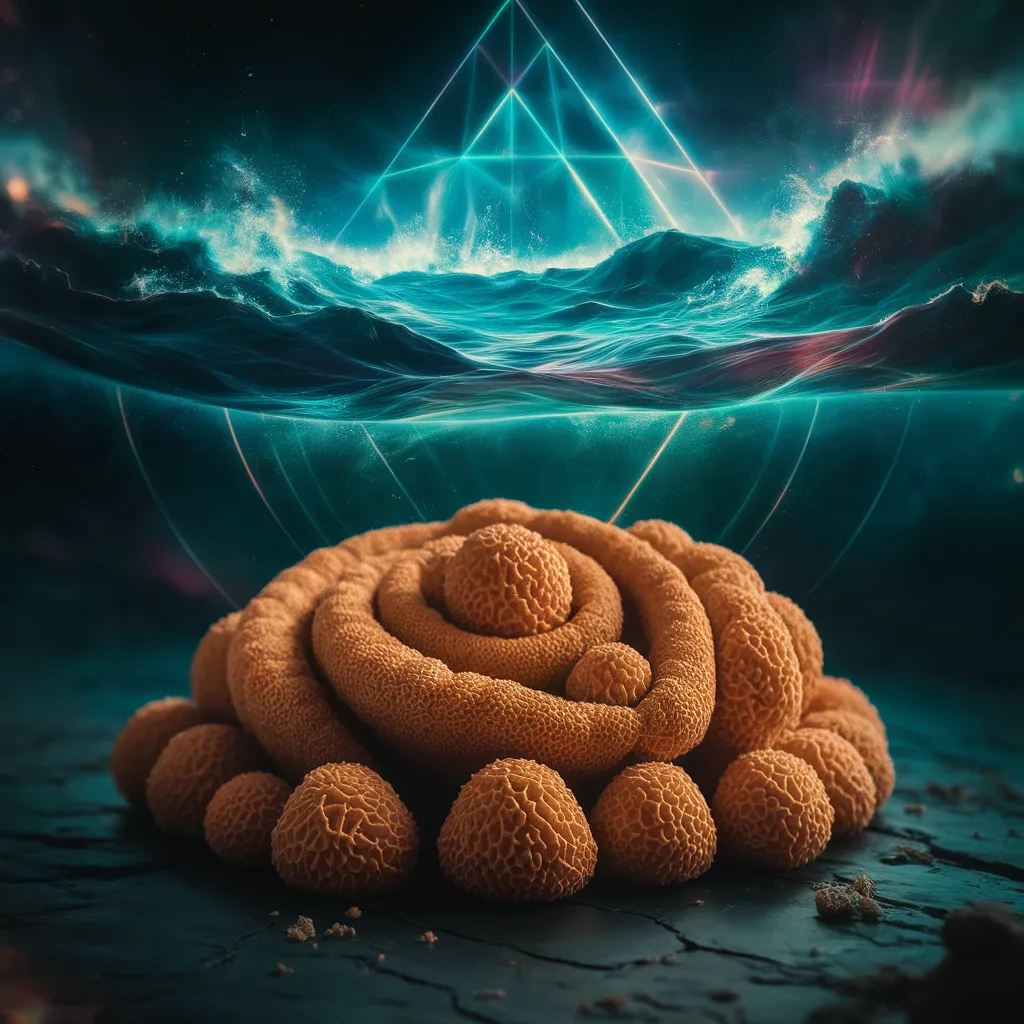
Psilocybe atlantis is a psilocybin-containing basidiomycete fungus first formally described from Fulton County, Georgia, USA, closely related to Psilocybe mexicana and sharing its capacity to produce sclerotia (magic truffles). Chemical analyses indicate that P. atlantis sclerotia contain psilocybin concentrations approximately 30–50% higher than Psilocybe tampanensis, placing it in the medium-to-strong potency bracket among commercially available Dutch truffle varieties. Morphologically, the fruiting bodies are small, with conical to bell-shaped honey-brown caps showing pronounced hygrophanous coloration. The sclerotia are marketed commercially in the Netherlands, where they are legally cultivated and sold under the Dutch policy framework distinguishing truffles from prohibited dried mushrooms. Users characteristically report more pronounced visual effects compared to milder varieties like Tampanensis or Mexicana, with strong euphoria, enhanced pattern recognition, and creative cognitive enhancement at standard doses.
#17
Suosituimmuusjärjestys
Emerging
Tutkimustaso
3
Viitteet
4
Keskeiset yhdisteet

Board-Certified Physician · Medical Reviewer · Viimeksi tarkistettu 21. helmikuuta 2026
Atlantis on kasvavan tieteellisen kiinnostuksen kohde. Varhaiset tutkimukset ovat lupaavia, mutta lisätutkimusta tarvitaan.
Atlantis sits squarely in the middle of the psilocybin truffle spectrum — stronger than Tampanensis or Mexicana, not as intense as Hollandia. It's the variety that people often describe as "exactly...
Atlantis on käytetty perinteisissä lääkintäjärjestelmissä vuosisatojen ajan, erityisesti perinteisessä kiinalaisessa lääketieteessä (TCM) ja muissa aasialaisissa hoitokäytännöissä.
Historiallinen konteksti: Perinteinen käyttö ei takaa tehoa tai turvallisuutta. Moderni tutkimus perinteisten väitteiden vahvistamiseksi on käynnissä.
Atlantis sits squarely in the middle of the psilocybin truffle spectrum — stronger than Tampanensis or Mexicana, not as intense as Hollandia. It's the variety that people often describe as "exactly right" — enough visual richness and euphoria to feel genuinely transformative, while remaining clear-headed enough that you don't lose the thread of who you are or where you are. The name captures something real: Atlantis takes you somewhere, but you come back.
The visual character of Atlantis is its defining quality. Colors saturate. Surfaces breathe and pulse gently. Patterns appear at the edges of your vision and in the geometry of ordinary objects — wood grain, fabric textures, the shadows of leaves. At standard doses (10–12 grams fresh), most people don't experience full-blown hallucinations but rather a heightened perceptual sensitivity where everything looks more vivid, more alive, more worthy of attention. Music becomes dimensional. Conversations feel profound. Your own thoughts feel like discoveries rather than the usual background chatter.
Atlantis was first described scientifically from Fulton County, Georgia — a surprising origin for a species that's become a staple of the Dutch smartshop circuit. Like Tampanensis and Mexicana, it belongs to the P. mexicana species complex: a group of closely related fungi scattered across North and Central America that share the unusual ability to produce both fruiting bodies and underground sclerotia (the truffles). In nature, these sclerotia serve as survival structures — dense reserves of nutrients that allow the fungus to weather dry or cold periods. In Dutch smartshops, they're precisely what makes commercial cultivation viable.
The potency step-up from Tampanensis is real but not dramatic — roughly equivalent to the difference between a glass of wine and two glasses. Most people find Atlantis very manageable even if it's their first time with truffles, provided they respect the dose. Ten grams is a good starting point; fifteen grams is where the experience deepens significantly; twenty grams is for people who know what they're doing and want to go deep.
Atlantis has a particular affinity with creative work. Many artists, musicians, and writers specifically seek it out for the way it loosens habitual thinking patterns and opens up associative leaps that feel genuinely novel. The euphoria isn't giddy or silly (that's more Mexicana's territory) — it's warm and curious, the feeling of being interested in everything. If you've ever wondered what it would feel like to look at the world with fresh eyes, Atlantis gives you a pretty good preview.
Practically speaking: eat the truffles on an empty stomach for the strongest, cleanest onset. Chewing them thoroughly or making a tea will speed up the come-up. The experience runs roughly 4–6 hours. Set aside the evening, have water and fruit available, and if possible, have a trusted person nearby who knows what you're doing. Nausea in the first hour is common with all truffle varieties — ginger tea beforehand helps significantly. The afterglow — the calm, gently optimistic feeling that follows — typically lasts another 12–24 hours and is, for many people, the best part of the whole experience.
Parhaat tuotteet, jotka sisältävät todennettua Psilocybe atlantis uutetta.


Nämä tiedot on tarkoitettu vain opetustarkoituksiin eivätkä ne korvaa ammattimaista lääketieteellistä neuvontaa. Ota aina yhteyttä pätevään terveydenhuollon ammattilaiseen.
Board-Certified Physician · Medical Reviewer
Board-certified physician affiliated with UC Irvine, the Gavin Herbert Eye Institute, and the UCI School of Medicine. Dr. Russell reviews all mushroom encyclopedia entries for scientific accuracy, ensuring claims are supported by peer-reviewed research.
viimeksi tarkistettu: 21. helmikuuta 2026
Click anywhere or press Escape to close