
Cordyceps sinensis.
Ophiocordyceps sinensis
Lääketieteellisesti tarkistanut Dr. Irvine Russell, M.D.
Ophiocordyceps sinensis (formerly Cordyceps sinensis) is an entomopathogenic ascomycete fungus of the family Ophiocordycipitaceae that parasitizes larvae of ghost moths (Thitarodes/Hepialus spp.) in the alpine grasslands of the Tibetan Plateau and Himalayan regions at elevations of 3,000–5,000 meters. The fungus infects the larva, mummifies it underground, and produces a slender, dark brown stroma (4–10 cm) that emerges from the host's head in spring. Known as Dong Chong Xia Cao ('winter worm, summer grass') in Chinese and Yartsa Gunbu in Tibetan, it is one of the most expensive biological commodities on Earth, with premium specimens commanding $20,000–$100,000+ per kilogram. Unlike the commercially cultivated Cordyceps militaris (which produces cordycepin abundantly), wild O. sinensis contains lower cordycepin concentrations but a unique profile of adenosine, cordycepic acid (D-mannitol), polysaccharides, and sterols that have been valued in Traditional Chinese and Tibetan Medicine for over 1,500 years.
#27
Suosituimmuusjärjestys
Extensive
Tutkimustaso
3
Viitteet
5
Keskeiset yhdisteet

Cordycepin

Board-Certified Physician · Medical Reviewer · Viimeksi tarkistettu 25. helmikuuta 2026
TIEDEKATSAUS.
Näytön aste: A
Cordyceps sinensis on tutkittu laajasti sekä prekliinisessä että kliinisessä tutkimuksessa. Useat ihmistutkimukset ovat tutkineet sen mahdollisia hyötyjä.
Keskeinen oivallus
Cordyceps sinensis — now officially classified as Ophiocordyceps sinensis — is the original, wild Cordyceps species that has been revered in Tibetan and Chinese medicine for over 1,500 years. It is...
Perinteinen käyttö
Cordyceps sinensis on käytetty perinteisissä lääkintäjärjestelmissä vuosisatojen ajan, erityisesti perinteisessä kiinalaisessa lääketieteessä (TCM) ja muissa aasialaisissa hoitokäytännöissä.
Historiallinen konteksti: Perinteinen käyttö ei takaa tehoa tai turvallisuutta. Moderni tutkimus perinteisten väitteiden vahvistamiseksi on käynnissä.
Cordyceps sinensis — now officially classified as Ophiocordyceps sinensis — is the original, wild Cordyceps species that has been revered in Tibetan and Chinese medicine for over 1,500 years. It is fundamentally different from the Cordyceps militaris already covered on this site, and understanding the distinction matters if you are an informed consumer. While C. militaris is commercially cultivated, affordable, and rich in cordycepin, O. sinensis is wild-harvested from the Tibetan Plateau, extraordinarily rare, and commands prices that can exceed $20,000 per kilogram — making it one of the most expensive biological materials on Earth.
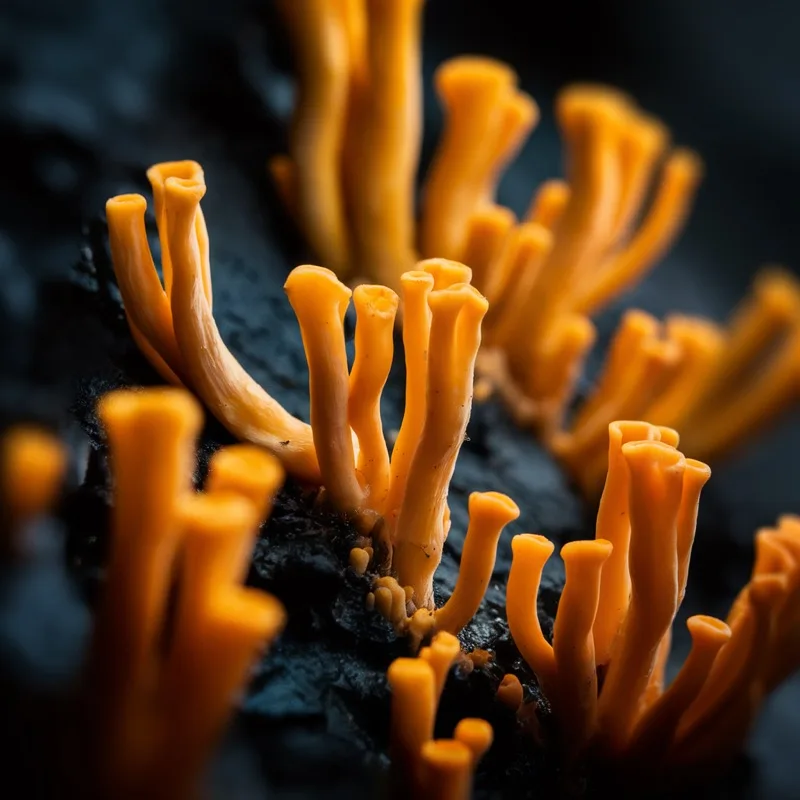
The life cycle of this fungus is both fascinating and macabre. It infects the larvae of ghost moths living underground in high-altitude Tibetan grasslands (3,000–5,000 meters elevation). The fungus slowly consumes the larva from the inside, mummifies it, and then in spring sends up a slender, finger-like fruiting body from the dead caterpillar's head. Tibetan herders call it Yartsa Gunbu — "winter worm, summer grass" — and its harvest each spring is a major economic event for rural Tibetan communities.
In Traditional Chinese Medicine, Cordyceps sinensis is classified as a tonic for the kidneys and lungs. It has been used to support respiratory health, enhance vitality and stamina, improve sexual function, and promote longevity. The Chinese national women's running team famously attributed their record-breaking performances in the 1993 Chinese National Games partly to Cordyceps supplementation, though this claim remains debated. What is not debated is the mushroom's deep cultural significance — it has been a prized gift and status symbol in Chinese culture for centuries.
Here is the critical consumer distinction: most "Cordyceps" supplements on the market today use cultivated C. militaris, not wild O. sinensis. This is not necessarily a bad thing — C. militaris actually contains significantly more cordycepin (up to 90 times more) than wild O. sinensis. However, O. sinensis has a unique chemical profile including specific polysaccharides, sterols, and adenosine that differ from C. militaris. Products claiming to contain wild Cordyceps sinensis at affordable prices should be viewed with skepticism, as the raw material alone costs thousands of dollars per kilogram.
Authentic O. sinensis supplements are available from premium Chinese medicine suppliers, typically at significantly higher prices than C. militaris products. Some products use CS-4, a cultivated mycelium strain of O. sinensis grown through liquid fermentation, which offers a more affordable alternative while maintaining some of the original species' chemical profile. Typical dosages of CS-4 range from 1,000 mg to 3,000 mg per day.
For most consumers seeking Cordyceps benefits — energy, athletic performance, endurance — cultivated C. militaris is the practical and evidence-based choice. O. sinensis is most relevant for those specifically interested in traditional Chinese medicine formulations, the unique chemical profile of the wild species, or the cultural and historical significance of the original Cordyceps. Both species have legitimate health applications, but they are distinct products with different chemical profiles, price points, and evidence bases.
Cordyceps sinensis Annostus
Nämä tiedot on tarkoitettu vain opetustarkoituksiin eivätkä ne korvaa ammattimaista lääketieteellistä neuvontaa. Ota aina yhteyttä pätevään terveydenhuollon ammattilaiseen.
SAMANKALTAISET LAJIT.
Cordyceps sinensis Guides & Articles
Lääketieteellisesti tarkistanut
Board-Certified Physician · Medical Reviewer
Board-certified physician affiliated with UC Irvine, the Gavin Herbert Eye Institute, and the UCI School of Medicine. Dr. Russell reviews all mushroom encyclopedia entries for scientific accuracy, ensuring claims are supported by peer-reviewed research.
viimeksi tarkistettu: 25. helmikuuta 2026
Click anywhere or press Escape to close