⭐ Top Rated ⭐

Lab VerifiedThis product has been independently lab tested with full COA results available. Beta-glucan content, heavy metals, microbials, and potency have been verified.
$45.00 $1.50/serving
View Review
Pleurotus eryngii
Lääketieteellisesti tarkistanut Dr. Irvine Russell, M.D.
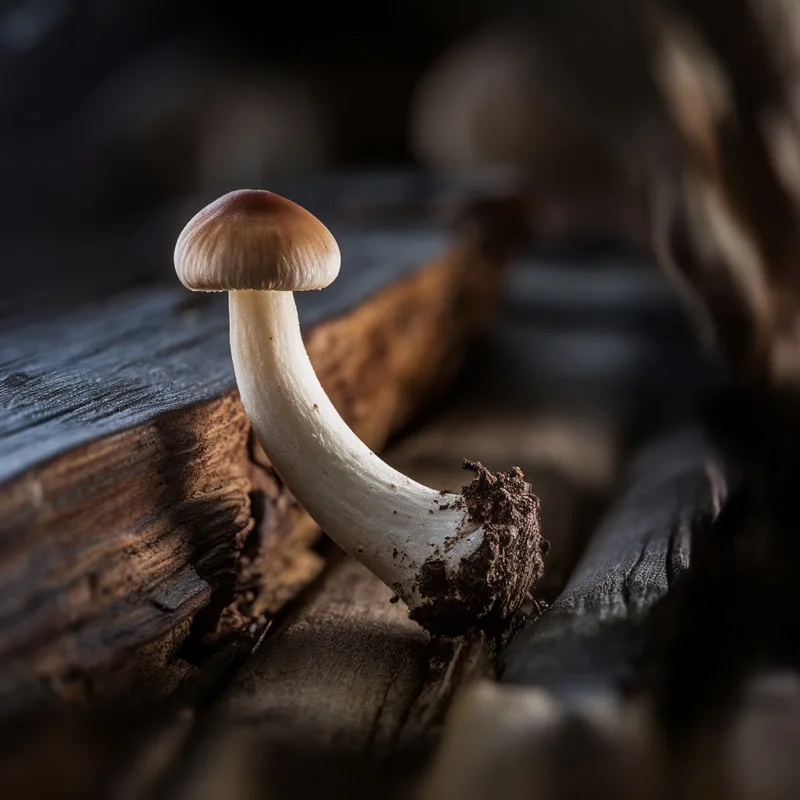
Pleurotus eryngii is a saprotrophic fungus of the Pleurotaceae family within the Basidiomycota, native to Mediterranean regions, Central Europe, and Western Asia. It uniquely grows in association with the roots of herbaceous plants in the Apiaceae family, particularly Eryngium species. Morphologically, it is characterized by a thick, fleshy white stipe and a smaller, convex, tan-colored pileus with decurrent, whitish gills. Key pharmacological properties include high concentrations of the antioxidant ergothioneine, along with bioactive compounds that contribute to its immunomodulatory, antihyperlipidemic, and cholesterol-lowering activities.
#8
Suosituimmuusjärjestys
Moderate
Tutkimustaso
3
Viitteet
3
Keskeiset yhdisteet

Board-Certified Physician · Medical Reviewer · Viimeksi tarkistettu 12. helmikuuta 2026
King Trumpet tutkimusnäyttö on kohtalainen, ja sillä on useita prekliinisiä tutkimuksia ja joitakin ihmiskokeita. Hyötyjen vahvistamiseksi tarvitaan lisätutkimusta.
In 2005, researchers at Tufts University published a study suggesting that ergothioneine — a sulfur-containing amino acid found in significant concentrations in certain fungi — might be a previously...
King Trumpet on käytetty perinteisissä lääkintäjärjestelmissä vuosisatojen ajan, erityisesti perinteisessä kiinalaisessa lääketieteessä (TCM) ja muissa aasialaisissa hoitokäytännöissä.
Historiallinen konteksti: Perinteinen käyttö ei takaa tehoa tai turvallisuutta. Moderni tutkimus perinteisten väitteiden vahvistamiseksi on käynnissä.
In 2005, researchers at Tufts University published a study suggesting that ergothioneine — a sulfur-containing amino acid found in significant concentrations in certain fungi — might be a previously unrecognized dietary micronutrient essential for human health. Unlike most amino acids, the human body has a dedicated transport protein (OCTN1) specifically for absorbing ergothioneine from food — a level of biological investment that typically signals evolutionary importance. The food with the highest ergothioneine concentration of any commonly consumed item? Not meat, not greens, not seeds — but mushrooms, with King Trumpet (Pleurotus eryngii) consistently ranking among the highest sources available to most people.
King Trumpet (Pleurotus eryngii), also called King Oyster, is the largest species in the oyster mushroom family and arguably the most culinarily distinctive of all commercial mushrooms. Its form is unusual: a thick, cylindrical white stipe that can grow 3–10 cm in diameter and 5–15 cm tall, topped by a relatively small, convex tan cap — the inverse of most mushrooms where the cap is primary. The stipe is fully edible and firm-textured, providing the bulk of the eating experience. Slice it into thick rounds and sear it in a hot pan, and the rounds develop a golden, caramelized crust over a dense interior that closely resembles a seared scallop — not just in texture but in the way it caramelizes and develops umami depth when cooked. This scallop-like quality has made it a favorite among chefs working with plant-based menus.
King Trumpet is native to Mediterranean regions and Western Asia, where it grows on the roots of plants in the Apiaceae family (the carrot/parsley family) — particularly species of Eryngium (sea holly), from which the species name eryngii derives. This ecological relationship with living plant roots is somewhat unusual among edible mushrooms, which more typically grow on dead wood or soil. Commercial cultivation of King Trumpet began in earnest in the 1990s in Japan and South Korea, where it quickly became one of the most valuable commercial mushroom species. It is now grown worldwide on supplemented sawdust substrates and commands premium prices in specialty grocery stores and restaurants.
Traditional use of wild King Trumpet dates back centuries in the Mediterranean, where it was foraged and consumed as a food of considerable quality. In Italian regional cuisine, it appears in pasta sauces, risottos, and grilled preparations. In Turkey and other Middle Eastern countries, it was historically harvested from the wild and valued both as food and, in some traditions, as a tonic for general health. In East Asian medicine, oyster mushrooms including King Trumpet have been used for circulation support, muscle strengthening, and general vitality — benefits that align with the modern understanding of its nutritional and bioactive profile.
The pharmacological story of King Trumpet centers substantially on ergothioneine — a betaine derivative of histidine with a thiol sulfur group that provides exceptional antioxidant activity in a distinctive cellular mechanism. Unlike most antioxidants that work in the cytoplasm or plasma, ergothioneine concentrates specifically in cells under greatest oxidative stress — lens cells, erythrocytes, liver cells, kidney cells, and neurons — because OCTN1 transporters concentrate where oxidative damage is most acute. This targeted distribution makes ergothioneine qualitatively different from bulk antioxidants like vitamin C, which distribute broadly. The 2005 Tufts research suggested that OCTN1 knockout mice (unable to absorb ergothioneine) showed accelerated aging and increased oxidative damage, supporting the hypothesis that ergothioneine serves a specific protective function in maintaining long-lived tissues.
Beyond ergothioneine, King Trumpet provides a nutritionally exceptional profile. A 2020 analysis by Tagkouli et al. in Molecules quantified free amino acid profiles across three Pleurotus species, finding that P. eryngii was exceptionally rich in leucine (the primary trigger for muscle protein synthesis), alanine, glutamine, valine, and serine. This amino acid profile makes King Trumpet one of the highest-quality plant/fungi protein sources available — relevant for vegetarians, vegans, and athletes alike. The protein content of dried King Trumpet is approximately 25–35% by dry weight, comparable to many legumes. A 2022 randomized controlled trial by Kleftaki et al. in Antioxidants found that daily consumption of baked P. eryngii for three months significantly reduced pro-inflammatory IL-6 and oxidized LDL cholesterol in participants with metabolic disorders — demonstrating meaningful anti-inflammatory and cardioprotective effects in humans.
The polysaccharide fraction of King Trumpet includes beta-1,3/1,6-glucans with immunomodulatory activity (consistent with other Pleurotus species), along with heteropolysaccharides with anti-tumor activity demonstrated in animal models. The combination of ergothioneine, polysaccharides, amino acids, and phenolic compounds gives King Trumpet an unusually multidimensional functional profile — more comprehensive nutritionally than most other medicinal mushrooms, which tend to be valued for specific compound classes rather than broad nutritional density.
Unlike most medicinal mushrooms, King Trumpet is best approached as a food rather than a supplement — the clinical evidence primarily comes from dietary consumption studies rather than extract trials. The Kleftaki 2022 trial used daily baked P. eryngii consumption (approximately 90g fresh per day) over three months, achieving meaningful clinical outcomes through whole food consumption. For ergothioneine specifically, approximately 100–200g of fresh King Trumpet per week provides a meaningful dietary ergothioneine contribution. Supplement extracts exist but are less well-studied than whole mushroom consumption for this species.
| Form | Typical Dose | Notes |
|---|---|---|
| Fresh mushroom (culinary) | 90–150 g/day (therapeutic), 50–100 g several times/week (maintenance) | Recommended primary approach; heat preparation doesn't significantly reduce ergothioneine |
| Dried powder | 5–10 g/day | Higher compound concentration per gram; rehydrate or use in soups/sauces |
| Capsules (extract) | 1,000–2,000 mg/day | Emerging option; less clinical evidence than dietary consumption studies |
| Mycelium products | Avoid or approach carefully | Less evidence for ergothioneine content in mycelium vs fruiting body |
King Trumpet supplements are less standardized than extracts of Lion's Mane, Reishi, or Cordyceps — the market is smaller and quality markers are less established. For supplement forms, look for fruiting body extraction (not mycelium) with beta-glucan content listed, and ideally ergothioneine content if the manufacturer has measured it. Some premium brands now standardize for ergothioneine specifically. Third-party testing for heavy metals and microbial contamination is the minimum quality standard.
For fresh King Trumpet — which is the most evidence-supported form — quality markers are straightforward: firm, dense stems without mushiness or discoloration; caps that are dry and intact rather than wet or crumbled; a mild, pleasant mushroom aroma without any sour or fermented notes. Fresh King Trumpet keeps exceptionally well in the refrigerator — up to two weeks — because of its low moisture content. This durability makes it practical to buy in larger quantities. For the best culinary results, slice the stems into 1–2 cm rounds and cook at high heat without moving for 3–4 minutes per side until deeply golden — the Maillard reaction on the dense white flesh produces exceptional flavor that makes regular consumption a pleasure rather than a chore.
King Trumpet is an edible mushroom with an excellent safety record — it's consumed regularly as food by hundreds of millions of people without known adverse effects beyond occasional mild GI upset at very high consumption levels. Unlike Shiitake, it does not carry a dermatitis risk. No significant drug interactions have been documented for regular dietary consumption. For concentrated supplements, the same general cautions apply as for other medicinal mushrooms (theoretical interactions with anticoagulants and immunosuppressants; caution in autoimmune conditions), though specific evidence for King Trumpet interactions is absent. Allergic reactions to King Trumpet are possible but rare, typically presenting as skin irritation or mild respiratory symptoms in occupationally exposed mushroom farm workers.
A: The scientific debate is ongoing. The discovery of OCTN1 — a specific, dedicated transporter protein for ergothioneine — is the strongest argument that it qualifies as an essential dietary micronutrient (by definition, vitamins are compounds the body needs but cannot produce in adequate amounts and must obtain from diet). Mushrooms are the primary dietary source; without regular mushroom consumption, ergothioneine intake approaches zero. Whether deficiency produces specific disease states (the clinical test for vitamin status) hasn't been definitively demonstrated in humans, though OCTN1 knockout studies in animals suggest accelerated aging and oxidative damage. The researcher Ames and others have argued for vitamin designation; official bodies haven't acted yet. In practical terms: eating mushrooms regularly provides a compound your body has specifically evolved to absorb and concentrate in vulnerable tissues.
A: King Trumpet (P. eryngii) is notably different from the more familiar pink, yellow, or gray oyster mushrooms (P. ostreatus and related species) in both culinary and nutritional terms. The stipe is far more substantial and has a firm, meaty texture that other oyster species lack — grey oysters are delicate and more suited to quick cooking. Ergothioneine content is higher in King Trumpet than in most other oyster varieties. The flavor is also more intense and complex. Grey and pink oysters are cheaper and easier to cultivate, making them more common, but King Trumpet is the premium product across both culinary and functional dimensions.
A: The honest answer: possibly, through mechanisms that are biologically plausible but not yet definitively proven in humans. Ergothioneine's targeted accumulation in oxidatively stressed tissues, the 2022 Kleftaki cardiovascular protection evidence, and the broader antioxidant profile all point toward meaningfully aging-relevant biological effects. Large epidemiological studies have found associations between mushroom consumption (not specifically King Trumpet) and reduced cognitive decline, cardiovascular events, and all-cause mortality. Whether King Trumpet specifically provides exceptional anti-aging benefits above other mushrooms remains unproven — but the ergothioneine story is compelling enough that leading longevity researchers like Aubrey de Grey have identified it as a priority area for further investigation.
A: High-heat dry cooking (searing, roasting, grilling) is actually preferable to boiling or steaming from both a culinary and nutritional standpoint. Ergothioneine is heat-stable and not significantly degraded by high-temperature cooking. Water-soluble polysaccharides leach into cooking water — if you simmer King Trumpet in soup or broth, keep and consume the liquid to retain these compounds. The Kleftaki 2022 clinical study used baked preparation and found meaningful cardiovascular benefits, validating that heat cooking does not eliminate the relevant bioactive content. The one practical takeaway: don't discard cooking liquids if preparing as part of a soup or sauce.
Emerging epidemiological evidence has linked ergothioneine intake to reduced rates of metabolic disease in population studies. A 2020 analysis of the Singapore Chinese Health Study (n=63,257) found that higher mushroom consumption was significantly associated with reduced risk of type 2 diabetes — even after adjusting for confounders including overall vegetable consumption, exercise, and body mass index. A follow-up analysis examining specific mushroom types found that the association was strongest for oyster mushrooms and related species (which include King Trumpet as the premium variety) — all high ergothioneine sources. The proposed mechanism connects ergothioneine's protection of mitochondrial function specifically in pancreatic beta cells, which face intense oxidative stress from glucose processing throughout their lifespan and are particularly vulnerable to mitochondrial dysfunction. If ergothioneine preserves beta cell mitochondrial health over decades, the long-term consequence would be maintained insulin secretion capacity — a prevention of, rather than treatment for, insulin deficiency-type diabetes.
As plant-based eating has moved from niche to mainstream, the question of complete protein sources has become practically important for a large population. King Trumpet stands out in this context: its free amino acid profile, documented in the Tagkouli 2020 analysis, includes all essential amino acids with particularly high concentrations of leucine (the primary trigger for muscle protein synthesis, typically abundant in animal proteins but scarce in plant foods), valine and isoleucine (the branched-chain amino acids critical for exercise recovery), and glutamine (the conditionally essential amino acid most important for immune cell function and gut barrier integrity). For athletes on plant-based diets specifically, adding King Trumpet regularly addresses the most common nutritional shortfalls in plant-based performance nutrition simultaneously: leucine for anabolism, glutamine for immune function, ergothioneine for recovery antioxidant protection, and B vitamins (particularly B12 precursors in the form of ergosterol-related compounds) for energy metabolism.
The culinary ceiling on King Trumpet is genuinely high — it's one of the few vegetables or fungi that rewards treatment as a main protein course rather than an accent ingredient. The stem's dense, uniform texture allows cooking techniques typically reserved for meat: thick-cut steaks seared in cast iron, planks roasted whole in a hot oven, cross-cut rounds prepared as scallop substitutes with brown butter and capers. The key to great King Trumpet is patience with browning — the Maillard reaction that produces flavor requires surface moisture to evaporate before browning can begin, and King Trumpet's low moisture content means browning happens faster than with most mushrooms, but only if the pan is genuinely hot and crowded pieces aren't creating steam. Japanese preparations often include mirin and soy sauce in the final deglaze, adding umami depth that makes King Trumpet indistinguishable from high-quality shellfish for many palates.
King Trumpet is the longevity mushroom — the one whose most important contribution is ergothioneine, a compound your body specifically evolved to absorb and concentrate in its most oxidatively vulnerable tissues. It's also nutritionally exceptional in ways that most "medicinal mushrooms" (woody bracket fungi taken as extracts) are not: meaningful protein with complete amino acid profile, vitamins, minerals, and fiber that contribute to daily nutritional needs. The Kleftaki 2022 clinical trial provides the most direct human evidence for cardiovascular and anti-inflammatory effects from dietary consumption. Best approach: make King Trumpet a regular part of your diet — aim for 90–150g of fresh mushrooms two to three times per week, cooked at high heat for maximum culinary quality. If dietary consumption isn't practical at therapeutic levels, a quality fruiting body extract at 1,000–2,000 mg/day fills the gap. This is one mushroom where the pleasure of eating it and the biological benefit of consuming it are perfectly aligned.
Parhaat tuotteet, jotka sisältävät todennettua Pleurotus eryngii uutetta.


Nämä tiedot on tarkoitettu vain opetustarkoituksiin eivätkä ne korvaa ammattimaista lääketieteellistä neuvontaa. Ota aina yhteyttä pätevään terveydenhuollon ammattilaiseen.
Board-Certified Physician · Medical Reviewer
Board-certified physician affiliated with UC Irvine, the Gavin Herbert Eye Institute, and the UCI School of Medicine. Dr. Russell reviews all mushroom encyclopedia entries for scientific accuracy, ensuring claims are supported by peer-reviewed research.
viimeksi tarkistettu: 12. helmikuuta 2026
Click anywhere or press Escape to close