$14.95 $14.95/serving
View Profile You must be at least 21 years old to enter this site.
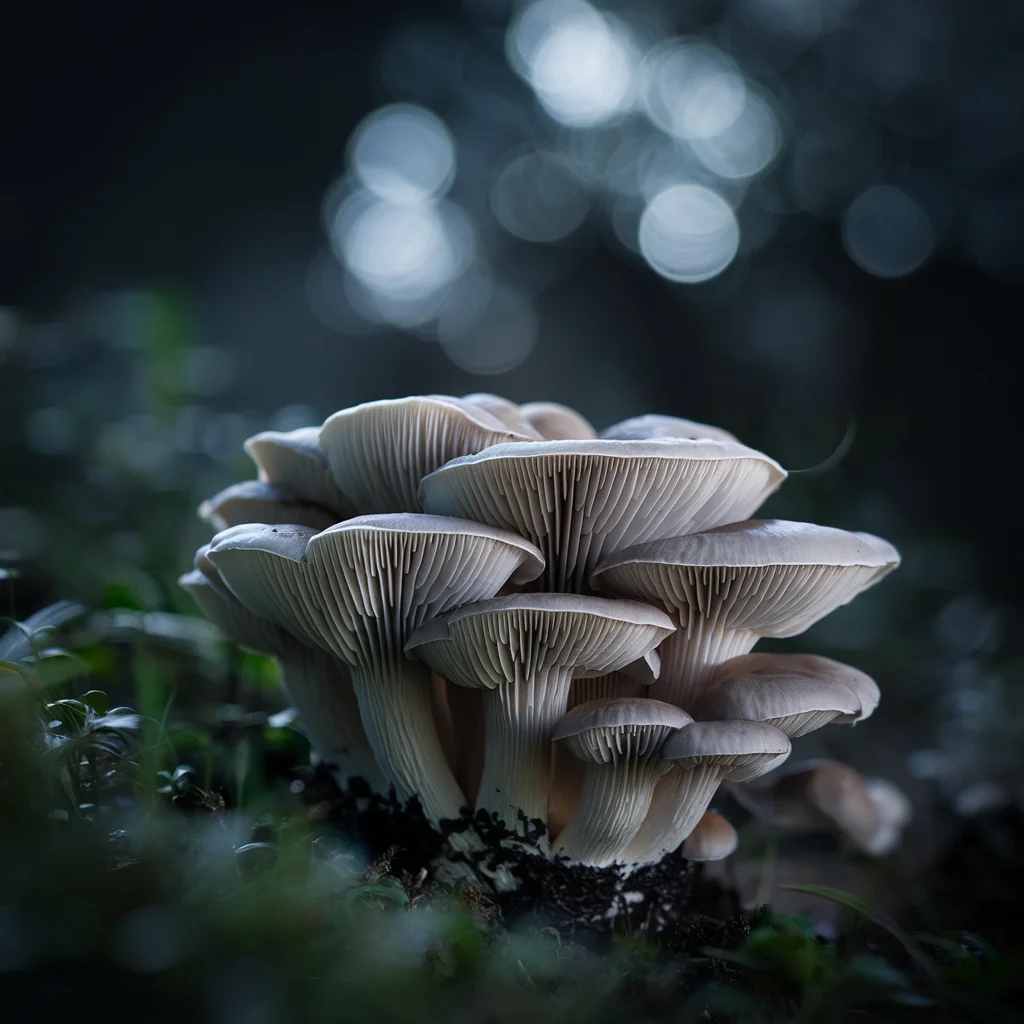
Pleurotus ostreatus is a saprotrophic basidiomycete fungus belonging to the family Pleurotaceae, order Agaricales. It is one of the most widely cultivated edible mushrooms globally, characterized by its broad, fan-shaped or oyster-shaped pileus (2–30 cm), which ranges in color from white to grey, tan, or brown. The gills are white, decurrent, and closely spaced, running down a short, eccentric or lateral stipe. As a white-rot fungus, it colonizes dead or dying hardwood trees and is notable for its nematophagous properties — the ability to capture and digest nematodes for nitrogen supplementation. Pharmacologically, P. ostreatus is distinguished by its naturally occurring lovastatin content (an HMG-CoA reductase inhibitor), high beta-glucan polysaccharides with demonstrated immunomodulatory activity, and significant ergothioneine concentrations, a potent cellular antioxidant. Clinical and preclinical studies have demonstrated cholesterol-lowering, anti-inflammatory, antidiabetic, and immunostimulatory properties.
#20
Classifica di popolarità
Extensive
Livello di ricerca
2
Riferimenti
4
Composti chiave
Independent Research Review · Ultima revisione 3 maggio 2026
Oyster Mushroom è stato ampiamente studiato sia nella ricerca preclinica che clinica. Molteplici studi clinici sull'uomo hanno indagato i suoi potenziali benefici.
The oyster mushroom is one of the most recognizable and widely eaten mushrooms in the world. Named for its broad, fan-shaped cap that resembles an oyster shell, it grows in overlapping clusters on...
Oyster Mushroom è stato utilizzato nei sistemi di medicina tradizionale per secoli, in particolare nella Medicina Tradizionale Cinese (MTC) e in altre pratiche di guarigione asiatiche.
Contesto storico: L'uso tradizionale non garantisce efficacia o sicurezza. La ricerca moderna è in corso per validare le affermazioni tradizionali.
The oyster mushroom is one of the most recognizable and widely eaten mushrooms in the world. Named for its broad, fan-shaped cap that resembles an oyster shell, it grows in overlapping clusters on dead or dying hardwood trees across North America, Europe, and Asia. Its color ranges from creamy white to grey or tan, and it has a mild, slightly sweet flavor that many people compare to seafood — making it one of the most popular meat substitutes in vegetarian and vegan cooking.
What makes the oyster mushroom particularly interesting from a health perspective is that it naturally contains lovastatin, the same compound found in prescription cholesterol-lowering medications. While the amounts in a serving of mushrooms are much smaller than in a pharmaceutical dose, regular consumption has been associated with modest improvements in cholesterol profiles in several studies. Beyond cholesterol, oyster mushrooms are rich in beta-glucans — complex sugars that prime the immune system to respond more effectively to threats — and ergothioneine, a powerful antioxidant that your body cannot produce on its own and must obtain from food.
Traditionally, oyster mushrooms have been used in Chinese medicine for centuries to support circulation, relax tendons, and strengthen the body. In Japan, they are known as hiratake and are a staple ingredient in soups, stir-fries, and hot pot dishes. European foragers have gathered wild oyster mushrooms from beech and oak trees for generations, and they remain one of the easiest wild mushrooms to identify safely.
In the supplement world, oyster mushroom extract is increasingly found in multi-mushroom blend capsules and powders, often combined with lion's mane, reishi, and cordyceps for a comprehensive functional mushroom formula. Standalone oyster mushroom supplements are available in capsule and powder form, with typical dosages ranging from 500 mg to 2,000 mg per day. The extract is also used in some cholesterol-support formulations alongside other heart-healthy ingredients.
When shopping for oyster mushroom supplements, look for products made from the fruiting body rather than mycelium grown on grain, as the fruiting body contains higher concentrations of lovastatin and beta-glucans. Third-party testing for heavy metals and contaminants is important, as mushrooms can accumulate environmental toxins. Organic certification and clearly stated beta-glucan percentages are good quality indicators.
Oyster mushrooms pair well with other functional mushrooms in supplement stacks. Combining them with reishi for immune and heart support, or with lion's mane for a brain-and-body wellness approach, is increasingly popular. For culinary use, they are also one of the easiest mushrooms to grow at home — many beginner grow kits use oyster mushrooms because they colonize quickly and fruit reliably, making them an excellent entry point into home mycology.
Migliori prodotti contenenti estratti verificati di Pleurotus ostreatus estratti.


Queste informazioni sono solo a scopo educativo e non devono sostituire il parere medico professionale. Consultare sempre un professionista sanitario qualificato.
Independent Research Review
Independent editorial team reviewing product labels, COAs, regulator records, and cited scientific literature. our editorial team reviews all mushroom encyclopedia entries for scientific accuracy, ensuring claims are supported by peer-reviewed research.
Last reviewed: 3 maggio 2026
Click anywhere or press Escape to close