
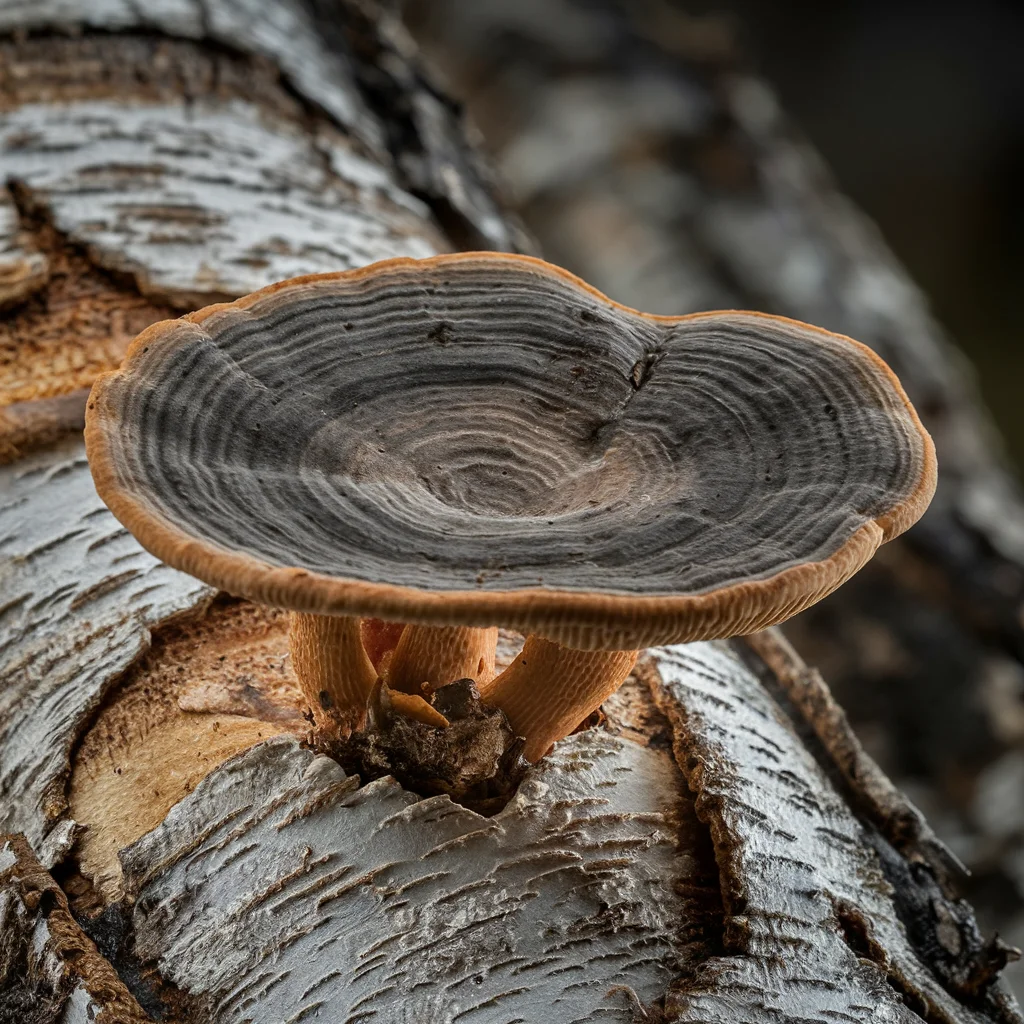
Fomes fomentarius is a perennial polypore fungus of the family Polyporaceae, forming large, hoof-shaped (ungulate) basidiocarps on the trunks of birch, beech, and other hardwood trees across the Northern Hemisphere. The fruiting body is characterized by a hard, woody structure with concentric grey-brown growth zones, a smooth to slightly velvety surface, and a pale brown to cinnamon pore layer. F. fomentarius holds extraordinary historical significance: specimens were found among the possessions of Ötzi the Iceman (circa 3300 BCE), indicating human use spanning at least 5,300 years. Traditionally used as tinder (amadou) for fire-starting and as a styptic for wound care, modern pharmacological research has identified immunomodulatory polysaccharides, anti-inflammatory fomentariol, antioxidant ergosterol peroxide, and antibacterial compounds, validating aspects of its ancient medicinal applications.
#29
Ranking popularności
Limited
Poziom badań
3
Odniesienia
5
Kluczowe związki
Polysaccharides
Independent Research Review · Ostatnio zrecenzowane 25 lutego 2026
PRZEGLĄD NAUKOWY.
Stopień dowodów: C
Tinder Polypore ma ograniczone badania naukowe. Większość dowodów pochodzi z tradycyjnego stosowania i badań wstępnych.
Kluczowy wniosek
The Tinder Polypore holds a unique distinction in the mushroom world: it is the oldest documented medicinal mushroom in human history. When the 5,300-year-old mummified body of Ötzi the Iceman was...
Zastosowanie tradycyjne
Tinder Polypore jest stosowany w tradycyjnych systemach medycznych od wieków, szczególnie w Tradycyjnej Medycynie Chińskiej (TCM) i innych azjatyckich praktykach leczniczych.
Kontekst historyczny: Tradycyjne zastosowanie nie gwarantuje skuteczności ani bezpieczeństwa. Trwają nowoczesne badania mające na celu weryfikację tradycyjnych twierdzeń.
The Tinder Polypore holds a unique distinction in the mushroom world: it is the oldest documented medicinal mushroom in human history. When the 5,300-year-old mummified body of Ötzi the Iceman was discovered in the Alps in 1991, he was carrying two species of polypore fungi — one of which was Fomes fomentarius. This hoof-shaped bracket fungus, which grows on birch and beech trees across the Northern Hemisphere, has been a companion to human civilization for millennia, used for fire-starting, wound care, and traditional medicine long before recorded history.
The name "Tinder Polypore" comes from its most famous traditional use: when the inner flesh (called amadou) is processed by soaking and beating, it becomes a soft, felt-like material that catches sparks easily, making it invaluable for fire-starting before the invention of matches. This same amadou material was also used as a wound dressing — its absorbent, slightly antiseptic properties made it an effective field bandage, and it was used by surgeons and barbers well into the 19th century.
Modern research has begun to validate the traditional medicinal applications of Tinder Polypore. Studies have identified immunomodulatory polysaccharides, anti-inflammatory compounds including fomentariol, and antioxidant ergosterol peroxide in the fungus. While the research base is smaller than for mainstream medicinal mushrooms like reishi or turkey tail, the existing evidence suggests genuine bioactive potential that aligns with centuries of traditional use.
Tinder Polypore supplements are available from specialty mushroom and ancestral health retailers, typically in powder, tincture, or capsule form. The mushroom is also popular among bushcraft and survival enthusiasts who process it traditionally for fire-starting and wound care. Wild-harvested specimens are the primary source, as commercial cultivation is limited. Typical supplement dosages range from 500 mg to 1,500 mg per day.
When sourcing Tinder Polypore, wild-harvested products from clean forest environments are preferred. The mushroom is common and widespread in northern temperate forests, so sustainability is generally not a concern. For supplement use, look for products that specify the extraction method and provide third-party testing results. Dual extraction (water and alcohol) captures the broadest spectrum of bioactive compounds.
Tinder Polypore appeals particularly to the ancestral health and traditional herbalism communities, who value its extraordinary historical pedigree. It combines well with other traditional European medicinal mushrooms like birch polypore (Piptoporus betulinus — the other fungus Ötzi carried) and chaga, which also grows on birch trees. For those interested in reconnecting with humanity's oldest relationship with medicinal fungi, Tinder Polypore offers a direct link to practices that predate civilization itself.
Tinder Polypore Dawkowanie
Te informacje służą wyłącznie celom edukacyjnym i nie powinny zastępować profesjonalnej porady medycznej. Zawsze konsultuj się z wykwalifikowanym lekarzem.
PODOBNE GATUNKI.
Zrecenzowane medycznie przez
Independent Research Review
Independent editorial team reviewing product labels, COAs, regulator records, and cited scientific literature. our editorial team reviews all mushroom encyclopedia entries for scientific accuracy, ensuring claims are supported by peer-reviewed research.
Ostatnio zrecenzowane: 25 lutego 2026
Click anywhere or press Escape to close