🏆 Editor's Pick 🏆

Lab VerifiedThis product has been independently lab tested with full COA results available. Beta-glucan content, heavy metals, microbials, and potency have been verified.
$55.00 $1.83/serving
View Review
Inonotus obliquus
Lékařsky přezkoumáno Dr. Irvine Russell, M.D.
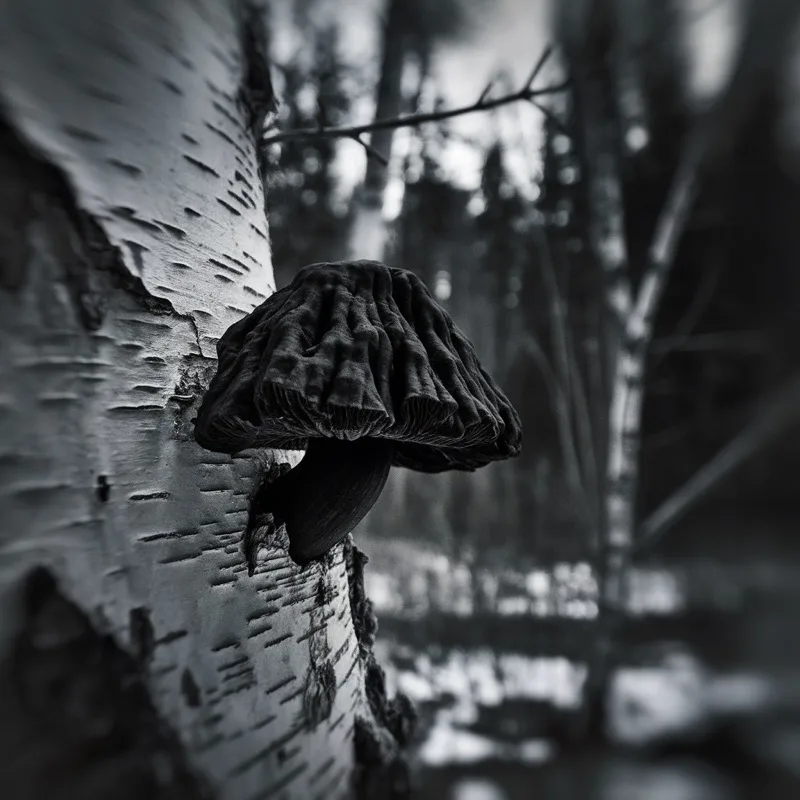
Inonotus obliquus is a parasitic fungus of the family Hymenochaetaceae, primarily found on birch trees in circumboreal forests. It presents as a sterile, black, and irregularly shaped sclerotium (mass of mycelium) rather than a true fruiting body, causing white heart rot in its host. This sclerotium is rich in melanin and contains various bioactive compounds, including polysaccharides, triterpenoids (betulin, betulinic acid, inotodiol), and polyphenols, which are responsible for its notable antioxidant, anti-inflammatory, and immunomodulatory properties.
#4
Žebříček popularity
Extensive
Úroveň výzkumu
6
Reference
3
Klíčové sloučeniny

Board-Certified Physician · Medical Reviewer · Naposledy přezkoumáno 12. února 2026
Chaga byl rozsáhle studován v preklinickém i klinickém výzkumu. Řada klinických studií zkoumala jeho potenciální přínosy.
Chaga is one of the only organisms on Earth that grows in frigid northern birch forests, extracts betulinic acid from its host tree's bark, and concentrates melanin at levels found in almost no other...
Chaga se po staletí používá v tradičních léčebných systémech, zejména v tradiční čínské medicíně (TCM) a dalších asijských léčitelských praktikách.
Historický kontext: Tradiční použití nezaručuje účinnost ani bezpečnost. Moderní výzkum za účelem ověření tradičních tvrzení stále probíhá.
Chaga is one of the only organisms on Earth that grows in frigid northern birch forests, extracts betulinic acid from its host tree's bark, and concentrates melanin at levels found in almost no other living thing. That combination produces one of the highest ORAC (Oxygen Radical Absorbance Capacity) scores ever recorded — approximately 146,700 μmol TE per 100g, beating blueberries (4,669) and acai (102,700). Life in harsh, oxidatively stressful environments selects hard for antioxidant defense. Chaga's extreme conditions produced extreme chemistry.
Chaga (Inonotus obliquus) defies easy categorization. It doesn't produce the classic cap-and-stem fruiting body — what foragers harvest is the sclerotium: a dense, irregular mass of hardened fungal tissue that erupts through birch bark, looking like burnt charcoal. Crack one open to find a striking amber-orange interior. Found almost exclusively on birch trees in circumboreal forests — Siberia, Scandinavia, Canada — it parasitizes the tree over 10–20 years.
This long interaction with birch is significant: Chaga absorbs betulin and betulinic acid from birch bark into its own tissue — compounds absent in lab-cultivated Chaga. In Siberian folk medicine, it was brewed as tea for centuries. In Finland, it served as a coffee substitute during WWII. The Russian author Solzhenitsyn featured it prominently in The Cancer Ward (1967), sparking early Western scientific interest.
⚡ Key Fact
Wild Chaga harvested from birch trees contains betulinic acid — a compound showing selective pro-apoptotic effects on certain cancer cell lines in vitro. Lab-cultivated Chaga grown on non-birch substrates cannot produce this compound. Sourcing matters more for Chaga than any other medicinal mushroom.
Chaga's bioactivity comes from an unusually diverse phytochemical profile: melanin pigments (potent antioxidant, UV-protective), beta-glucan polysaccharides (immunomodulatory), polyphenols (anti-inflammatory via NF-κB suppression), and lanostane triterpenoids including betulinic acid (from the birch host). A 2022 study by Nguyen et al. found that Chaga extracts significantly inhibited nitric oxide production and downregulated pro-inflammatory cytokines TNF-α and IL-6 in macrophage cells.
The immunomodulatory polysaccharides follow the same beta-glucan receptor pathway as other medicinal mushrooms, but Chaga is unique in the density of additional antioxidant compounds working synergistically. The Arata 2016 study found continuous oral Chaga extract significantly suppressed tumor growth and metastasis in mice — not yet replicated in human trials but aligned with the anti-inflammatory mechanisms.
💊 Recommended Dosage
1,000–2,000 mg/day of hot water or dual-extracted Chaga. For traditional tea, simmer 3–5g of dried chunks for 20–30 minutes at 80–90°C (not boiling). Prioritize wild-harvested birch-source Chaga for the full spectrum of birch-derived compounds. Dual extraction captures both water-soluble polysaccharides and alcohol-soluble triterpenoids.
Nejlepší produkty obsahující ověřené Inonotus obliquus extrakty.

Sacred Journey Chocolate


Tyto informace slouží pouze ke vzdělávacím účelům a nenahrazují odbornou lékařskou radu. Vždy se poraďte s kvalifikovaným poskytovatelem zdravotní péče.
Board-Certified Physician · Medical Reviewer
Board-certified physician affiliated with UC Irvine, the Gavin Herbert Eye Institute, and the UCI School of Medicine. Dr. Russell reviews all mushroom encyclopedia entries for scientific accuracy, ensuring claims are supported by peer-reviewed research.
naposledy přezkoumáno: 12. února 2026
Click anywhere or press Escape to close