$29.99 $0.50/serving
View Profile You must be at least 21 years old to enter this site.
This is a legal, non-psychoactive functional mushroom guide. Talk with your clinician first if you take blood thinners, diabetes medications, immune-modulating drugs, or are in cancer treatment.
Best supplement form
Compare products that match the form most often recommended for Chaga.
Evidence summary
3 cited references reviewed for the Chaga guide.
For healthy aging
See how Chaga compares with Reishi, Chaga, and Turkey Tail for older adults.
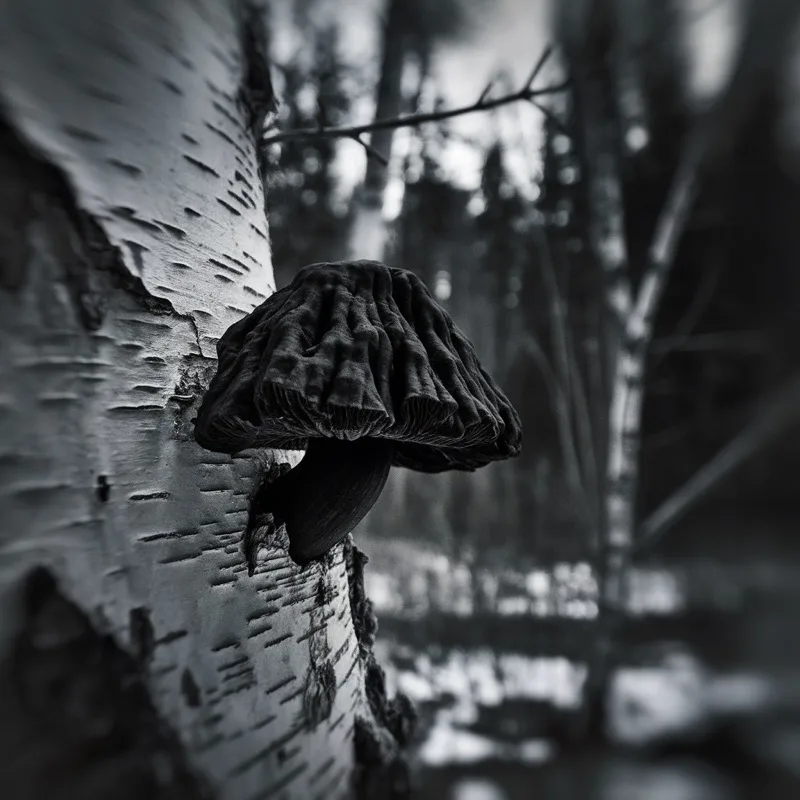
Inonotus obliquus is a parasitic fungus of the family Hymenochaetaceae, primarily found on birch trees in circumboreal forests. It presents as a sterile, black, and irregularly shaped sclerotium (mass of mycelium) rather than a true fruiting body, causing white heart rot in its host. This sclerotium is rich in melanin and contains various bioactive compounds, including polysaccharides, triterpenoids (betulin, betulinic acid, inotodiol), and polyphenols, which are responsible for its notable antioxidant, anti-inflammatory, and immunomodulatory properties.
#4
Popularity Rank
Extensive
Research Level
3
References
3
Key Compounds
Independent Research Review · Last Reviewed May 3, 2026
Chaga (Inonotus obliquus) is a functional mushroom with a extensive level of scientific research supporting its use. Its primary bioactive compounds - Beta-Glucans, Polyphenols, Melanin - have been studied for benefits including immunity, antioxidants, inflammation support, skin health. Multiple human clinical trials have investigated Chaga, making it one of the more evidence-backed functional mushrooms available. Chaga is ranked #4 in popularity among functional mushroom species, with 3 cited research references in our database. The most commonly recommended form is birch-sourced hot-water extract or tea with contaminant testing. Typical supplemental dosages range from 500 mg to 3,000 mg per day depending on extract concentration and intended use.
Buyer decision guide
Use this section to compare evidence strength, active compounds, researched forms, and safety limits for chaga.
Animal and test-tube studies suggest that chaga extract has antioxidant, anti-inflammatory, and immunomodulating activity, and may slow cancer‑cell growth and improve metabolic markers such as blood sugar and cholesterol; however, high‑quality human trials are limited, and definitive clinical evidence of benefit in people is still lacking.
Chaga contains beta‑glucans, polyphenols, melanin, triterpenoids such as lanostanes and betulinic acid, and other secondary metabolites; these compounds are associated in preclinical studies with antioxidant, anti‑inflammatory, immunomodulatory, and antitumor effects, but their contribution to human health outcomes is not yet precisely quantified.
Most pharmacological data come from standardized extracts or powdered preparations used in animal and in‑vitro studies; human evidence for chaga is sparse, so there is no clearly superior product form, and any extract or tea should be chosen based on independent quality and contaminant testing rather than on specific clinical superiority.
Clinical safety data are limited; chaga may interact with diabetes, anticoagulant, and immunosuppressive drugs and has been linked to rare kidney‑toxicity signals, so people with chronic disease, on chronic medication, or with kidney or autoimmune conditions should work with a clinician and avoid long‑term or high‑dose use without medical supervision.
Chaga has been extensively studied in both preclinical and clinical research. Multiple human trials have investigated its potential benefits.
Chaga is one of the only organisms on Earth that grows in frigid northern birch forests, extracts betulinic acid from its host tree's bark, and concentrates melanin at levels found in almost no other...
Chaga has been used in traditional medicine systems for centuries, particularly in Traditional Chinese Medicine (TCM) and other Asian healing practices.
Historical Context: Traditional use does not guarantee efficacy or safety. Modern research is ongoing to validate traditional claims.
Chaga is one of the only organisms on Earth that grows in frigid northern birch forests, extracts betulinic acid from its host tree's bark, and concentrates melanin at levels found in almost no other living thing. That combination produces one of the highest ORAC (Oxygen Radical Absorbance Capacity) scores ever recorded — approximately 146,700 μmol TE per 100g, beating blueberries (4,669) and acai (102,700). Life in harsh, oxidatively stressful environments selects hard for antioxidant defense. Chaga's extreme conditions produced extreme chemistry.
Chaga (Inonotus obliquus) defies easy categorization. It doesn't produce the classic cap-and-stem fruiting body — what foragers harvest is the sclerotium: a dense, irregular mass of hardened fungal tissue that erupts through birch bark, looking like burnt charcoal. Crack one open to find a striking amber-orange interior. Found almost exclusively on birch trees in circumboreal forests — Siberia, Scandinavia, Canada — it parasitizes the tree over 10–20 years.
This long interaction with birch is significant: Chaga absorbs betulin and betulinic acid from birch bark into its own tissue — compounds absent in lab-cultivated Chaga. In Siberian folk medicine, it was brewed as tea for centuries. In Finland, it served as a coffee substitute during WWII. The Russian author Solzhenitsyn featured it prominently in The Cancer Ward (1967), sparking early Western scientific interest.
⚡ Key Fact
Wild Chaga harvested from birch trees contains betulinic acid — a compound showing selective pro-apoptotic effects on certain cancer cell lines in vitro. Lab-cultivated Chaga grown on non-birch substrates cannot produce this compound. Sourcing matters more for Chaga than any other medicinal mushroom.
Chaga's bioactivity comes from an unusually diverse phytochemical profile: melanin pigments (potent antioxidant, UV-protective), beta-glucan polysaccharides (immunomodulatory), polyphenols (anti-inflammatory via NF-κB suppression), and lanostane triterpenoids including betulinic acid (from the birch host). A 2022 study by Nguyen et al. found that Chaga extracts significantly inhibited nitric oxide production and downregulated pro-inflammatory cytokines TNF-α and IL-6 in macrophage cells.
The immunomodulatory polysaccharides follow the same beta-glucan receptor pathway as other medicinal mushrooms, but Chaga is unique in the density of additional antioxidant compounds working synergistically. The Arata 2016 study found continuous oral Chaga extract significantly suppressed tumor growth and metastasis in mice — not yet replicated in human trials but aligned with the anti-inflammatory mechanisms.
💊 Recommended Dosage
1,000–2,000 mg/day of hot water or dual-extracted Chaga. For traditional tea, simmer 3–5g of dried chunks for 20–30 minutes at 80–90°C (not boiling). Prioritize wild-harvested birch-source Chaga for the full spectrum of birch-derived compounds. Dual extraction captures both water-soluble polysaccharides and alcohol-soluble triterpenoids.
Products containing Inonotus obliquus extracts, with emphasis on verification, format, and practical daily use.

KÄÄPÄ Biotech

Sempera Organics

WholeSun Wellness

Bulk Wholesale Mushrooms

Bulk Wholesale Mushrooms

MycoSymbiotics


Frenchmush
Personalized dosage recommendations based on your experience level, body weight, and goals.
Independent Research Review
The editorial team reviews mushroom encyclopedia entries for sourcing, clarity, safety caveats, and citation support.
Last reviewed: May 3, 2026
Click anywhere or press Escape to close