$19.99 $19.99/serving
View Review
You must be at least 18 years old to enter this site.
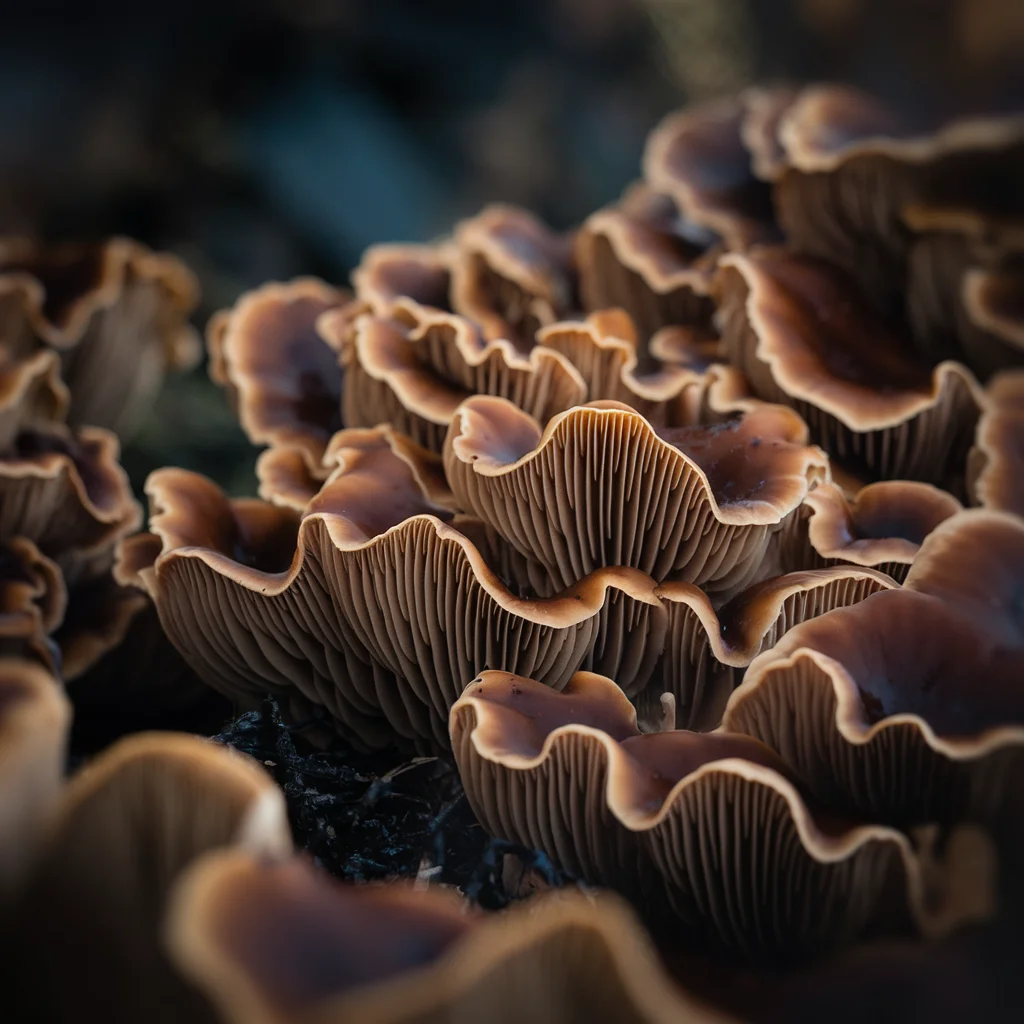
Psilocybe cyanescens is a potent psilocybin-containing basidiomycete of the family Hymenogastraceae, distinguished by its characteristically undulating (wavy) cap margin. The pileus is 2–5 cm in diameter, caramel to chestnut brown when moist, fading to pale buff when dry (hygrophanous), with a distinctive wavy or rippled edge at maturity. The stipe is 3–8 cm, white, and bruises strongly blue — a hallmark of psilocybin oxidation. P. cyanescens is a wood-decomposing saprotroph that fruits prolifically on lignin-rich substrates, particularly wood chip mulch, in the Pacific Northwest of North America and increasingly in urban and suburban landscapes across Europe, Australia, and New Zealand. It contains psilocybin at concentrations of 0.85–1.96% dry weight, making it significantly more potent than P. cubensis. Its spread via wood chip mulch in landscaping has made it one of the most commonly encountered potent psilocybin species in temperate urban environments.
#31
Žebříček popularity
Moderate
Úroveň výzkumu
3
Reference
4
Klíčové sloučeniny
Independent Research Review · Naposledy přezkoumáno 25. února 2026
Wavy Caps má střední podporu výzkumu s několika preklinickými studiemi a některými klinickými studiemi na lidech. K potvrzení přínosů je zapotřebí dalšího výzkumu.
Wavy Caps — Psilocybe cyanescens — are among the most potent commonly encountered psilocybin mushrooms in the world. Named for the distinctive wavy, undulating edge of their caps at maturity, they...
Wavy Caps se po staletí používá v tradičních léčebných systémech, zejména v tradiční čínské medicíně (TCM) a dalších asijských léčitelských praktikách.
Historický kontext: Tradiční použití nezaručuje účinnost ani bezpečnost. Moderní výzkum za účelem ověření tradičních tvrzení stále probíhá.
Wavy Caps — Psilocybe cyanescens — are among the most potent commonly encountered psilocybin mushrooms in the world. Named for the distinctive wavy, undulating edge of their caps at maturity, they are a wood-loving species that has spread globally through the use of wood chip mulch in landscaping. Originally native to the Pacific Northwest of North America, they are now found in urban and suburban environments across Europe, Australia, and New Zealand, often fruiting in spectacular quantities in garden beds, parks, and along paths mulched with hardwood chips.
The potency of Wavy Caps is significantly higher than the more commonly known Psilocybe cubensis. With psilocybin concentrations reaching nearly 2% of dry weight, they can be roughly twice as potent as typical cubensis specimens. This means that dosing requires particular care — what might be a moderate dose of cubensis could produce an intense experience with cyanescens. A typical moderate dose is 1–2 grams dried, compared to 2–3.5 grams for cubensis.
Wavy Caps fruit in autumn and early winter, typically after the first cold rains, in temperatures between 2–13°C. They grow in dense clusters on wood chip mulch, particularly alder, birch, and other hardwood chips. The fruiting body features a caramel-brown cap that fades to pale buff as it dries, white gills that darken to purple-brown with spore maturity, and a white stem that bruises intensely blue when handled — one of the most reliable identification features.
The ecological story of Wavy Caps is remarkable. Paul Stamets, the renowned mycologist who has championed their documentation, has described how the species has essentially hitchhiked around the world via the wood chip mulch trade. Landscaping companies spread wood chips in parks and gardens, and P. cyanescens spores colonize this substrate, establishing new populations far from the species' original range. This has made them one of the most successful invasive fungi in urban environments.
For identification purposes, key features include: wavy cap margin (especially at maturity), caramel-brown hygrophanous cap, intense blue bruising on the stem and cap margin, purple-brown spore print, and growth on wood chips (never in grass or on dung). Important lookalikes to distinguish include Galerina marginata (deadly poisonous, also grows on wood) — the key difference is that Galerina has a rusty-brown spore print versus the purple-brown of Psilocybe.
Wavy Caps are not commercially available and are illegal to possess in most jurisdictions. This information is provided for educational and harm reduction purposes. If encountered in a jurisdiction where psilocybin is legal or decriminalized, the same principles of responsible use apply: accurate identification is critical, start with a low dose given the high potency, ensure a safe and comfortable setting, and have a trusted companion present. The intensity of the Wavy Cap experience can be surprising even for those experienced with other psilocybin species.
Nejlepší produkty obsahující ověřené Psilocybe cyanescens extrakty.
Tyto informace slouží pouze ke vzdělávacím účelům a nenahrazují odbornou lékařskou radu. Vždy se poraďte s kvalifikovaným poskytovatelem zdravotní péče.
Independent Research Review
Independent editorial team reviewing product labels, COAs, regulator records, and cited scientific literature. our editorial team reviews all mushroom encyclopedia entries for scientific accuracy, ensuring claims are supported by peer-reviewed research.
naposledy přezkoumáno: 25. února 2026
Click anywhere or press Escape to close
2-minute quiz
Get a personalized mushroom path for focus, sleep, anxiety, energy, or emotional reset before you buy.