🏆 Editor's Pick 🏆

Lab VerifiedThis product has been independently lab tested with full COA results available. Beta-glucan content, heavy metals, microbials, and potency have been verified.
$55.00 $1.83/serving
View Review
Laricifomes officinalis
Revisado médicamente por Dr. Irvine Russell, M.D.
Laricifomes officinalis is a wood-decay fungus in the order Polyporales, found in old-growth coniferous forests in Eurasia, Morocco, and North America, where it causes brown heart rot on trees such as Larix, Pinus, and Cedrus. The fruiting body, or conk, is a large, hoof-shaped or columnar structure that can weigh up to 9 kilograms, with a chalky white interior and a bitter taste. Key pharmacological properties include potent antiviral activity against various viruses — including pox viruses, herpes simplex virus (HSV-1 and HSV-2), and influenza — as well as antibacterial effects against Mycobacterium tuberculosis.
#10
Clasificación de popularidad
Emerging
Nivel de investigación
3
Referencias
3
Compuestos clave

Board-Certified Physician · Medical Reviewer · Última revisión 12 de febrero de 2026
Agarikon es un área de investigación emergente con creciente interés científico. Los estudios iniciales son prometedores, pero se necesita más investigación.
In 2005, the U.S. Department of Defense's DARPA (Defense Advanced Research Projects Agency) funded Paul Stamets and his company Fungi Perfecti to screen mushroom extracts against biological threat...
Agarikon se ha utilizado en sistemas de medicina tradicional durante siglos, particularmente en la Medicina Tradicional China (MTC) y otras prácticas curativas asiáticas.
Contexto histórico: El uso tradicional no garantiza eficacia ni seguridad. La investigación moderna está en curso para validar las afirmaciones tradicionales.
In 2005, the U.S. Department of Defense's DARPA (Defense Advanced Research Projects Agency) funded Paul Stamets and his company Fungi Perfecti to screen mushroom extracts against biological threat agents, including weaponized pox viruses and anthrax. The standout performer in their screens wasn't an exotic tropical species or a laboratory compound — it was an extract from a mushroom that Dioscorides had written about treating lung infections in 65 AD, that Indigenous peoples of the Pacific Northwest had used in healing ceremonies for centuries, and that had been effectively ignored by Western medicine for a thousand years. That mushroom was Agarikon. The fact that a fungi collection in Washington State was considered relevant to biodefense research is one of the stranger convergences of ancient medicine and modern national security on record.
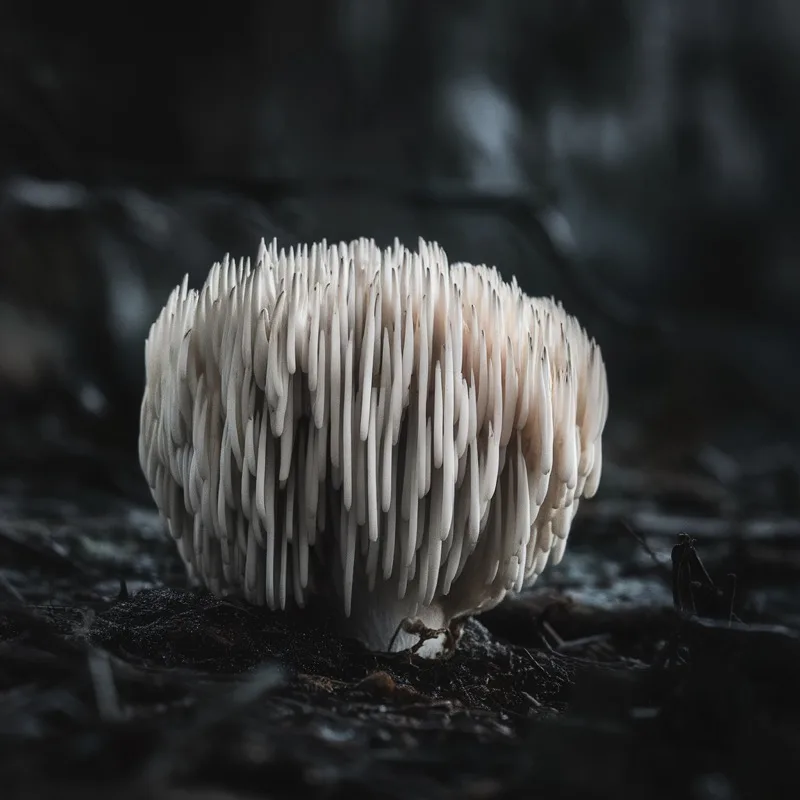
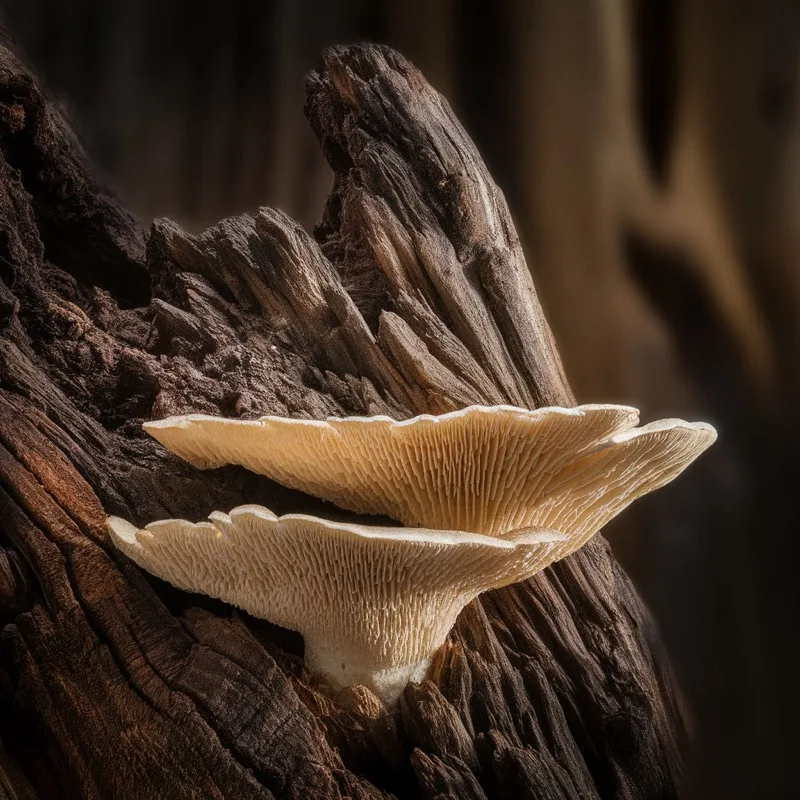
Agarikon (Laricifomes officinalis, formerly classified as Fomitopsis officinalis) is a wood-rotting polypore fungus that grows on the trunks and branches of old-growth conifers — primarily larch (Larix), pine (Pinus), Douglas fir (Pseudotsuga), and cedar (Cedrus) — in ancient forests of the Northern Hemisphere. What it produces is called a conk: a large, hoof-shaped or columnar bracket fruiting body that can range from a few kilograms to over 20 kilograms for the largest specimens. The exterior is deeply furrowed, chalky white to pale gray, developing characteristic rings or corrugations as it grows. The interior is white, dense, and extremely bitter to taste — the bitterness caused by agaric acid and related terpene compounds that have been its defining pharmacological characteristic since antiquity. Crucially, Agarikon can live for decades — some specimens are estimated to be over a century old, making them among the longest-lived fruiting bodies in the fungal kingdom.
Agarikon was once distributed widely across Europe, North America, and parts of Asia. The tragedy of the 20th century is that it has essentially disappeared from most of its former European range, and its North American populations are now restricted almost entirely to old-growth forests of the Pacific Northwest — primarily in British Columbia, Oregon, and Washington State. The cause is straightforward: Agarikon requires genuinely old trees (100+ years) to colonize, and industrial logging of old-growth forests destroyed its habitat far faster than it could relocate or recover. In Europe, where old-growth forest is now a rarity rather than the norm, Agarikon is functionally extinct across vast areas where it was once common. Its rarity gives it an almost mythological quality among mycologists and foragers — finding an Agarikon in the wild today is a meaningful event.
The human relationship with Agarikon is extraordinarily long and geographically diverse. The Greek physician Dioscorides described it in his foundational text Materia Medica (65 AD) as "agaricum" — a treatment for "consumption" (tuberculosis), liver ailments, and night sweats associated with chronic illness. This is among the earliest written fungal medicine references in Western history, and Dioscorides was describing a treatment already in established use, suggesting the history goes back further still. The Romans traded Agarikon from the Black Sea region through their empire. In Eurasia, it remained a significant medicine for respiratory disease through the medieval period. In the Pacific Northwest, the Haida, Tlingit, and other Indigenous peoples independently developed substantial traditional knowledge of Agarikon as a respiratory and spiritual medicine — knowledge that survived in oral tradition long after European old-growth forests lost the mushroom entirely.
Agarikon's pharmacological profile is driven by a group of unusual organic compounds including lanostane-type triterpenoids (related to the ganoderic acids in Reishi but structurally distinct), chlorinated coumarin derivatives, and polysaccharides including beta-glucans. The agaric acid (agaricin) that gives the mushroom its pronounced bitterness is a polyporenic acid — a triterpene with documented antimicrobial, antiviral, and antitussive (cough-suppressing) properties. The traditional use for tuberculosis (bacterial) and various respiratory conditions (potentially viral) aligns with the modern identification of broad-spectrum antimicrobial activity in Agarikon extracts.
The antiviral findings are what generated the most recent scientific excitement. Stamets' 2005 paper in the International Journal of Medicinal Mushrooms reported broad-spectrum antiviral and antibacterial activity of Fomitopsis officinalis (Agarikon) extracts against pox viruses, herpes simplex viruses (HSV-1 and HSV-2), and influenza strains in vitro. The DARPA-funded research extended these screens to include weaponized biological agents and found activity that warranted further investigation. The Hwang et al. 2013 study in Bioorganic and Medicinal Chemistry Letters identified a new chlorinated coumarin from Agarikon mycelium culture with significant antibacterial activity against multiple pathogenic bacteria. The Girometta 2019 review in Mycology synthesized the cumulative evidence, highlighting the antiviral activity of lanostane triterpenoids and chlorinated coumarins as the most pharmacologically significant findings, while acknowledging that in vitro antiviral activity requires careful translation before clinical claims can be made.
The mechanistic basis for antiviral activity likely involves multiple pathways. Some Agarikon compounds appear to directly inhibit viral replication by interfering with viral polymerase enzymes or viral capsid assembly. Others may work through immunostimulatory effects — activating innate immune responses that reduce viral load before adaptive immunity can mount a targeted response. The polysaccharide fraction provides the same TLR-mediated immunomodulation seen in other medicinal mushrooms. The unique aspect of Agarikon compared to other medicinal mushrooms is the additional layer of direct antiviral chemistry from its unusual secondary metabolites — compounds not found in other medicinal mushroom species.
Human clinical dose-ranging studies for Agarikon are essentially absent — the evidence base is primarily in vitro and animal data, with traditional use providing the broadest human safety and efficacy context. Most commercial Agarikon products recommend 500–1,500 mg/day of standardized extract. Given the rarity and cost of Agarikon, it often appears as a component in broader immune support formulations rather than as a standalone product at higher doses. Traditional preparations involved brewing chunks of Agarikon in hot water, producing an extremely bitter tea that was consumed in small quantities — consistent with low dose by modern standards. Due to the bitter compounds, tea preparations are genuinely unpleasant and capsules or tinctures are strongly preferred.
| Form | Typical Dose | Notes |
|---|---|---|
| Capsules (extract) | 500–1,500 mg/day | Strongly preferred over tea due to intense bitterness of raw mushroom |
| Tincture (dual extract) | 1–2 ml twice daily | Alcohol extraction captures triterpenoids; water extraction captures polysaccharides |
| Mushroom blend (with Agarikon component) | Per product — Agarikon typically 100–500 mg in blends | Common formulation approach due to rarity and cost of standalone product |
| Raw mushroom tea | 1–3 g dried, simmered | Intensely bitter; traditional method but practically very difficult to consume |
Agarikon sourcing is the single most critical quality consideration — and the most ethically significant. Wild-harvested Agarikon is extremely rare and its collection from the very limited remaining old-growth populations creates real conservation concerns. Look specifically for suppliers who explicitly state they cultivate their own Agarikon rather than wild-harvesting. Paul Stamets' company, Fungi Perfecti, is probably the best-known and most scientifically credible source — Stamets has deposited Agarikon strains in culture collections and has published research demonstrating that cultivated Agarikon contains meaningful levels of the relevant bioactive compounds. Other quality brands have followed with documented cultivation programs.
Extraction standardization is difficult for Agarikon because the specific active antiviral compounds (lanostane triterpenoids, chlorinated coumarins) don't have established commercial testing protocols the way beta-glucans do. Look for dual extraction (hot water plus ethanol) to capture both polysaccharides and the lipid-soluble terpenoids. Beta-glucan percentage can be used as a proxy quality marker, though it doesn't capture the uniquely antiviral chemistry. Third-party heavy metal and microbial testing is essential. Given the significant price premium for legitimate Agarikon products, any product dramatically cheaper than the market average should be treated with skepticism — there is financial incentive to mislabel cheaper bracket fungi as Agarikon.
Agarikon has a long traditional safety record, with documented use stretching back nearly 2,000 years in European medicine and an unknown additional period in Indigenous traditions. No serious adverse events have been documented in traditional use or in modern research. The most notable concern is its extreme bitterness — agaric acid in very high doses has been associated with digestive irritation and, historically, was actually used as a purgative (laxative) in large quantities. At typical supplemental doses, GI effects are mild and uncommon. The general cautions for immunostimulant mushrooms apply: theoretical concern about autoimmune exacerbation, potential interactions with immunosuppressant medications, and lack of safety data for pregnancy. Because Agarikon's research is still categorized as "emerging," there may be compound interactions or effects not yet characterized in the existing literature — this is a mushroom for people comfortable with frontier wellness rather than those seeking only the most thoroughly clinically tested options.
A: The in vitro evidence against pox viruses, herpes viruses, and influenza strains is real and was produced by credentialed researchers with serious institutional backing (including DARPA funding). What remains unestablished is whether these in vitro effects translate to clinically meaningful antiviral activity in human bodies — a critical distinction in medicine. In vitro activity against viruses is necessary but not sufficient evidence for human antiviral efficacy; many compounds kill viruses in a test tube at concentrations that cannot safely be achieved in human tissues. No completed human RCT has tested Agarikon for any viral infection. The honest position: Agarikon has unusual and potentially significant antiviral chemistry that warrants serious clinical investigation and hasn't received it yet. It may prove to be one of the most important antiviral natural substances discovered — or the in vitro results may not translate meaningfully to human use. The research simply hasn't been done.
A: Agarikon requires genuinely old trees — at minimum 80–100 year old conifers — to colonize, and it grows slowly, taking decades to produce a sizeable conk. Industrial logging of old-growth forests in Europe and North America throughout the 20th century destroyed the habitat for this species far faster than it could adapt. In Europe, it is now considered functionally extinct across most of its former range. In North America, it survives primarily in the old-growth forests of the Pacific Northwest, which themselves face ongoing logging pressure. If purchasing Agarikon, sustainable cultivation over wild-harvesting is not just ethically preferable — it may determine whether wild populations persist at all. This is a real conservation concern, not just marketing language.
A: They observed it working in the only clinical trial setting available to them: trying it on patients and noting outcomes over decades and centuries. The specificity of Dioscorides' description — "consumption," characterized by chronic cough, night sweats, and wasting — matches the clinical presentation of tuberculosis precisely enough that historians consider this a credible historical identification. Whether Agarikon's antibacterial activity against Mycobacterium tuberculosis (documented in vitro in modern research) was sufficient to produce clinical improvements in pre-antibiotic-era TB patients is an interesting question. TB is a difficult infection to clear even with modern antibiotics, requiring 6+ months of combination therapy. Agarikon likely reduced symptoms and perhaps extended survival in some patients, which ancient observers would have interpreted as effective treatment. The consistency of the respiratory disease indication across independent cultures (European, Asian, and North American Indigenous) is strong ethnobotanical evidence that the observation of some effectiveness was real.
A: Agarikon is best suited for a specific type of health-oriented consumer: one who is already using well-established medicinal mushrooms (Lion's Mane, Reishi, Turkey Tail) as a foundation and wants to add cutting-edge immune and antiviral support; someone with recurring respiratory infections, chronic bronchitis, or susceptibility to viral illness; or someone philosophically interested in supporting the most evidence-forward research in functional mycology by being an early adopter of a mushroom with significant potential. It's not the right starting point for someone new to medicinal mushrooms — the evidence base is too early-stage, the cost too high, and the available data too preliminary to prioritize it over mushrooms with decades of human clinical data. As a complementary addition to an established protocol, it's a genuinely interesting and potentially valuable choice.
The convergent use of Agarikon across independent cultures separated by thousands of miles and centuries offers unusual insight into its efficacy. The traditional knowledge held by Pacific Northwest Indigenous peoples — Haida, Tlingit, Heiltsuk, and others — included Agarikon as both a medicinal substance and a ceremonial material, with the large conks sometimes carved into masks and figures precisely because of their enduring, ancient quality. The medical applications centered on respiratory disease (consistent with Dioscorides), wound healing (the dried powder was used topically), and rituals associated with long life and protection from illness. Indigenous ethnobotanists have documented that many communities maintained cultivated knowledge of Agarikon host trees — tracking specific old-growth trees with established Agarikon conks as generational healthcare resources. The systematic destruction of old-growth forests in the Pacific Northwest over the 20th century erased both the mushrooms and the cultural knowledge systems built around them in a single generation.
Agarikon's unusual pharmacological profile may be inseparable from its ecological context in old-growth coniferous forest — a point that has significant implications for cultivation and supplement production. The relationship between Agarikon and its host trees isn't just structural (using the tree as substrate) but metabolic: the lanostane triterpenoids and chlorinated coumarins in Agarikon are produced in response to specific chemical signals from the host tree's defensive chemistry, microbial community, and environmental stress factors. Lab-cultivated Agarikon, grown on sawdust or liquid media without the complex chemical dialogue of a living old-growth tree, may produce different ratios of these secondary metabolites than wild specimens. This is why responsible cultivators like Stamets work to maintain genetically diverse Agarikon strains from multiple wild sources and experiment with cultivation substrates that approximate the conifer host chemistry — attempting to reproduce, insofar as possible, the ecological conditions that shaped Agarikon's pharmacological profile over millions of years of co-evolution with its forest ecosystem.
Several research directions make Agarikon one of the most interesting compounds in natural products medicine over the next decade. The antiviral findings from Stamets' work and subsequent screens have not been followed up with clinical trials primarily due to funding gaps — natural compounds cannot be patented (unless specific extracts or formulations are novel), reducing pharmaceutical industry incentive to invest in expensive human trials. However, the COVID-19 pandemic renewed interest in broad-spectrum antiviral natural compounds, and several academic groups are now conducting more systematic screens of Agarikon fractions against emerging viral threats. The chlorinated coumarin compounds specifically — unusual natural products with no close analogs in other commonly studied organisms — represent a potentially novel antiviral scaffold worth pharmaceutical investigation. If human antiviral efficacy is demonstrated even for a limited spectrum of viruses, Agarikon could transition from obscure ethnomycological curiosity to significant pharmaceutical lead compound within a decade.
Agarikon is the wild card in the functional mushroom world — the rarest, the most historically documented, the most pharmacologically unusual, and the least clinically validated of the top-tier medicinal species. Its antiviral chemistry is real and distinctive; its traditional use record stretching back nearly two millennia is unusually long even by TCM standards; the DARPA-backed antiviral research is the kind of thing that makes serious people take notice. What's missing is the human clinical trial evidence that would transform compelling preclinical data into clinical confidence. For now, Agarikon occupies a frontier position — worth including in a comprehensive immune protocol, worth supporting through purchasing from companies actively funding further research, and worth watching as the science develops. Not a replacement for the clinical stalwarts like Turkey Tail or Reishi, but a distinctive addition with genuinely unique chemistry that no other commonly available mushroom provides. Those willing to be early adopters of promising but incompletely proven approaches will find it a fascinating addition to their regimen.
Mejores productos con extracto verificado de Laricifomes officinalis extractos.


Esta información es solo con fines educativos y no debe reemplazar el consejo médico profesional. Consulte siempre con un profesional de la salud cualificado.
Board-Certified Physician · Medical Reviewer
Board-certified physician affiliated with UC Irvine, the Gavin Herbert Eye Institute, and the UCI School of Medicine. Dr. Russell reviews all mushroom encyclopedia entries for scientific accuracy, ensuring claims are supported by peer-reviewed research.
Last reviewed: 12 de febrero de 2026
Click anywhere or press Escape to close