
Cordyceps and Chronic Kidney Disease: What Three Meta-Analyses of RCTs Show
Physician ShrooMap Editorial examines the strongest body of human trial evidence in functional mushrooms — Cordyceps sinensis and chronic kidney disease — covering three meta-analyses totaling over 7,000 patients.

Independent Research Review · Published April 15, 2026

in dit artikel
- Understanding What We're Measuring
- The Three Meta-Analyses
- How Does Cordyceps Protect Kidney Tissue? The Mechanisms
- The Big Caveat: Quality and Applicability of the Evidence
- Who Is This Information Relevant For?
- How Cordyceps Kidney Research Compares to Other Mushroom Research
- Frequently Asked Questions
- The Bottom Line
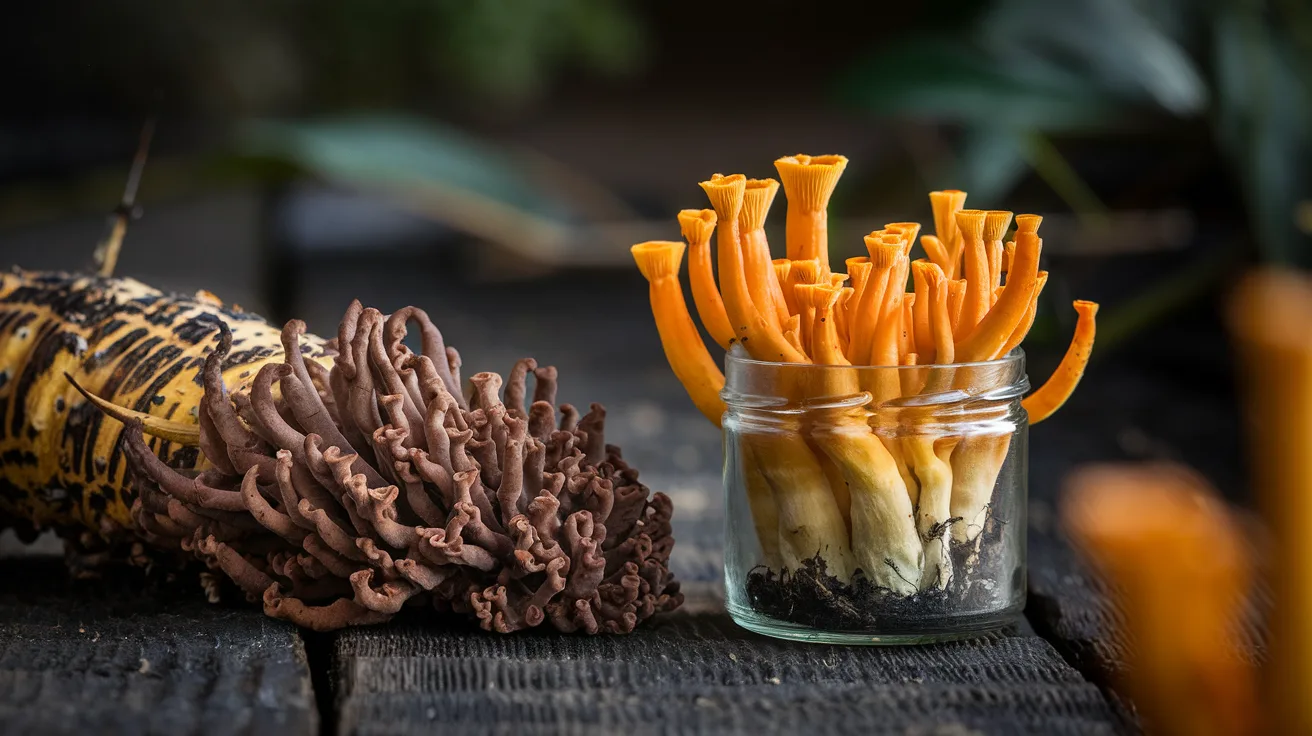
When I tell patients that Cordyceps mushroom has been tested in over 89 randomized controlled trials for kidney disease — across more than seven thousand patients — they look at me like I have lost my mind. The supplement aisle version of Cordyceps is marketed as an energy booster for gym-goers. The research version has a decades-long clinical record in nephrology that most Western physicians have never encountered.
This disconnect exists because the bulk of the Cordyceps and kidney research was conducted in China, where Ophiocordyceps sinensis has been used as a nephroprotective agent in traditional medicine for centuries, and where pharmaceutical-grade Cordyceps preparations (Bailing capsules, Jinshuibao capsules) have been integrated into hospital protocols for chronic kidney disease. The data is real, peer-reviewed, and indexed on PubMed — it just doesn't appear in Western nephrology journals.
Let me give that data the serious clinical examination it deserves.
Understanding What We're Measuring
Before diving into the research, it helps to understand what chronic kidney disease (CKD) looks like from a laboratory standpoint, because all of the relevant trials use the same biomarkers:
| Biomarker | What It Measures | Direction You Want |
|---|---|---|
| Serum creatinine (Scr) | Waste product cleared by kidneys — rises when kidneys fail | Lower is better |
| Blood urea nitrogen (BUN) | Nitrogen waste from protein metabolism — rises in kidney disease | Lower is better |
| 24-hour urinary protein (24hUP) | Protein leaking into urine — a marker of kidney filter damage | Lower is better |
| Urine albumin excretion rate (UAER) | Albumin in urine — early marker of diabetic kidney damage | Lower is better |
| Cystatin C (CysC) | Sensitive GFR marker, earlier indicator than creatinine | Lower is better |
These are hard clinical outcomes. Unlike many supplement studies that rely on subjective self-report, improvements in serum creatinine and proteinuria represent measurable improvements in kidney function. Any compound that consistently moves these markers in the right direction across multiple RCTs is worth taking seriously.
The Three Meta-Analyses
Meta-Analysis 1: 38 RCTs, 3,167 Patients with Diabetic Kidney Disease
The largest and most methodologically rigorous meta-analysis was published in 2022 in Phytomedicine by Yan and colleagues at Changchun University. They searched seven electronic databases for RCTs comparing standard therapy (ACE inhibitors or ARBs, the current standard of care for diabetic kidney disease) alone versus standard therapy plus Ophiocordyceps sinensis preparations. After screening, 38 RCTs with 3,167 patients met inclusion criteria.
The results were consistently positive across every measured renal endpoint:
- Serum creatinine reduced by a mean difference of 11.48 units (95% CI: 15.78 to 7.18, p < 0.01)
- Blood urea nitrogen reduced by MD -1.00 (95% CI: -1.44 to -0.55, p < 0.01)
- Cystatin C reduced by MD -0.64 (95% CI: -0.83 to -0.45, p < 0.01)
- 24-hour urinary protein: large effect size (SMD -1.99, 95% CI: -2.68 to -1.31, p < 0.01)
- Urine microalbumin reduced by MD -37.41 (95% CI: -44.76 to -30.06, p < 0.01)
- Urinary albumin excretion rate reduced by MD -24.11 (95% CI: -30.54 to -17.68, p < 0.01)
Beyond kidney-specific markers, the Cordyceps group also showed improved blood pressure, blood glucose control, lipid profiles, inflammatory markers, and oxidative stress indicators. No significant difference in adverse events was found between treatment and control groups (DOI: 10.1016/j.phymed.2022.154531).
The effect sizes here are clinically meaningful, not just statistically significant. A reduction in serum creatinine of over 11 units, sustained across 38 trials and 3,000 patients, represents genuine kidney function preservation.
Meta-Analysis 2: 51 RCTs, 3,955 Patients
A 2019 meta-analysis published in the Journal of Renal Nutrition by Li and Xu at Nanchang University examined Jinshuibao — a different Cordyceps preparation derived from fermented mycelium — combined with ACEI/ARB for diabetic kidney disease. This analysis included 51 randomized controlled trials and 3,955 participants.
Compared to ACEI/ARB alone, the combination group showed significant improvements in:
- 24-hour proteinuria (MD -0.16, 95% CI: -0.19 to -0.13)
- Serum creatinine (MD -13.84, 95% CI: -18.01 to -9.68)
- Blood urea nitrogen (MD -1.00, 95% CI: -1.36 to -0.63)
- Systolic blood pressure (MD -4.57)
- Diastolic blood pressure (MD -3.96)
- Fasting blood glucose (MD -0.85)
- HbA1c (MD -0.52)
- Total cholesterol and triglycerides
The overall response rate was nearly five times higher in the combination group (OR 4.91, 95% CI: 3.32 to 7.25). This is a striking effect size, though it reflects the composite response rate across all endpoints rather than any single marker (DOI: 10.1053/j.jrn.2019.03.083).
Meta-Analysis 3: Bailing Capsule in CKD (2024)
The most recent analysis, published in 2024 in Frontiers in Pharmacology by Tao and colleagues, examined Bailing capsule — the Cordyceps formulation most commonly prescribed in Chinese hospital nephrology departments — specifically for chronic kidney disease (not limited to the diabetic subtype). The analysis confirmed the findings above: the Bailing-treated group showed lower 24-hour urinary protein, BUN, serum creatinine, and inflammatory markers (hs-CRP, IL-6, TNF-alpha) compared to control.
The authors also performed network pharmacology analysis, identifying 190 molecular targets shared between Bailing Capsule and CKD. Gene ontology enrichment suggested the pharmacological mechanism operates through immune response modulation, anti-inflammatory pathways, vascular endothelial protection, cell proliferation regulation, and anti-fibrotic effects (DOI: 10.3389/fphar.2024.1342831).
How Does Cordyceps Protect Kidney Tissue? The Mechanisms
A 2022 review in Frontiers in Pharmacology by Tan and colleagues specifically examined the mechanisms by which Cordyceps combats renal fibrosis — the scarring process that defines CKD progression. At least five distinct mechanisms have been identified in preclinical and translational research (DOI: 10.3389/fphar.2022.932172):
1. Anti-Inflammatory Action
Cordyceps polysaccharides and cordycepin (3-deoxyadenosine) suppress inflammatory cytokines including IL-1beta, IL-6, and TNF-alpha — the same cytokines that drive progressive kidney damage in CKD. This explains why the clinical trials consistently show reduced CRP and inflammatory markers alongside improved renal function markers.
2. Anti-Fibrotic Effects
Renal fibrosis — the replacement of functional kidney tissue with scar tissue — is the final common pathway of all forms of CKD, regardless of underlying cause. Cordyceps extracts have been shown to inhibit TGF-beta/Smad signaling, one of the main molecular pathways driving renal fibrosis. In animal models, this translates to reduced collagen deposition and preserved glomerular architecture.
3. Antioxidant Activity
Oxidative stress is a major driver of both diabetic and non-diabetic kidney injury. Cordyceps increases superoxide dismutase (SOD) activity and reduces malondialdehyde (MDA) levels — biomarkers of oxidative damage — in both animal models and human trials. This is consistent with the broader antioxidant profile seen across Cordyceps research in other contexts.
4. Autophagy Regulation
Cordyceps compounds appear to modulate autophagy — the cellular self-cleaning process — in kidney cells. Both excessive autophagy (leading to cell death) and insufficient autophagy (allowing damaged proteins to accumulate) contribute to CKD progression. Cordyceps appears to normalize this balance, though the precise mechanism is still under investigation.
5. Reduction of Extracellular Matrix Deposition
Cordycepin specifically has been shown to reduce extracellular matrix (ECM) accumulation in glomerular mesangial cells — the cells most vulnerable to the first wave of diabetic kidney damage. Less ECM deposition means less scarring and slower loss of filtering capacity.
The Big Caveat: Quality and Applicability of the Evidence
I would be doing you a disservice if I presented this data without its limitations, so here they are plainly:
Most trials are from China, using proprietary Chinese preparations. Bailing capsules and Jinshuibao are standardized pharmaceutical products with defined Cordyceps content, manufactured under regulatory oversight in China. The generic "Cordyceps" capsules you can buy on Amazon or in supplement shops are not the same thing. The active compound concentrations, extraction methods, and quality controls differ significantly.
The underlying trial quality is variable. Meta-analyses of Chinese RCTs on herbal medicines have historically struggled with publication bias (negative results go unpublished) and methodological quality issues (inadequate blinding, unclear randomization methods). The authors of all three meta-analyses above acknowledge this. The evidence is stronger than most people realize, but it's not at the level of a well-conducted Western pharmaceutical trial.
These are adjuvant studies — Cordyceps on top of standard therapy. None of these trials compared Cordyceps to standard kidney medications alone. They compared standard therapy plus Cordyceps versus standard therapy alone. This means the studies cannot tell us whether Cordyceps would work as a standalone treatment, and they certainly don't suggest replacing conventional nephrology care.
No long-term outcomes data yet. The trials measure surrogate endpoints (creatinine, proteinuria) rather than hard clinical outcomes (time to dialysis, cardiovascular events, mortality). These surrogates are clinically validated and meaningful, but the endpoint that actually matters — whether Cordyceps delays dialysis or extends kidney function for years — has not yet been demonstrated in high-quality long-term trials.
Who Is This Information Relevant For?
I want to be direct here: if you have CKD and are under nephrology care, this article is not a substitute for that care. But it is information worth discussing with your physician, particularly if:
- You have diabetic kidney disease (DKD) — this is the subtype most studied, and the evidence is most directly applicable
- You are already on ACEI or ARB therapy — all the trials studied Cordyceps as an add-on to these medications, not a replacement
- You are interested in complementary approaches supported by clinical evidence, not just preclinical data
For otherwise healthy individuals, the kidney protection research suggests Cordyceps may be worth considering as a long-term preventive strategy, particularly for those with risk factors for CKD (type 2 diabetes, hypertension, strong family history). But the evidence base for this application is weaker than the adjuvant therapy data above.
How Cordyceps Kidney Research Compares to Other Mushroom Research
To put the Cordyceps kidney evidence in context: this is the most human-trial-dense area of functional mushroom research I have encountered. The 89-trial figure comes from combining just the two larger meta-analyses described above, and there are additional trials in the literature not captured by either. For comparison, the lion's mane cognition literature contains perhaps a dozen human RCTs. Turkey tail's PSK has about 30 human trials, mostly in oncology. Cordyceps in kidney disease is simply in a different weight class of human evidence — partly because the condition is so prevalent and serious in the populations where this research is conducted.
Frequently Asked Questions
Does Cordyceps militaris (the supplement version) have the same kidney effects as C. sinensis?
This is an important question, and the honest answer is: probably partially, but we don't know for certain. The kidney RCTs used Ophiocordyceps sinensis preparations — the wild or fermented mycelium strain — not Cordyceps militaris, which is the commercially cultivated species used in most Western supplements. The two species share some bioactive compounds (beta-glucans, adenosine) but have different profiles of cordycepin and other secondary metabolites. The preclinical mechanism data on cordycepin applies to compounds found in both species, so there is reason to think C. militaris preparations have some nephroprotective activity. But the direct clinical trial data was generated with C. sinensis.
Can I take Cordyceps if I already have kidney disease?
The published trials show a strong safety profile, and Cordyceps is generally considered safe in the populations studied. However, if you have established CKD, this is not a supplement decision to make without talking to your nephrologist. People with advanced CKD (stage 4 or 5) have highly restricted options for any supplements due to impaired clearance — even things that are generally safe can accumulate dangerously. Your nephrologist can review the evidence and advise appropriately for your specific stage and medications.
Why don't Western nephrologists use Cordyceps?
Several reasons compound. The trials are predominantly published in Chinese-language journals or in English-language journals with lower impact factors that Western specialists rarely read. Proprietary preparations like Bailing capsules aren't available through Western pharmacies or hospital formularies. There's also a general skepticism in Western medicine about Chinese herbal preparations due to legitimate quality-control concerns and the historical association of some preparations with heavy metal contamination. And frankly, there's no pharmaceutical company funding large Western trials, because Cordyceps cannot be patented. All of these factors create an information gap that's genuinely damaging to patient care — millions of CKD patients in Western countries have never heard of a complementary approach with this level of human trial evidence.
The Bottom Line
Cordyceps and kidney disease represents the most rigorous human trial literature in the functional mushroom space, and it's almost completely unknown in Western medicine. Three meta-analyses — covering 38, 51, and multiple additional RCTs, involving thousands of patients — consistently show that Cordyceps preparations added to standard kidney disease therapy produce meaningful improvements in the biomarkers that define kidney function: creatinine, BUN, proteinuria, and albumin excretion.
The caveats are real: variable trial quality, proprietary preparations not widely available in the West, and a lack of long-term hard outcome data. But the pattern is consistent enough — and the condition serious enough — that this deserves serious attention from anyone interested in evidence-based approaches to kidney health.
Next time someone tells you Cordyceps is just for pre-workout, you have a rather lengthy rebuttal ready.
Based on articles retrieved from PubMed. Studies cited: Yan et al., 2022; Li & Xu, 2019; Tao et al., 2024; Tan et al., 2022.
Tags
Medisch beoordeeld door
ShrooMap Editorial Team
Bevoegd arts verbonden aan de Family Medicine (UCI), het medical review en de Integrative Wellness.
Frequently Asked Questions
What does this article about "Cordyceps and Chronic Kidney Disease: What Three Meta-Analyses of RCTs Show" cover?
Physician ShrooMap Editorial examines the strongest body of human trial evidence in functional mushrooms — Cordyceps sinensis and chronic kidney disease — covering three meta-analyses totaling over 7,000 patients.
Who reviewed this article?
This article was editorially reviewed by ShrooMap Editorial Team, a independent editorial team.
What topics are related to this article?
This article covers topics including cordyceps, kidney health, CKD, diabetic nephropathy, renal function. Explore our blog for more articles on these subjects.
Verwante artikelen

Categorieën verkennen
⚖️ Productvergelijkingen
Verken de paddenstoelenwereld
Duik dieper in de soortprofielen, vergelijk producten en vind winkels bij jou in de buurt.