
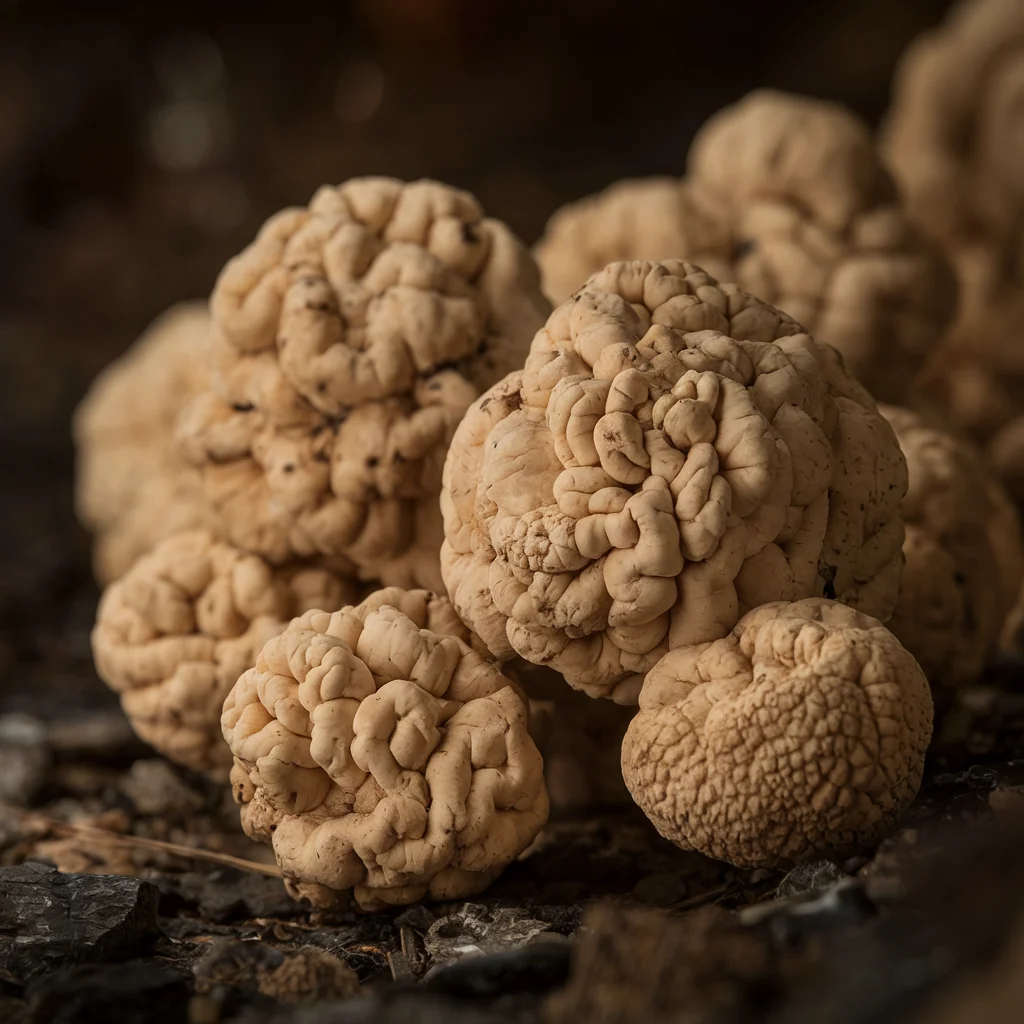
Psilocybe galindoi is a sclerotia-producing psilocybin mushroom of the family Hymenogastraceae, closely related to Psilocybe tampanensis. Native to Mexico, it was first described by Guzmán in 1983 from specimens collected in Jalisco. Like P. tampanensis, P. galindoi produces underground sclerotia (commonly marketed as 'truffles' or 'philosopher's stones') that contain psilocybin and are legally sold in Dutch smartshops under the name 'Pajaritos' (Spanish for 'little birds'). The sclerotia are small, dense, irregularly shaped masses with a dark brown exterior and lighter interior, containing moderate psilocybin concentrations that place them in the mild-to-moderate potency range — typically positioned between Mexicana (mildest) and Tampanensis in the Dutch truffle potency hierarchy. P. galindoi truffles are popular as an introductory psilocybin product for first-time users seeking a gentle, manageable experience.
#34
Beliebtheitsrang
Limited
Forschungsniveau
3
Quellenangaben
3
Schlüsselverbindungen
Psilocybin
Independent Research Review · Zuletzt überprüft 25. Februar 2026
WISSENSCHAFTLICHER ÜBERBLICK.
Evidenzgrad: C
Pajaritos verfügt über begrenzte wissenschaftliche Forschung. Die meisten Belege stammen aus traditioneller Anwendung und vorläufigen Studien.
Wichtige Erkenntnis
Pajaritos — Spanish for "little birds" — is the commercial name for psilocybin truffles produced by Psilocybe galindoi, a Mexican species closely related to Psilocybe tampanensis. These truffles are...
Traditionelle Anwendung
Pajaritos wird seit Jahrhunderten in traditionellen Medizinsystemen verwendet, insbesondere in der Traditionellen Chinesischen Medizin (TCM) und anderen asiatischen Heilpraktiken.
Historischer Kontext: Traditionelle Anwendung garantiert keine Wirksamkeit oder Sicherheit. Moderne Forschung zur Validierung traditioneller Behauptungen ist im Gange.
Pajaritos — Spanish for "little birds" — is the commercial name for psilocybin truffles produced by Psilocybe galindoi, a Mexican species closely related to Psilocybe tampanensis. These truffles are legally sold in Dutch smartshops alongside other truffle varieties like Mexicana, Tampanensis, Atlantis, and Hollandia, filling an important niche in the potency spectrum as a mild-to-moderate option that bridges the gap between the gentlest (Mexicana) and mid-range (Tampanensis) varieties.
The Pajaritos experience is characterized by gentle mood enhancement, increased sociability, mild visual effects (color brightening, pattern recognition), and a sense of lightness and connection. At standard doses (10–15 grams of fresh truffles), most users describe a pleasant, manageable experience that enhances social interactions and creative thinking without the intensity or potential overwhelm of stronger varieties. This makes Pajaritos a popular choice for first-time users and for social settings where a full psychedelic experience is not desired.
The species itself, Psilocybe galindoi, was first described by the legendary Mexican mycologist Gastón Guzmán in 1983 from specimens collected in Jalisco, Mexico. Like its close relative P. tampanensis, it produces underground sclerotia — dense, compact masses of mycelium that serve as nutrient reserves and survival structures. These sclerotia are what Dutch producers cultivate and sell as "truffles," taking advantage of the Netherlands' legal framework that permits the sale of psilocybin-containing sclerotia while prohibiting the fruiting bodies (mushrooms) of the same species.
In the Dutch smartshop hierarchy, Pajaritos typically sit at potency level 2 out of 5, making them slightly stronger than Mexicana (level 1) but milder than Tampanensis (level 2.5) and significantly milder than Atlantis (level 3.5) or Hollandia (level 5). This positioning makes them an excellent stepping stone for users who have tried Mexicana and want to explore slightly deeper territory without jumping to a mid-range or high-potency variety.
Pajaritos truffles are typically sold in 15-gram sealed packages in Dutch smartshops. They have a nutty, slightly earthy flavor that most people find more palatable than stronger truffle varieties. Common consumption methods include eating them directly (chewing thoroughly for better absorption), brewing them into tea, or mixing them with honey or chocolate to mask the taste. Effects typically begin within 30–45 minutes and last 4–6 hours.
For those considering Pajaritos as a first psilocybin experience: they represent one of the gentlest entry points available. Start with half a package (7–8 grams) to assess your sensitivity, consume them on an empty or light stomach, choose a comfortable and familiar environment, and have a trusted friend present. The mild nature of Pajaritos means that challenging experiences are uncommon at standard doses, but basic preparation and a positive mindset will enhance the experience regardless of the variety chosen.
Pajaritos Dosierung
Diese Informationen dienen nur zu Bildungszwecken und ersetzen keine professionelle medizinische Beratung. Konsultieren Sie immer einen qualifizierten Arzt.
ÄHNLICHE ARTEN.
Medizinisch geprüft von
Independent Research Review
Independent editorial team reviewing product labels, COAs, regulator records, and cited scientific literature. our editorial team reviews all mushroom encyclopedia entries for scientific accuracy, ensuring claims are supported by peer-reviewed research.
Last reviewed: 25. Februar 2026
Click anywhere or press Escape to close