
Cordyceps Militaris vs Sinensis: I Wasted $40 Before Learning the Difference
Cordyceps sinensis costs $20,000/kg and you can't even buy the real thing. Cordyceps militaris has 90x more cordycepin and actually works as a supplement. Here's what the research says and what I learned the hard way.

Board-Certified Physician · Medical Reviewer · Published February 18, 2026
📑 In This Article
Forty bucks. That's what I paid for a bottle of Cordyceps sinensis caps off iHerb last March. Gold label, "Premium Himalayan" stamped across the front. Two caps a day for six weeks. Felt absolutely nothing.
Cracked one open eventually. Dumped the powder on my kitchen counter. Smelled it. Smelled like... oatmeal? Flipped the bottle. Squinted. Supplement facts, tiny font: "mycelium biomass, cultured on organic oats."
Oats. I'd been eating forty-dollar oat powder.
That's the story of how I became extremely annoying about cordyceps labels.
These Are Not The Same Mushroom
Two Latin names you'll see on cordyceps bottles: sinensis and militaris. Most folks figure they're, like, two varietals. Granny Smith vs Pink Lady kind of deal. Interchangeable.
Wrong.
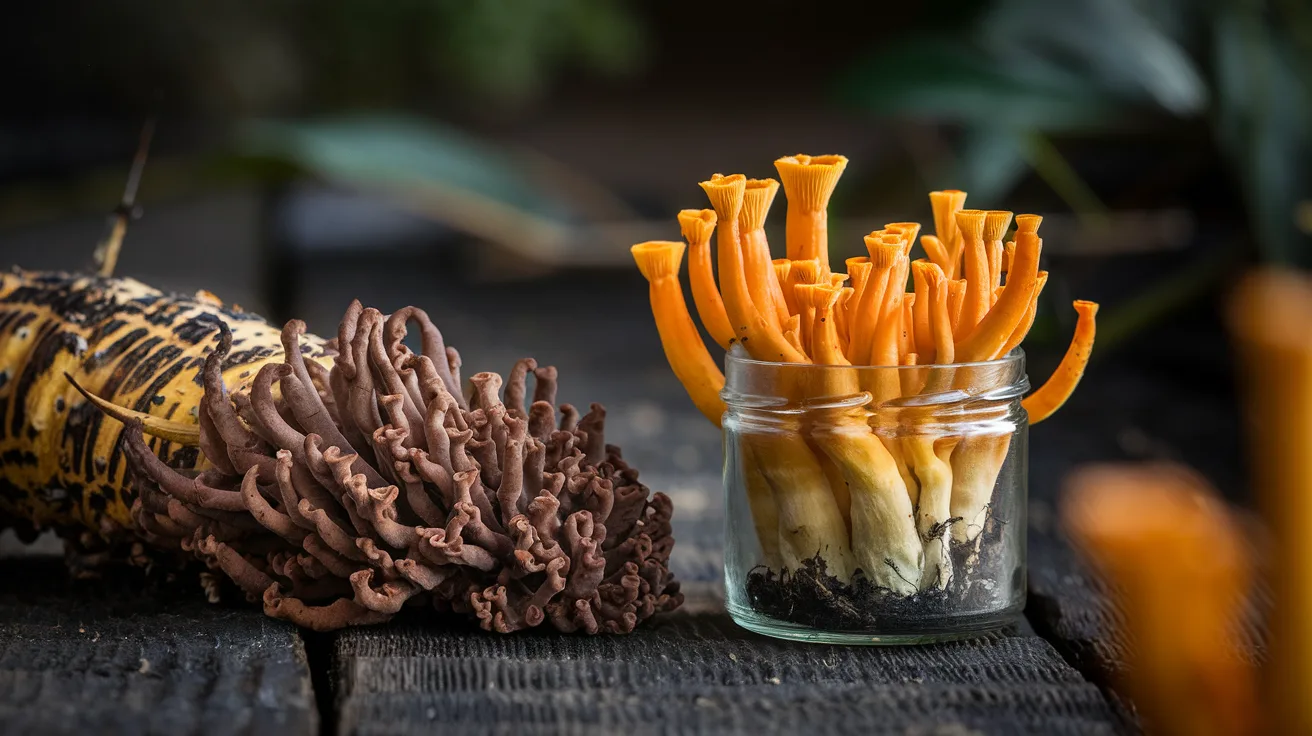
Cordyceps sinensis — renamed Ophiocordyceps sinensis in 2007 by taxonomists who love ruining simple things — is a parasitic fungus from the Tibetan Plateau. Grows above 3,800 meters. Infects ghost moth caterpillars. Slowly replaces the bug's insides with fungal mycelium. Then shoots a brown stalk out of the caterpillar's head.
(Mycology is metal.)
This stuff costs $20,000 to $60,000 per kilogram. Sometimes more. Families in Nagqu Prefecture, Tibet, make their entire year's income harvesting it each spring. There've been territorial fights over collection grounds. Fatal ones. National Geographic covered the economics — whole villages relocate to the harvesting areas every May.
And nobody can grow it in a lab. The Chinese government has dumped funding into this problem since the 80s. Forty years. Can grow the mycelium in tanks, sure. But the actual fruiting body — the mushroom that sprouts from the dead caterpillar — nope. Not commercially viable. Not in 2026, not yet.
So that $30 Amazon bottle labeled "Cordyceps sinensis"? You're getting Cs-4. That's a mycelium strain (Paecilomyces hepiali) fermented on grain. Not mushroom. Mycelium on rice or oats. Independent labs have tested these products and found 60-70% grain starch by weight.
My oatmeal experience makes more sense now.
The Orange Fingers
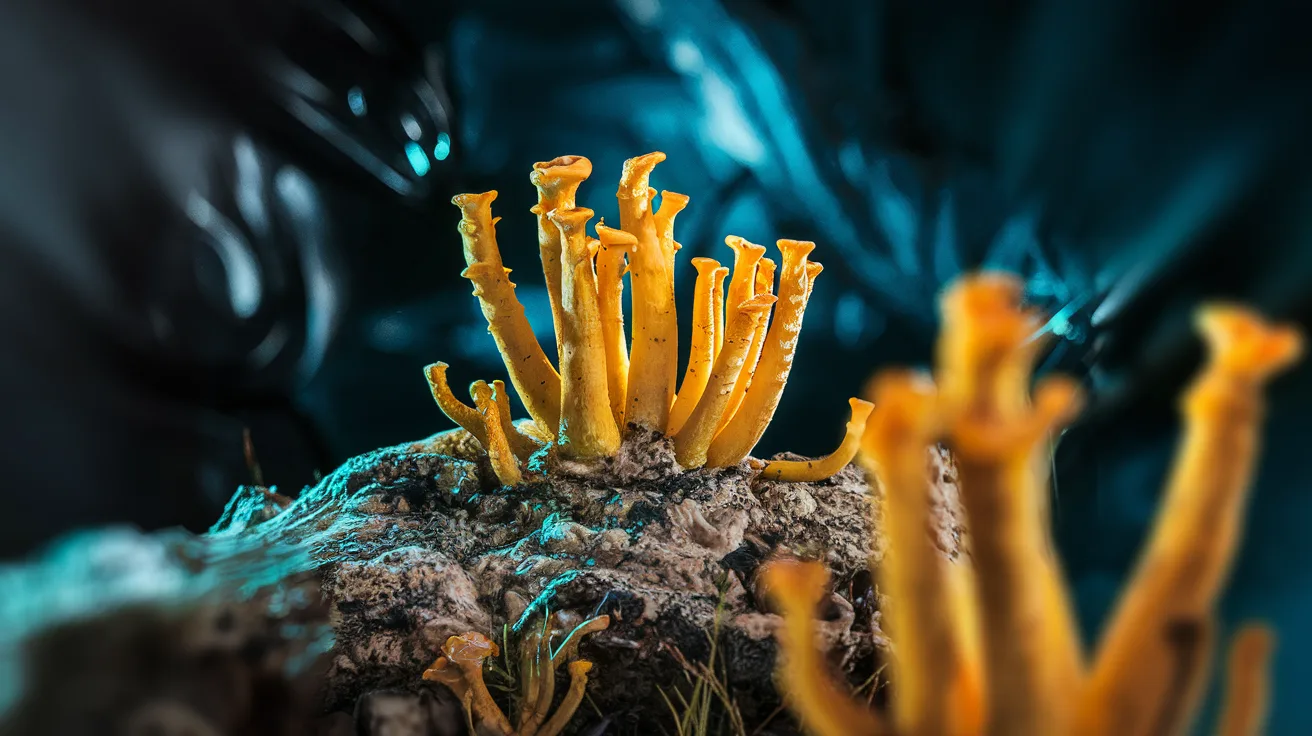
Cordyceps militaris looks completely different. Bright orange. Like tiny traffic cones growing out of substrate. I saw fresh ones at an Oregon Mycological Society meetup in Portland last October — genuinely alien-looking. Beautiful though.
The critical difference: you can farm militaris. South Korean growers have been doing it commercially since the early 2000s. Full fruiting bodies grown on brown rice in climate-controlled rooms. Real mushroom, not mycelium-on-grain.
Then in 2008, researchers at Chungbuk National University published something in the Journal of Agricultural and Food Chemistry that broke my brain a little when I first read it.
They measured cordycepin — that's 3'-deoxyadenosine, the bioactive compound driving most cordyceps research on energy and athletic performance — in both species.
Militaris had 90 times more.
Read that again. Not nine times. Not nineteen. Ninety. Wild sinensis contains maybe 0.02-0.06% cordycepin. Cultivated militaris hits 0.2-0.4%.
The "cheap cultivated" species absolutely destroys the "$60K per kilo wild" species on the compound that actually matters. I re-read that paper at 1am on my couch three times thinking I was missing something. I wasn't. Multiple subsequent studies confirmed it. A 2025 metabolomics paper using UHPLC-MS/MS (published in PMC) showed the two species have genuinely distinct chemical profiles — not just "more or less of the same stuff" but fundamentally different metabolite fingerprints.
What The Test Results Actually Say
After my oat powder incident, I became a COA stalker. Certificate of Analysis — the lab test results that tell you what's actually in a supplement. Our COA reading guide explains how to interpret these. Changed how I shop.
Cordycepin: Militaris. Ninety times more. Done.
Beta-glucans: These are the immune-modulating polysaccharides — the reason people take medicinal mushrooms at all. Good militaris fruiting body extracts test 25-30% beta-glucans. Most Cs-4 products? Don't even list beta-glucan content on the label. Suspicious, right? When third-party labs test them, the high starch percentage tells you everything. Can't have robust beta-glucans when your product is mostly rice.
Adenosine: Both species have it. Wild sinensis historically tested higher. Doesn't matter much practically because cordycepin is the bigger deal for energy.
A guy I talked to at SupplySide West — works at one of the bigger extract companies, asked to stay anonymous — told me they routinely test competitor cordyceps products. "Half the bottles on Amazon are grain with a dusting of mycelium. Consumers can't tell." His words, not mine.
Being Fair About Cs-4
Some Reddit threads call Cs-4 a total scam. That's too far. Real clinical trials exist — mostly Chinese, mostly from the 90s and 2000s — showing respiratory and fatigue benefits. The Chinese State FDA approved it. Jeff Chilton from Nammex (been in mushroom cultivation since 1973, basically the godfather of the North American mushroom extract industry) acknowledges Cs-4 has a legitimate research base.
The problem is packaging. Slap a photo of wild caterpillar fungus on the bottle. Write "Cordyceps sinensis" in big letters. Bury "mycelium biomass cultured on grain" in the fine print. Let consumers assume they're getting something resembling the legendary Tibetan stuff. Not technically illegal. Definitely gross.
What Happened After I Switched
Bought a militaris fruiting body extract eight months ago. Hot water extracted, COA verified: 0.3% cordycepin, 28% beta-glucans. $34 for 60 days. From a company in Carlsbad.
Week three, my 3pm espresso habit just... stopped. Not dramatically. I just noticed I wasn't craving it. Energy held through the afternoon.
My wife noticed before I did, actually. "You haven't made espresso after lunch in like two weeks." That's my n=1 anecdata. Make of it what you will. But the 90x cordycepin difference makes the placebo explanation feel like a stretch.
How I Actually Take This Stuff
People DM me about dosing so here's what I do. 1,000mg with breakfast. Capsules, not powder — I tried mixing powder into smoothies and it tasted like dirt. Like actual dirt from a garden. Some mornings I double up to 1,500 if I've got a packed schedule.
Morning only. I learned this one the hard way. Forgot my morning dose one Tuesday, popped it around 4pm instead. Lay in bed staring at the ceiling until 1:30am. My brain would NOT shut off. Took it exactly once in the afternoon. Never again.
This lines up with what I've read — cordycepin bumps ATP production, which is great when the sun's up, terrible when you're trying to sleep. Our supplement timing guide covers the why behind this for different mushroom species. Short version for cordyceps: before 2pm, with food.
Clinical trials typically run 1,000-3,000mg daily for a month or longer before measuring results. You gotta be patient. Week one, nothing. Week two, maybe nothing. Week three for me is when the espresso cravings stopped. That tracks with what researchers see — this stuff builds up gradually.
Who Should Maybe Not Do This
I'm not a doctor and don't play one on the internet. That said — blood thinners and cordyceps don't mix well. Cordycepin has anticoagulant properties. My uncle's on warfarin and I specifically told him to ask his cardiologist before touching any cordyceps product. He did. Doc said no.
Autoimmune stuff is a gray area. Cordyceps modulates immune function which sounds great until you remember that "modulate" can go both directions. If your immune system is already attacking your own tissue, ramping it up further isn't ideal. Talk to someone who actually went to medical school.
Everyone else? Safety record is genuinely good. People in East Asia have eaten militaris as food — literally just cooked and eaten — for centuries. Cultivated versions on rice substrate are arguably even safer since you control the growing conditions. No heavy metals from wild harvesting, no insect pathogens.
Worst thing that happened to me: stomach felt weird days 1 through 3. Gone by day 4. My buddy Mike — same thing. His girlfriend started the same batch, felt nothing negative at all. Bodies don't read the same manual.
My Buying Checklist (Steal It)
Species on the label: Must say "Cordyceps militaris" specifically. Just "Cordyceps" with no species? Hard pass. Check our 2026 functional mushroom guide for why species ID matters across all medicinal mushrooms.
Fruiting body: For militaris — non-negotiable. "Fruiting body extract." If it says mycelium or mycelial biomass, it's the grain product.
Beta-glucan percentage: Listed. Above 25%. No number = they don't want you to see it.
Cordycepin standardized: Best militaris products list exact cordycepin content. 0.2% minimum.
Third-party COA: Email the company. Ask. If they ghost you? They don't want you seeing their lab results.
Starch test: High starch = grain filler. The smoking gun.
One more thing — if you're building a mushroom stack (cordyceps plus lion's mane, reishi, whatever), each product's quality matters independently. Stacking five bad supplements doesn't somehow create one good one.
Militaris is what I take. What I tell friends to buy when they ask. The science is clear, the price is fair, and you can actually verify what you're getting. Don't spend $40 on oat powder like I did. Read the damn label.
Tags
Medically Reviewed By
Dr. Igor I. Bussel, M.D.
Board-certified physician affiliated with the University of California, Irvine (UCI), the Gavin Herbert Eye Institute, and the UCI School of Medicine.
Related Articles
Explore the Mushroom World
Dive deeper into species profiles, compare products, and find stores near you.