🏆 Editor's Pick 🏆

Lab VerifiedThis product has been independently lab tested with full COA results available. Beta-glucan content, heavy metals, microbials, and potency have been verified.
$55.00 $1.83/serving
View Review
Lentinula edodes
Medisch beoordeeld door Dr. Irvine Russell, M.D.
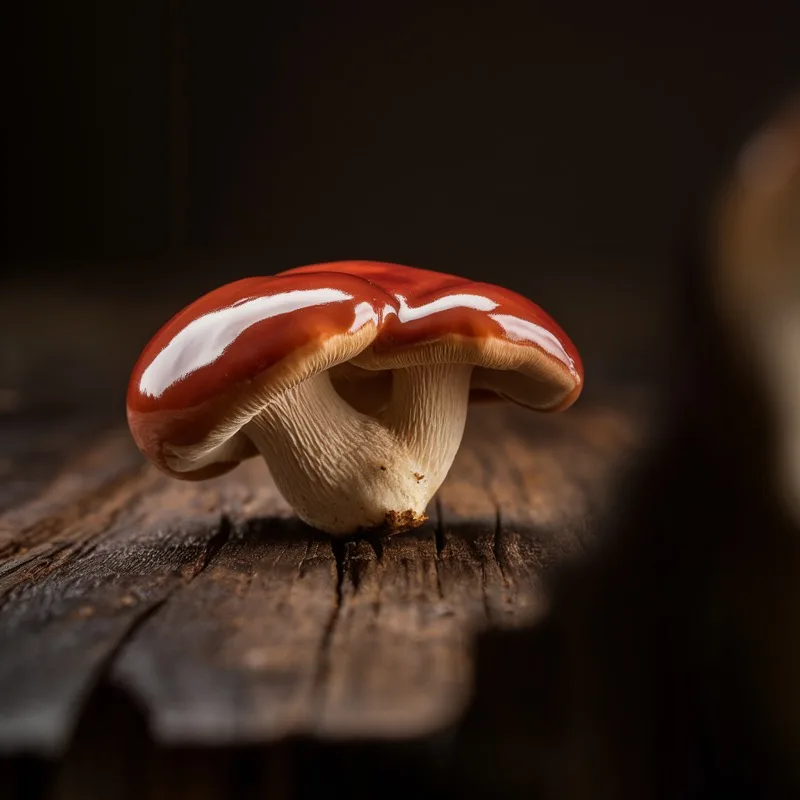
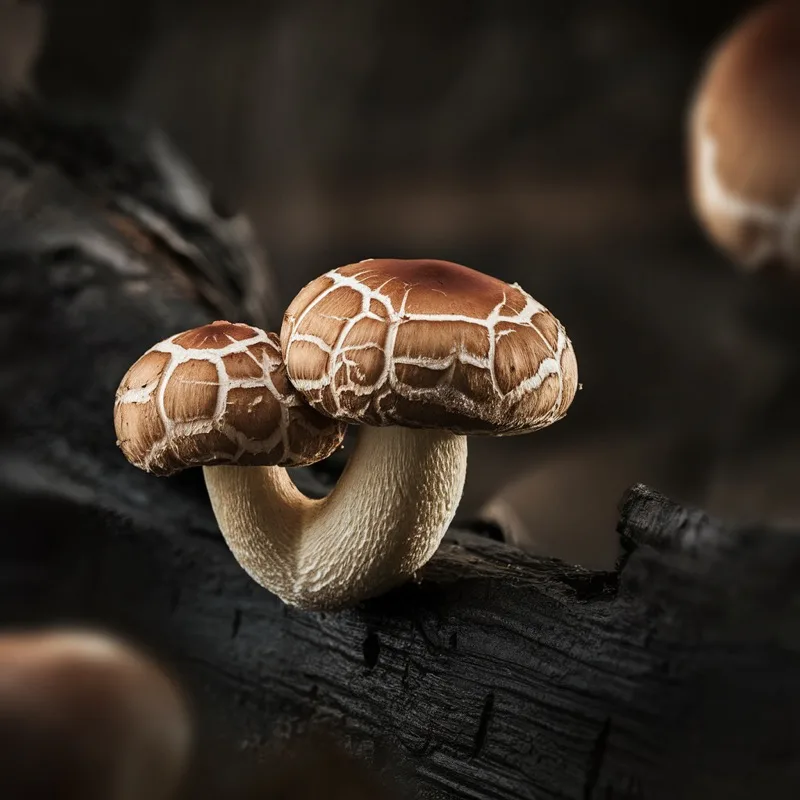
Lentinula edodes is a saprotrophic fungus belonging to the family Omphalotaceae, native to East Asia, where it thrives on decaying hardwood trees, particularly oak and other broad-leaved species. The fruiting body is characterized by a convex to flat, brown-colored cap ranging from 5 to 25 cm in diameter, with a distinctive scaly texture and white gills. Key pharmacological properties are attributed to its rich composition of bioactive compounds, including the polysaccharide lentinan — an approved adjunct immunotherapy in Japan — and eritadenine, which has demonstrated cholesterol-lowering effects in clinical studies.
#6
Populariteitsrangschikking
Extensive
Onderzoeksniveau
6
Referenties
3
Belangrijke verbindingen

Board-Certified Physician · Medical Reviewer · Laatst beoordeeld 12 februari 2026
Shiitake is uitgebreid bestudeerd in zowel preklinisch als klinisch onderzoek. Meerdere klinische studies hebben de potentiële voordelen onderzocht.
Shiitake is the only common edible mushroom that contains a pharmaceutical-grade immunological agent approved by a national government — lentinan, administered intravenously in Japanese hospitals as...
Shiitake wordt al eeuwenlang gebruikt in traditionele geneeskundige systemen, met name in de Traditionele Chinese Geneeskunde (TCM) en andere Aziatische geneeswijzen.
Historische context: Traditioneel gebruik garandeert geen werkzaamheid of veiligheid. Modern onderzoek om traditionele claims te valideren is gaande.
Shiitake is the only common edible mushroom that contains a pharmaceutical-grade immunological agent approved by a national government — lentinan, administered intravenously in Japanese hospitals as an adjunct to chemotherapy. That a mushroom most people know from stir-fry has produced a rigorously validated pharmaceutical is one of the most interesting convergences of food culture and medicine in modern history. The line between food and medicine, at least with mushrooms, is substantially blurrier than Western categorization typically allows.
Shiitake (Lentinula edodes) is the world's second most consumed mushroom, cultivated at over 10 million metric tons annually. Native to East Asia, it grows on fallen hardwood — oak, chestnut, beech. The fruiting body is classic: a convex brown cap with scaly texture, cream gills, and firm white stipe. Dried Shiitake concentrate in flavor through conversion of lentinic acid to lenthionine — producing that characteristic smoky, caramel-mushroom aroma.
Shiitake has been cultivated in China for at least 800 years — the first record dates to 1209 AD. What makes it exceptional is that it bridges the food-medicine divide uniquely: a 2015 randomized intervention by Dai et al. found healthy adults who ate 5–10g dried Shiitake daily for four weeks showed significant immune improvements — increased gamma-delta T-cells and reduced inflammatory CRP. No extract, no capsule — just cooked mushrooms as food.
⚡ Key Fact
Shiitake contains eritadenine — a unique amino acid derivative found almost exclusively in this species — that lowers LDL cholesterol by inhibiting SAH hydrolase in the methylation cycle. Animal studies show 25–45% reductions in total cholesterol. No other mushroom contains meaningful eritadenine levels.
Shiitake's pharmacology centers on three compound classes. Lentinan is a beta-1,3-glucan with a specific triple-helix structure that activates macrophages, NK cells, and T-lymphocytes through complement receptor 3 and dectin-1. The triple-helix conformation confers receptor selectivity and potency that straight-chain beta-glucans lack. Eritadenine inhibits SAH hydrolase, disrupting lipid metabolism to reduce LDL cholesterol formation.
The vitamin D story adds another dimension: Shiitake contains ergosterol that dramatically increases when exposed to UV light. A single cup of UV-exposed dried Shiitake provides over 1,000 IU of vitamin D2 — valuable for people in low-sunlight environments. The 2024 Xu et al. study identified five new anti-inflammatory compounds, suggesting the pharmacological profile continues to expand.
💊 Recommended Dosage
For dietary consumption: 50–100g fresh or 5–10g dried Shiitake daily (per the Dai 2015 trial). For supplements: 1,000–3,000 mg/day of fruiting body extract. Food-first approach is strongly supported — cook thoroughly to avoid Shiitake dermatitis risk. Use the soaking liquid from rehydrating dried mushrooms (it's packed with polysaccharides).
Topproducten met geverifieerde Lentinula edodes extracten.


Deze informatie is uitsluitend bedoeld voor educatieve doeleinden en mag professioneel medisch advies niet vervangen. Raadpleeg altijd een gekwalificeerde zorgverlener.
Board-Certified Physician · Medical Reviewer
Board-certified physician affiliated with UC Irvine, the Gavin Herbert Eye Institute, and the UCI School of Medicine. Dr. Russell reviews all mushroom encyclopedia entries for scientific accuracy, ensuring claims are supported by peer-reviewed research.
Laatst beoordeeld: 12 februari 2026
Click anywhere or press Escape to close