Before adding Shiitake to your routine
This is a legal, non-psychoactive functional mushroom guide. Talk with your clinician first if you take blood thinners, diabetes medications, immune-modulating drugs, or are in cancer treatment.
Best supplement form
Whole-food shiitake or hot-water extract with lentinan/beta-glucan disclosure
Compare products that match the form most often recommended for Shiitake.
Evidence summary
Extensive research
3 cited references reviewed for the Shiitake guide.
For healthy aging
Immunity, Metabolism, Heart Health
See how Shiitake compares with Reishi, Chaga, and Turkey Tail for older adults.
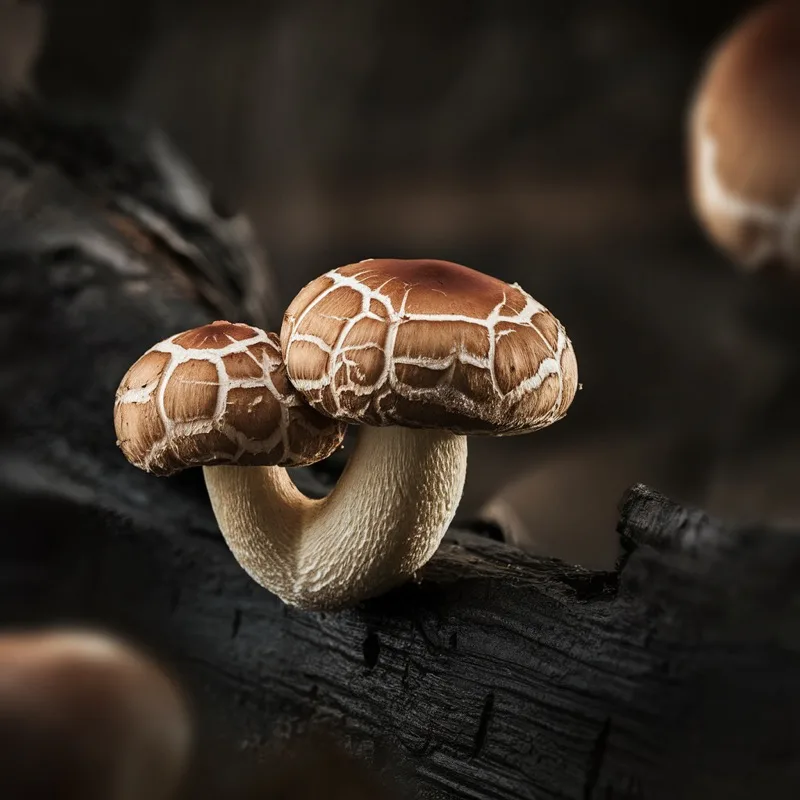
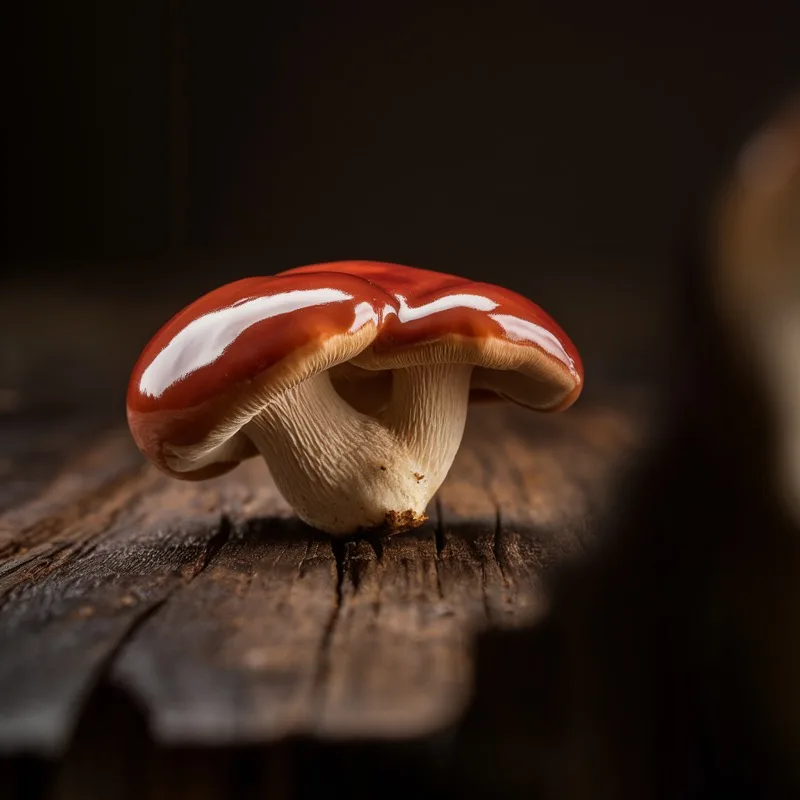
Lentinula edodes is a saprotrophic fungus belonging to the family Omphalotaceae, native to East Asia, where it thrives on decaying hardwood trees, particularly oak and other broad-leaved species. The fruiting body is characterized by a convex to flat, brown-colored cap ranging from 5 to 25 cm in diameter, with a distinctive scaly texture and white gills. Key pharmacological properties are attributed to its rich composition of bioactive compounds, including the polysaccharide lentinan — an approved adjunct immunotherapy in Japan — and eritadenine, which has demonstrated cholesterol-lowering effects in clinical studies.
#6
Popularity Rank
Extensive
Research Level
3
References
3
Key Compounds
Lentinan
Independent Research Review · Last Reviewed May 3, 2026
Key Takeaway
Shiitake (Lentinula edodes) is a functional mushroom with a extensive level of scientific research supporting its use. Its primary bioactive compounds - Lentinan, Beta-Glucans, Eritadenine - have been studied for benefits including immunity, metabolism, heart health, vitamin d. Multiple human clinical trials have investigated Shiitake, making it one of the more evidence-backed functional mushrooms available. Shiitake is ranked #6 in popularity among functional mushroom species, with 3 cited research references in our database. The most commonly recommended form is whole-food shiitake or hot-water extract with lentinan/beta-glucan disclosure. Typical supplemental dosages range from 500 mg to 3,000 mg per day depending on extract concentration and intended use.
Buyer decision guide
Shiitake evidence, forms, and safety
Use this section to compare evidence strength, active compounds, researched forms, and safety limits for shiitake.
Evidence snapshot
Human trials show that consuming dried shiitake mushrooms for 4 weeks increases immune-cell proliferation (γδ-T and NK-T cells by 60–200%) and raises secretory IgA in saliva without harmful inflammation. Shiitake contains copper (72% DRI per half cup) and selenium, with eritadenine and beta-glucans linked to cholesterol reduction in observational and animal studies.
Active-compound check
Lentinan and beta-glucans are the primary bioactive polysaccharides documented in human immune studies. Eritadenine appears in shiitake and has been associated with cholesterol-lowering effects in animal and some human contexts. Copper and selenium content supports mineral intake. Vitamin D2 enrichment occurs naturally and is enhanced by sun-exposure during cultivation.
Best researched form
Whole dried shiitake mushrooms show the strongest human-trial evidence for immune benefit (4-week daily consumption in published trials). Cooked fresh shiitake is a culinary staple with similar bioactive profiles. Shiitake extracts and lentinan supplements exist but have less direct human-trial data than whole-mushroom consumption studies.
Safety limits
No serious adverse events reported in clinical trials reviewed. Shiitake is a common food in Asia with long culinary history. Individual allergic reactions and drug interactions are possible; consult healthcare providers if taking immunosuppressants or anticoagulants. Some preparations may cause mild digestive effects in sensitive individuals.
SCIENCE OVERVIEW.
Evidence Grade: A
Shiitake has been extensively studied in both preclinical and clinical research. Multiple human trials have investigated its potential benefits.
Key Insight
Shiitake is the only common edible mushroom that contains a pharmaceutical-grade immunological agent approved by a national government — lentinan, administered intravenously in Japanese hospitals as...
Traditional Use
Shiitake has been used in traditional medicine systems for centuries, particularly in Traditional Chinese Medicine (TCM) and other Asian healing practices.
Historical Context: Traditional use does not guarantee efficacy or safety. Modern research is ongoing to validate traditional claims.
Shiitake is the only common edible mushroom that contains a pharmaceutical-grade immunological agent approved by a national government — lentinan, administered intravenously in Japanese hospitals as an adjunct to chemotherapy. That a mushroom most people know from stir-fry has produced a rigorously validated pharmaceutical is one of the most interesting convergences of food culture and medicine in modern history. The line between food and medicine, at least with mushrooms, is substantially blurrier than Western categorization typically allows.
What Is Shiitake?
Shiitake (Lentinula edodes) is the world's second most consumed mushroom, cultivated at over 10 million metric tons annually. Native to East Asia, it grows on fallen hardwood — oak, chestnut, beech. The fruiting body is classic: a convex brown cap with scaly texture, cream gills, and firm white stipe. Dried Shiitake concentrate in flavor through conversion of lentinic acid to lenthionine — producing that characteristic smoky, caramel-mushroom aroma.
Shiitake has been cultivated in China for at least 800 years — the first record dates to 1209 AD. What makes it exceptional is that it bridges the food-medicine divide uniquely: a 2015 randomized intervention by Dai et al. found healthy adults who ate 5–10g dried Shiitake daily for four weeks showed significant immune improvements — increased gamma-delta T-cells and reduced inflammatory CRP. No extract, no capsule — just cooked mushrooms as food.
⚡ Key Fact
Shiitake contains eritadenine — a unique amino acid derivative found almost exclusively in this species — that lowers LDL cholesterol by inhibiting SAH hydrolase in the methylation cycle. Animal studies show 25–45% reductions in total cholesterol. No other mushroom contains meaningful eritadenine levels.
The Science: How It Works
Shiitake's pharmacology centers on three compound classes. Lentinan is a beta-1,3-glucan with a specific triple-helix structure that activates macrophages, NK cells, and T-lymphocytes through complement receptor 3 and dectin-1. The triple-helix conformation confers receptor selectivity and potency that straight-chain beta-glucans lack. Eritadenine inhibits SAH hydrolase, disrupting lipid metabolism to reduce LDL cholesterol formation.
The vitamin D story adds another dimension: Shiitake contains ergosterol that dramatically increases when exposed to UV light. A single cup of UV-exposed dried Shiitake provides over 1,000 IU of vitamin D2 — valuable for people in low-sunlight environments. The 2024 Xu et al. study identified five new anti-inflammatory compounds, suggesting the pharmacological profile continues to expand.
Proven Benefits
- ✓Immune Enhancement: The Dai 2015 intervention used whole cooked mushrooms — not extracts — and still showed measurable immune improvements. Increased gamma-delta T-cells, enhanced NK cell activity, and reduced CRP after just 4 weeks.
- ✓Cholesterol & Heart Health: Eritadenine's SAH hydrolase inhibition mechanism is well-characterized with 25–45% LDL reductions in animal models. Regular dietary consumption is associated with improved lipid profiles in observational studies.
- ✓Vitamin D Source: UV-exposed Shiitake delivers 1,000+ IU of vitamin D2 per cup — one of the only non-animal dietary sources. Place gill-side up in sunlight for 30–60 minutes before cooking.
- ✓Anti-Inflammatory: Novel phenolic compounds with NF-κB pathway inhibition — the inflammatory cascade behind cardiovascular disease, arthritis, and metabolic syndrome. Regular dietary consumption provides continuous low-level anti-inflammatory input.
💊 Recommended Dosage
For dietary consumption: 50–100g fresh or 5–10g dried Shiitake daily (per the Dai 2015 trial). For supplements: 1,000–3,000 mg/day of fruiting body extract. Food-first approach is strongly supported — cook thoroughly to avoid Shiitake dermatitis risk. Use the soaking liquid from rehydrating dried mushrooms (it's packed with polysaccharides).
Shiitake supplement options
Products containing Lentinula edodes extracts, with emphasis on verification, format, and practical daily use.
Find Your Ideal Shiitake Dose
Personalized dosage recommendations based on your experience level, body weight, and goals.
SIMILAR SPECIES.
Shiitake Guides & Articles
Editorial Reviewer
Independent Research Review
The editorial team reviews mushroom encyclopedia entries for sourcing, clarity, safety caveats, and citation support.
Last reviewed: May 3, 2026
Click anywhere or press Escape to close