🏆 Editor's Pick 🏆

Lab VerifiedThis product has been independently lab tested with full COA results available. Beta-glucan content, heavy metals, microbials, and potency have been verified.
$55.00 $1.83/serving
View Review
Cordyceps militaris
Révisé médicalement par Dr. Irvine Russell, M.D.
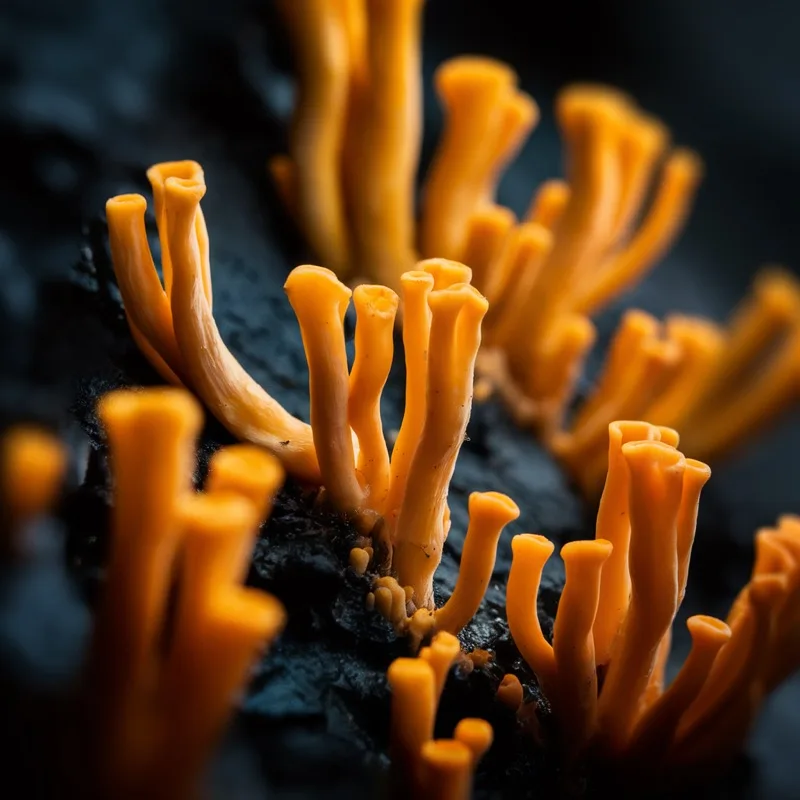
Cordyceps militaris is a parasitic ascomycete fungus belonging to the phylum Ascomycota, which primarily grows on the pupae of insects in the Northern Hemisphere. It is characterized by its bright orange-red, club-shaped fruiting body that emerges from the deceased host. This fungus is a source of several bioactive compounds, most notably cordycepin (3'-deoxyadenosine) and adenosine, which are nucleoside analogs with demonstrated effects on cellular energy metabolism, oxygen utilization, and anti-inflammatory pathways.
#3
Classement de popularité
Extensive
Niveau de recherche
6
Références
3
Composés clés

Board-Certified Physician · Medical Reviewer · Dernière révision 12 février 2026
Cordyceps a fait l'objet d'études approfondies tant en recherche préclinique que clinique. Plusieurs essais humains ont étudié ses bienfaits potentiels.
In 1993, three Chinese female runners shattered multiple world records at the National Games — including the 10,000-meter run by over 40 seconds. Their coach attributed the performance to daily...
Cordyceps est utilisé dans les systèmes de médecine traditionnelle depuis des siècles, notamment dans la Médecine Traditionnelle Chinoise (MTC) et d'autres pratiques de guérison asiatiques.
Contexte historique: L'usage traditionnel ne garantit ni l'efficacité ni la sécurité. La recherche moderne est en cours pour valider les allégations traditionnelles.
In 1993, three Chinese female runners shattered multiple world records at the National Games — including the 10,000-meter run by over 40 seconds. Their coach attributed the performance to daily consumption of Cordyceps sinensis. Doping authorities found nothing prohibited. Whether Cordyceps was truly responsible or a convenient cover story, the incident ignited Western scientific curiosity about a fungus that Tibetan herders had been feeding to yaks for centuries to enhance performance at altitude.
Cordyceps is a genus of parasitic fungi with a story that borders on science fiction. C. sinensis — the wild Himalayan species — infects ghost moth larvae at altitudes of 3,500–5,000 meters, slowly replacing body tissue, then sending a club-shaped fruiting body from the larva's head. Wild Cordyceps sells for $20,000–$40,000/kg, making it one of the most expensive biological commodities on Earth.
The supplement world uses Cordyceps militaris — a cultivated species with equal or higher concentrations of the key compound cordycepin. Grown commercially on rice or liquid substrates, C. militaris produces vivid orange-red fruiting bodies now grown worldwide. In Traditional Chinese Medicine, Cordyceps was used as a tonic for kidneys and lungs, to enhance vitality, and to support recovery — especially valued at high altitude where oxygen is limited.
⚡ Key Fact
Cordycepin (3'-deoxyadenosine) is structurally similar to adenosine — the backbone of ATP, your body's energy currency. It enhances mitochondrial efficiency, producing more ATP per unit of oxygen consumed. This is why Cordyceps works best where oxygen is the limiting factor.
Cordyceps' primary mechanism centers on cordycepin, a nucleoside analog that enhances mitochondrial oxidative phosphorylation — making the electron transport chain produce ATP more efficiently. More energy per oxygen molecule means better performance during intense exercise or at altitude. A second mechanism involves adenosine receptor modulation: cordycepin enhances vasodilation, improving oxygen delivery to working muscles.
The Hirsch et al. 2017 study (Journal of Dietary Supplements) found a mushroom blend with C. militaris significantly improved VO2 max and time to exhaustion after just one week. A 2020 study by Choi et al. demonstrated enhanced exercise performance attributable specifically to increased ATP production, not reduced fatigue perception.
💊 Recommended Dosage
1,500–3,000 mg/day of C. militaris fruiting body extract. Take 30–60 minutes before exercise for performance, or in the morning for general energy. Avoid late-afternoon dosing as cordycepin may interfere with sleep in sensitive individuals. Look for products specifying cordycepin content (0.1–0.5%) and ≥25% beta-glucans.
Meilleurs produits contenant des extraits vérifiés de Cordyceps militaris extraits.


Sacred Journey Chocolate


Ces informations sont à titre éducatif uniquement et ne doivent pas remplacer un avis médical professionnel. Consultez toujours un professionnel de santé qualifié.
Board-Certified Physician · Medical Reviewer
Board-certified physician affiliated with UC Irvine, the Gavin Herbert Eye Institute, and the UCI School of Medicine. Dr. Russell reviews all mushroom encyclopedia entries for scientific accuracy, ensuring claims are supported by peer-reviewed research.
Last reviewed: 12 février 2026
Click anywhere or press Escape to close