$34.95 $1.17/serving
View Profile You must be at least 21 years old to enter this site.
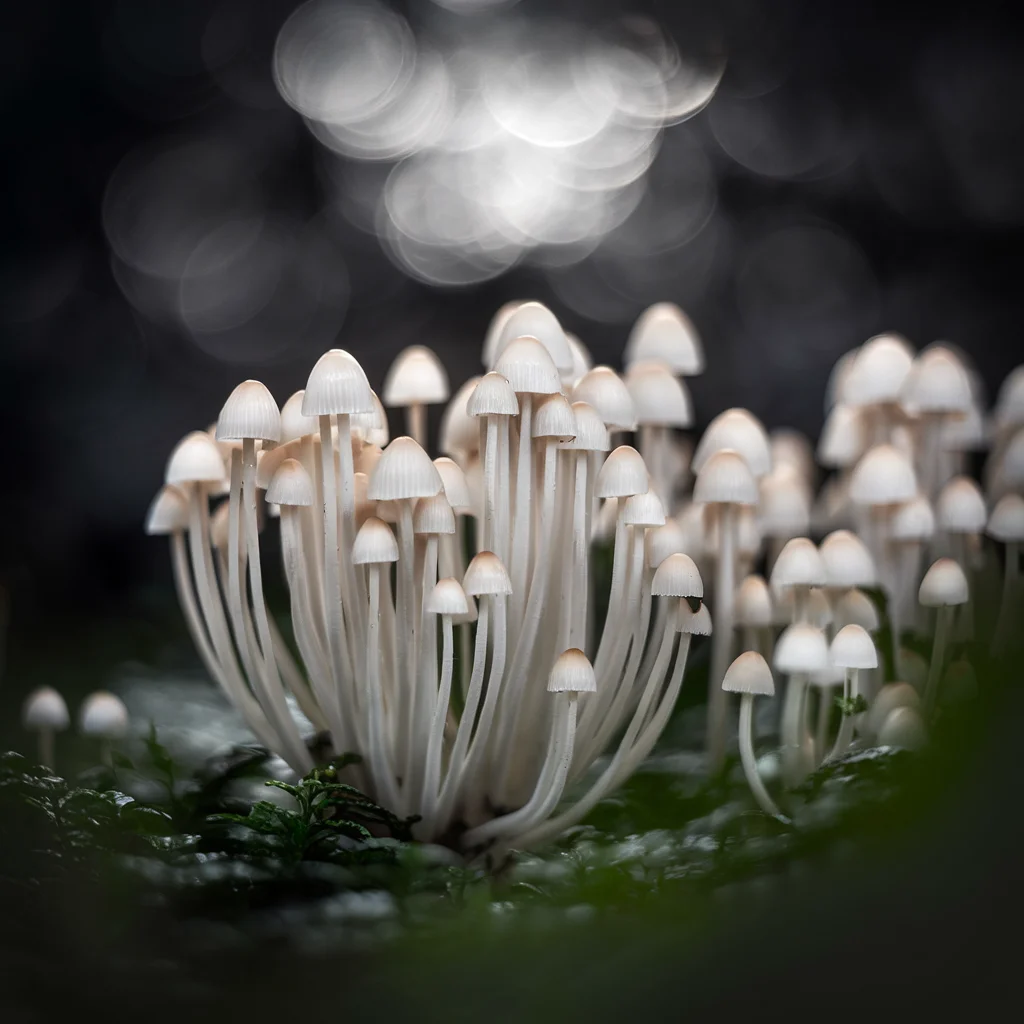
Flammulina velutipes is a basidiomycete fungus of the family Physalacriaceae, order Agaricales, commonly known as enoki, enokitake, golden needle mushroom, or winter mushroom. In its cultivated form, it presents as clusters of long, thin, white stems (5–14 cm) topped by small, convex caps (1–2 cm diameter), grown in CO2-rich environments that promote stem elongation. Wild specimens differ markedly, featuring shorter stems, larger orange-brown caps with a sticky surface, and a velvety dark stipe base. F. velutipes is notable for its cold tolerance, fruiting at temperatures as low as -10°C. Pharmacologically, it contains flammulin and proflamin — glycoproteins with demonstrated antitumor activity — along with immunomodulatory beta-glucans, ergothioneine, and various phenolic compounds with antioxidant properties.
#21
Classement de popularité
Moderate
Niveau de recherche
3
Références
4
Composés clés
Independent Research Review · Dernière révision 3 mai 2026
Enoki bénéficie d'un soutien de recherche modéré avec plusieurs études précliniques et quelques essais humains. Des recherches supplémentaires sont nécessaires pour confirmer les bienfaits.
Enoki mushrooms are those elegant, long-stemmed, tiny-capped mushrooms you have probably seen in Asian soups and hot pot dishes. The cultivated version — bright white with thin, noodle-like stems —...
Enoki est utilisé dans les systèmes de médecine traditionnelle depuis des siècles, notamment dans la Médecine Traditionnelle Chinoise (MTC) et d'autres pratiques de guérison asiatiques.
Contexte historique: L'usage traditionnel ne garantit ni l'efficacité ni la sécurité. La recherche moderne est en cours pour valider les allégations traditionnelles.
Enoki mushrooms are those elegant, long-stemmed, tiny-capped mushrooms you have probably seen in Asian soups and hot pot dishes. The cultivated version — bright white with thin, noodle-like stems — looks completely different from its wild counterpart, which has a brown, sticky cap and a velvety dark stem. Also called golden needle mushroom, winter mushroom, or enokitake in Japanese, this species is one of the most widely consumed mushrooms in East Asia and is rapidly gaining popularity in Western markets both as a food and as a supplement ingredient.
What makes enoki interesting from a health perspective is its unique compounds. Flammulin and proflamin are glycoproteins found in enoki that have shown antitumor activity in laboratory studies — research that has generated significant interest in the scientific community. Enoki also contains beta-glucans for immune support, ergothioneine (a potent antioxidant), and various B vitamins. Epidemiological studies from Japan have noted that regions with high enoki consumption tend to have lower cancer mortality rates, though more research is needed to establish causation.
In traditional medicine, enoki has been used in China and Japan for centuries. Chinese practitioners have used it to support digestive health, reduce inflammation, and boost vitality. In Japan, it is considered a health food and is consumed regularly as part of a balanced diet. The mushroom's ability to fruit in cold temperatures — even below freezing — earned it the name "winter mushroom" and made it a valuable food source during colder months.
Enoki supplements are available in capsule form, with The Shroom Shop (UK) offering dedicated enoki capsules, and the extract appears in several multi-mushroom blend formulas. Typical supplement dosages range from 500 mg to 1,500 mg per day. The mushroom is also widely available fresh in grocery stores, where it can be added to soups, salads, stir-fries, and ramen. Fresh enoki should be stored in the refrigerator and used within a week.
When choosing enoki supplements, look for products that specify the extraction method and beta-glucan content. Hot water extraction is the most common method for pulling out the beneficial polysaccharides. As with all mushroom supplements, fruiting body extracts are generally preferred over mycelium-on-grain products. Third-party testing and clear labeling are important quality markers.
Enoki pairs well with other immune-supporting mushrooms like turkey tail and maitake, and can be part of a comprehensive mushroom supplement stack. For culinary enthusiasts, enoki is one of the most versatile cooking mushrooms — it can be eaten raw in salads, added to soups at the last minute for a delicate crunch, wrapped in bacon and grilled, or used as a crispy topping when lightly fried. Its mild, slightly fruity flavor makes it accessible even to people who don't typically enjoy mushrooms.
Meilleurs produits contenant des extraits vérifiés de Flammulina velutipes extraits.


Ces informations sont à titre éducatif uniquement et ne doivent pas remplacer un avis médical professionnel. Consultez toujours un professionnel de santé qualifié.
Independent Research Review
Independent editorial team reviewing product labels, COAs, regulator records, and cited scientific literature. our editorial team reviews all mushroom encyclopedia entries for scientific accuracy, ensuring claims are supported by peer-reviewed research.
Last reviewed: 3 mai 2026
Click anywhere or press Escape to close