$24.99 $0.42/serving
View Profile You must be at least 21 years old to enter this site.
This is a legal, non-psychoactive functional mushroom guide. Talk with your clinician first if you take blood thinners, diabetes medications, immune-modulating drugs, or are in cancer treatment.
Best supplement form
Compare products that match the form most often recommended for Enoki.
Evidence summary
3 cited references reviewed for the Enoki guide.
For healthy aging
See how Enoki compares with Reishi, Chaga, and Turkey Tail for older adults.
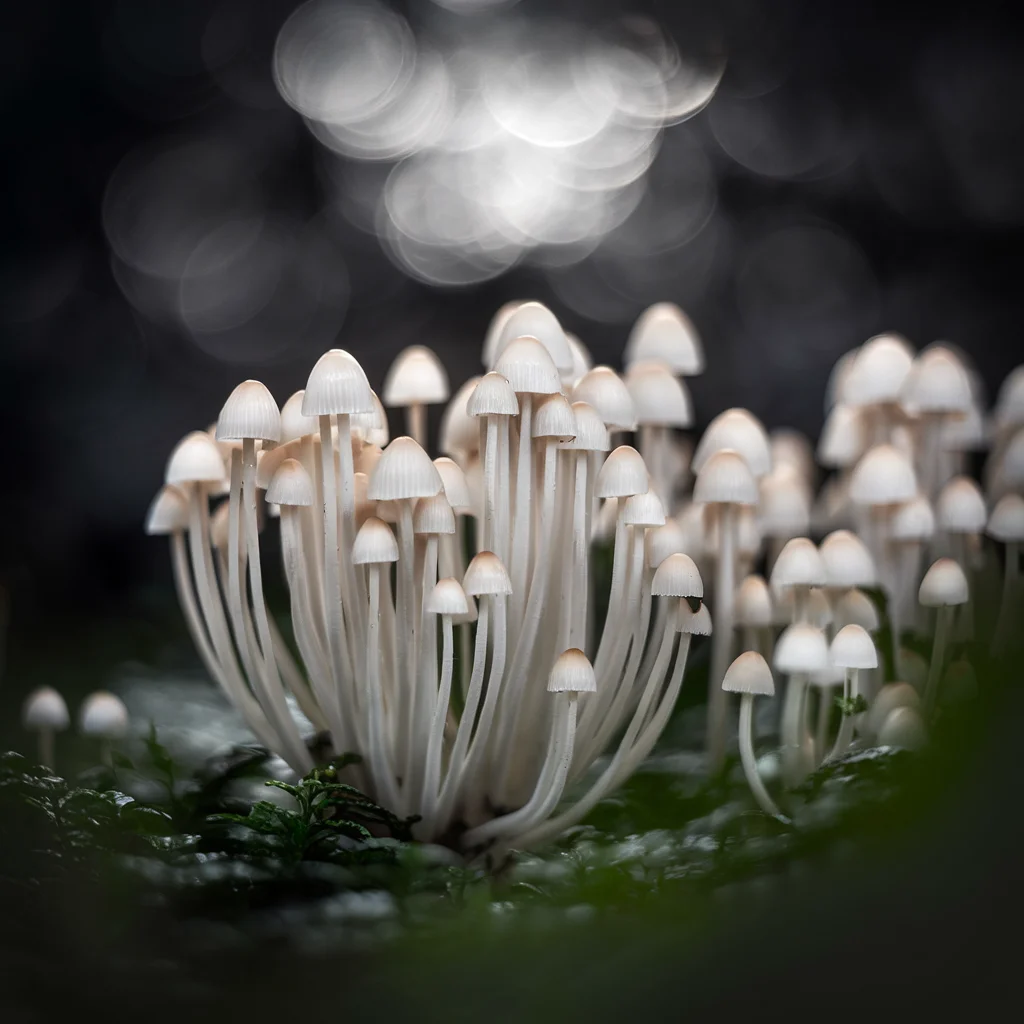
Flammulina velutipes is a basidiomycete fungus of the family Physalacriaceae, order Agaricales, commonly known as enoki, enokitake, golden needle mushroom, or winter mushroom. In its cultivated form, it presents as clusters of long, thin, white stems (5–14 cm) topped by small, convex caps (1–2 cm diameter), grown in CO2-rich environments that promote stem elongation. Wild specimens differ markedly, featuring shorter stems, larger orange-brown caps with a sticky surface, and a velvety dark stipe base. F. velutipes is notable for its cold tolerance, fruiting at temperatures as low as -10°C. Pharmacologically, it contains flammulin and proflamin — glycoproteins with demonstrated antitumor activity — along with immunomodulatory beta-glucans, ergothioneine, and various phenolic compounds with antioxidant properties.
#21
Popularity Rank
Moderate
Research Level
3
References
4
Key Compounds
Independent Research Review · Last Reviewed May 3, 2026
Enoki (Flammulina velutipes) is a functional mushroom with a moderate level of scientific research supporting its use. Its primary bioactive compounds - Flammulin, Proflamin, Beta-Glucans, and 1 others - have been studied for benefits including immune support, antioxidant protection, digestive health, anti-inflammatory. Several preclinical studies and initial human trials support these uses, though additional clinical research is ongoing. Enoki is ranked #21 in popularity among functional mushroom species, with 3 cited research references in our database. The most commonly recommended form is cooked whole enoki or tested flammulina velutipes extract. Typical supplemental dosages range from 500 mg to 3,000 mg per day depending on extract concentration and intended use.
Buyer decision guide
Use this section to compare evidence strength, active compounds, researched forms, and safety limits for enoki.
Enoki mushrooms (Flammulina velutipes) show preclinical evidence for antioxidant effects from polysaccharides and ergothioneine, immune modulation via FVE protein and beta-glucans in mouse studies, and potential cardiovascular benefits from hypolipidemic activity. One human trial found enoki extract improved male menopausal symptoms and testosterone levels. Anticancer and brain function effects limited to animal and test-tube research. No strong human clinical evidence for health claims.
Key compounds include flammulin, proflamin (ribosome-inactivating proteins), beta-glucans (immune-modulating polysaccharides), and ergothioneine (antioxidant). FVE protein shows anticancer activity in mice. Adenosine in extracts linked to testosterone increase in human and animal studies. Phenols, polysaccharides support antioxidant and neuroprotective effects in preclinical models per Healthline and PMC sources.
Extracts, particularly ethanolic or those high in adenosine, demonstrate benefits in one human RCT for male menopause symptoms and testosterone. Culinary forms provide antioxidants and nutrients but lack clinical outcome data. Preclinical studies favor extracts for immune, anticancer, and hypolipidemic effects. Fresh enoki used traditionally; no superiority proven for supplements vs food.
Enoki has no known toxic effects; hypolipidemic studies confirm safety. Listeria outbreaks linked to contaminated imported enoki. Cook thoroughly to mitigate risks. One human trial reported no adverse events with extract. Avoid raw consumption; safe in food amounts per WebMD, Healthline. Consult physician if on medications due to potential immune-modulating interactions.
Enoki has moderate research support with several preclinical studies and some human trials. More research is needed to confirm benefits.
Enoki mushrooms are those elegant, long-stemmed, tiny-capped mushrooms you have probably seen in Asian soups and hot pot dishes. The cultivated version — bright white with thin, noodle-like stems —...
Enoki has been used in traditional medicine systems for centuries, particularly in Traditional Chinese Medicine (TCM) and other Asian healing practices.
Historical Context: Traditional use does not guarantee efficacy or safety. Modern research is ongoing to validate traditional claims.
Enoki mushrooms are those elegant, long-stemmed, tiny-capped mushrooms you have probably seen in Asian soups and hot pot dishes. The cultivated version — bright white with thin, noodle-like stems — looks completely different from its wild counterpart, which has a brown, sticky cap and a velvety dark stem. Also called golden needle mushroom, winter mushroom, or enokitake in Japanese, this species is one of the most widely consumed mushrooms in East Asia and is rapidly gaining popularity in Western markets both as a food and as a supplement ingredient.
What makes enoki interesting from a health perspective is its unique compounds. Flammulin and proflamin are glycoproteins found in enoki that have shown antitumor activity in laboratory studies — research that has generated significant interest in the scientific community. Enoki also contains beta-glucans for immune support, ergothioneine (a potent antioxidant), and various B vitamins. Epidemiological studies from Japan have noted that regions with high enoki consumption tend to have lower cancer mortality rates, though more research is needed to establish causation.
In traditional medicine, enoki has been used in China and Japan for centuries. Chinese practitioners have used it to support digestive health, reduce inflammation, and boost vitality. In Japan, it is considered a health food and is consumed regularly as part of a balanced diet. The mushroom's ability to fruit in cold temperatures — even below freezing — earned it the name "winter mushroom" and made it a valuable food source during colder months.
Enoki supplements are available in capsule form, with The Shroom Shop (UK) offering dedicated enoki capsules, and the extract appears in several multi-mushroom blend formulas. Typical supplement dosages range from 500 mg to 1,500 mg per day. The mushroom is also widely available fresh in grocery stores, where it can be added to soups, salads, stir-fries, and ramen. Fresh enoki should be stored in the refrigerator and used within a week.
When choosing enoki supplements, look for products that specify the extraction method and beta-glucan content. Hot water extraction is the most common method for pulling out the beneficial polysaccharides. As with all mushroom supplements, fruiting body extracts are generally preferred over mycelium-on-grain products. Third-party testing and clear labeling are important quality markers.
Enoki pairs well with other immune-supporting mushrooms like turkey tail and maitake, and can be part of a comprehensive mushroom supplement stack. For culinary enthusiasts, enoki is one of the most versatile cooking mushrooms — it can be eaten raw in salads, added to soups at the last minute for a delicate crunch, wrapped in bacon and grilled, or used as a crispy topping when lightly fried. Its mild, slightly fruity flavor makes it accessible even to people who don't typically enjoy mushrooms.
Products containing Flammulina velutipes extracts, with emphasis on verification, format, and practical daily use.


Personalized dosage recommendations based on your experience level, body weight, and goals.
Independent Research Review
The editorial team reviews mushroom encyclopedia entries for sourcing, clarity, safety caveats, and citation support.
Last reviewed: May 3, 2026
Click anywhere or press Escape to close