
Best Visuals

$17.50
View Review
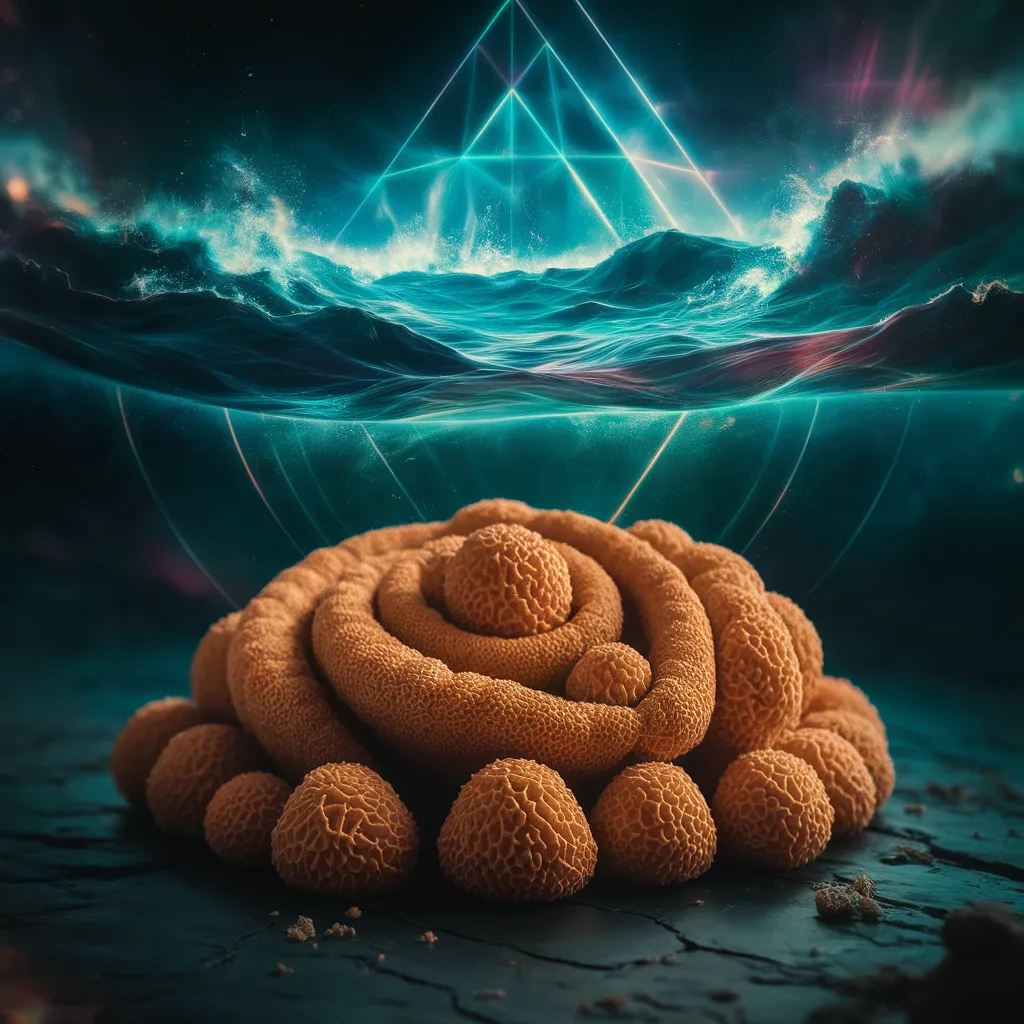
Psilocybe atlantis

Board-Certified Physician · Medical Reviewer · Last Reviewed February 21, 2026
Latin Name
Psilocybe atlantis
Research Level
Emerging
Popularity
#17 Ranked
Cited Studies
3 References
Psilocybe atlantis is a psilocybin-containing basidiomycete fungus first formally described from Fulton County, Georgia, USA, closely related to Psilocybe mexicana and sharing its capacity to produce sclerotia (magic truffles). Chemical analyses indicate that P. atlantis sclerotia contain psilocybin concentrations approximately 30–50% higher than Psilocybe tampanensis, placing it in the medium-to-strong potency bracket among commercially available Dutch truffle varieties. Morphologically, the fruiting bodies are small, with conical to bell-shaped honey-brown caps showing pronounced hygrophanous coloration. The sclerotia are marketed commercially in the Netherlands, where they are legally cultivated and sold under the Dutch policy framework distinguishing truffles from prohibited dried mushrooms. Users characteristically report more pronounced visual effects compared to milder varieties like Tampanensis or Mexicana, with strong euphoria, enhanced pattern recognition, and creative cognitive enhancement at standard doses.
Atlantis sits squarely in the middle of the psilocybin truffle spectrum — stronger than Tampanensis or Mexicana, not as intense as Hollandia. It's the variety that people often describe as "exactly right" — enough visual richness and euphoria to feel genuinely transformative, while remaining clear-headed enough that you don't lose the thread of who you are or where you are. The name captures something real: Atlantis takes you somewhere, but you come back.
The visual character of Atlantis is its defining quality. Colors saturate. Surfaces breathe and pulse gently. Patterns appear at the edges of your vision and in the geometry of ordinary objects — wood grain, fabric textures, the shadows of leaves. At standard doses (10–12 grams fresh), most people don't experience full-blown hallucinations but rather a heightened perceptual sensitivity where everything looks more vivid, more alive, more worthy of attention. Music becomes dimensional. Conversations feel profound. Your own thoughts feel like discoveries rather than the usual background chatter.
Atlantis was first described scientifically from Fulton County, Georgia — a surprising origin for a species that's become a staple of the Dutch smartshop circuit. Like Tampanensis and Mexicana, it belongs to the P. mexicana species complex: a group of closely related fungi scattered across North and Central America that share the unusual ability to produce both fruiting bodies and underground sclerotia (the truffles). In nature, these sclerotia serve as survival structures — dense reserves of nutrients that allow the fungus to weather dry or cold periods. In Dutch smartshops, they're precisely what makes commercial cultivation viable.
The potency step-up from Tampanensis is real but not dramatic — roughly equivalent to the difference between a glass of wine and two glasses. Most people find Atlantis very manageable even if it's their first time with truffles, provided they respect the dose. Ten grams is a good starting point; fifteen grams is where the experience deepens significantly; twenty grams is for people who know what they're doing and want to go deep.
Atlantis has a particular affinity with creative work. Many artists, musicians, and writers specifically seek it out for the way it loosens habitual thinking patterns and opens up associative leaps that feel genuinely novel. The euphoria isn't giddy or silly (that's more Mexicana's territory) — it's warm and curious, the feeling of being interested in everything. If you've ever wondered what it would feel like to look at the world with fresh eyes, Atlantis gives you a pretty good preview.
Practically speaking: eat the truffles on an empty stomach for the strongest, cleanest onset. Chewing them thoroughly or making a tea will speed up the come-up. The experience runs roughly 4–6 hours. Set aside the evening, have water and fruit available, and if possible, have a trusted person nearby who knows what you're doing. Nausea in the first hour is common with all truffle varieties — ginger tea beforehand helps significantly. The afterglow — the calm, gently optimistic feeling that follows — typically lasts another 12–24 hours and is, for many people, the best part of the whole experience.
Verified supplements featuring Atlantis — ranked by quality and value


Based on available research evidence
Based on available research evidence
Based on available research evidence
Based on available research evidence
Based on available research evidence
⚠️ Important: These statements have not been evaluated by the FDA. Functional mushrooms are not intended to diagnose, treat, cure, or prevent any disease. Consult with a healthcare provider before starting any new supplement.
The primary psychoactive prodrug in magic mushrooms. Converted to psilocin in the body, it activates serotonin 5-HT2A receptors, producing altered perception and consciousness. Breakthrough therapy designation from FDA for treatment-resistant depression.
The pharmacologically active metabolite of psilocybin. Directly binds serotonin receptors to produce psychedelic effects including visual changes, emotional openness, and neuroplasticity.
A psilocybin analog found in magic mushrooms. Thought to modulate the psychedelic experience, potentially contributing to the "entourage effect" of whole mushroom preparations.
A demethylated analog of psilocybin. Its pharmacological role is still being studied, but it may contribute to the overall psychoactive profile of psilocybin mushrooms.
Atlantis has been used in traditional medicine systems for centuries, particularly in Traditional Chinese Medicine (TCM) and other Asian healing practices.
📖 Historical Context: Traditional use does not guarantee efficacy or safety. Modern research is ongoing to validate traditional claims and understand mechanisms of action.
Atlantis is an emerging area of research with growing scientific interest. Early studies show promise but more research is needed.
Research Areas: Studies have focused on vivid visuals, creative enhancement, euphoria, and other potential applications. Results are promising but more high-quality human trials are needed.
The following studies have been reviewed and cited by our medical team to support the claims on this page.
Guzmán, G. (1983). The Genus Psilocybe. Nova Hedwigia, Beiheft 74. J. Cramer, Vaduz.
The definitive taxonomic monograph on the Psilocybe genus, providing morphological descriptions and distribution data for all known species including P. atlantis and its relationship to the P. mexicana complex.
Passie, T., Seifert, J., Schneider, U., & Emrich, H. M. (2002). The pharmacology of psilocybin. Addiction Biology, 7(4), 357-364.
Comprehensive pharmacological review of psilocybin and psilocin, documenting dose-response relationships and the serotonergic mechanism underlying visual and perceptual effects relevant to all psilocybin-containing species.
Carhart-Harris, R., et al. (2021). Trial of psilocybin versus escitalopram for depression. New England Journal of Medicine, 384(15), 1402-1411.
This landmark randomized trial found psilocybin non-inferior to escitalopram for depression treatment, with secondary analyses suggesting superior effects on emotional well-being and connection, effects consistent with the experiential profile of Atlantis users.
📋 Methodology: References are sourced from PubMed, major mycology journals, and peer-reviewed medical literature. Each entry is reviewed by Dr. Igor I. Bussel, M.D. for accuracy and clinical relevance.
Board-Certified Physician · Medical Reviewer
Board-certified physician affiliated with UC Irvine, the Gavin Herbert Eye Institute, and the UCI School of Medicine. Dr. Bussel reviews all mushroom encyclopedia entries for scientific accuracy, ensuring claims are supported by peer-reviewed research.
Last reviewed: February 21, 2026
Discover more functional mushroom species
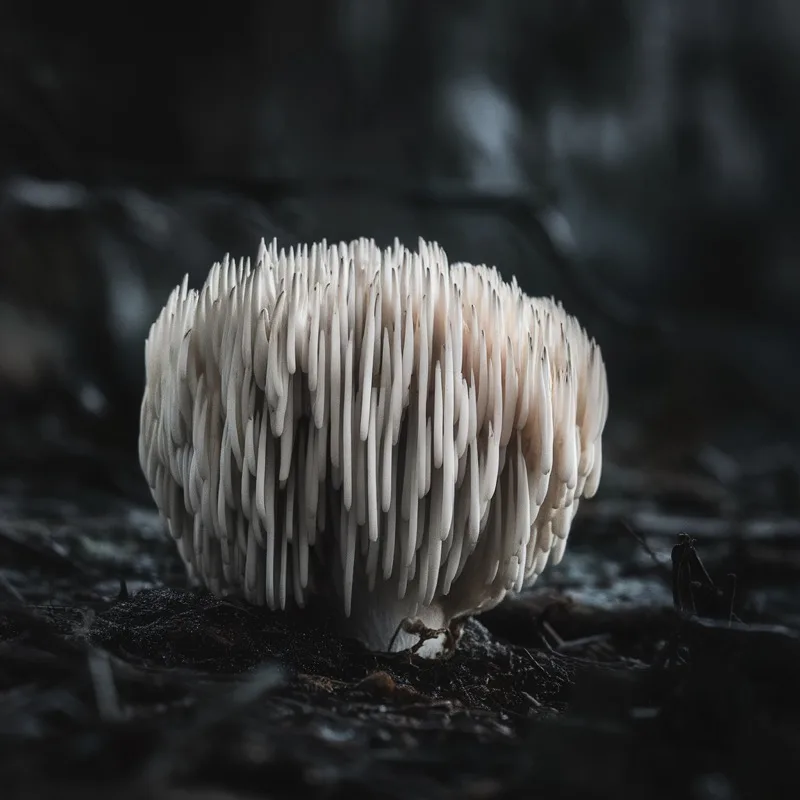
Hericium erinaceus
Hericium erinaceus is a saprotrophic fungus of the family Hericiaceae, commonly found on dead or wounded hardwood trees in North America, Europe, and Asia. Its morphology is characterized by a large, irregular, bulbous fruiting body with long, dangling spines, lacking a distinct cap or stipe. Key pharmacological properties are attributed to its unique bioactive compounds, including hericenones and erinacines, which have demonstrated neuroprotective and neurotrophic effects by stimulating nerve growth factor (NGF) synthesis in preclinical and clinical studies.
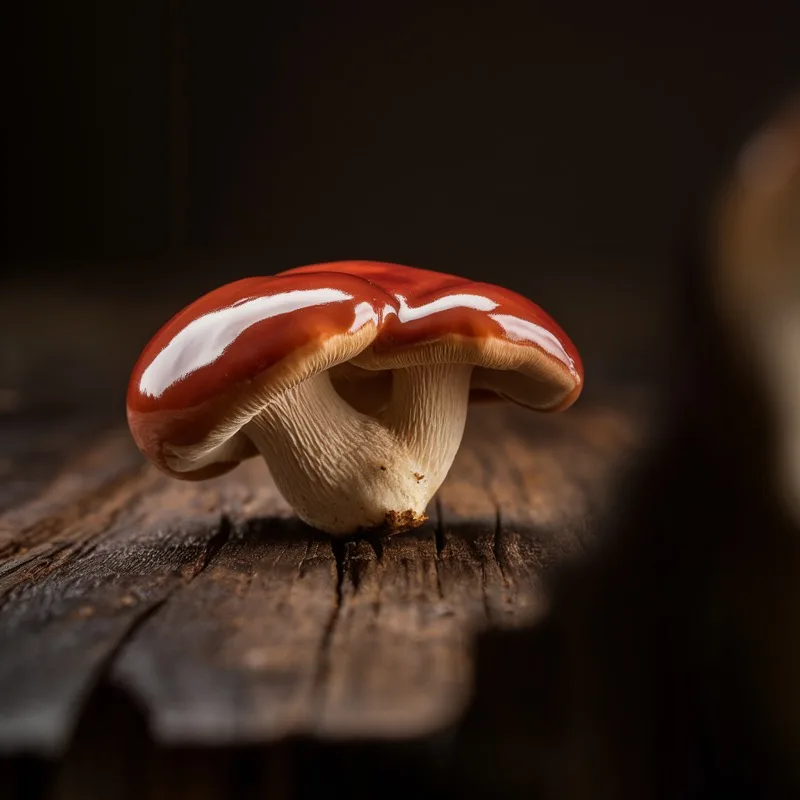
Ganoderma lucidum
Ganoderma lucidum is a polypore basidiomycetous fungus belonging to the family Ganodermataceae, characterized by its laccate cap surface and double-walled basidiospores. This large, woody mushroom thrives in hot and humid subtropical climates, growing on decaying hardwood, and is identified by its distinct red-varnished, fan-like or kidney-shaped cap. Its key pharmacological properties include immunomodulation, hepatoprotection, and adaptogenic effects, primarily mediated by its rich content of polysaccharides and over 130 identified triterpenoid compounds.
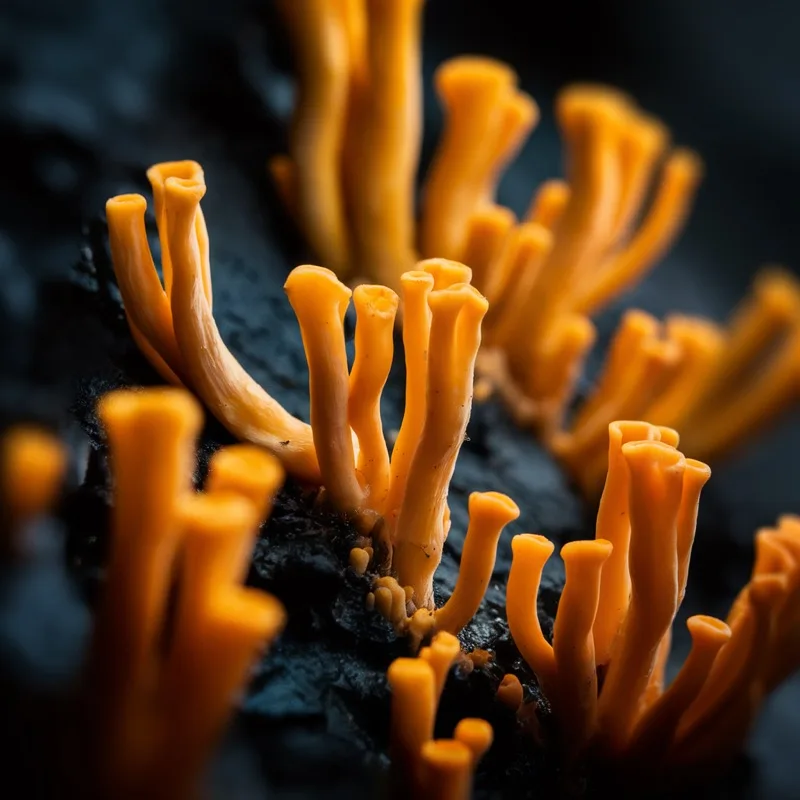
Cordyceps militaris
Cordyceps militaris is a parasitic ascomycete fungus belonging to the phylum Ascomycota, which primarily grows on the pupae of insects in the Northern Hemisphere. It is characterized by its bright orange-red, club-shaped fruiting body that emerges from the deceased host. This fungus is a source of several bioactive compounds, most notably cordycepin (3'-deoxyadenosine) and adenosine, which are nucleoside analogs with demonstrated effects on cellular energy metabolism, oxygen utilization, and anti-inflammatory pathways.
Click anywhere or press Escape to close