
Blue Meanies
Panaeolus cyanescens

Board-Certified Physician · Medical Reviewer · Last Reviewed February 25, 2026
Latin Name
Panaeolus cyanescens
Research Level
Moderate
Popularity
#33 Ranked
Cited Studies
3 References
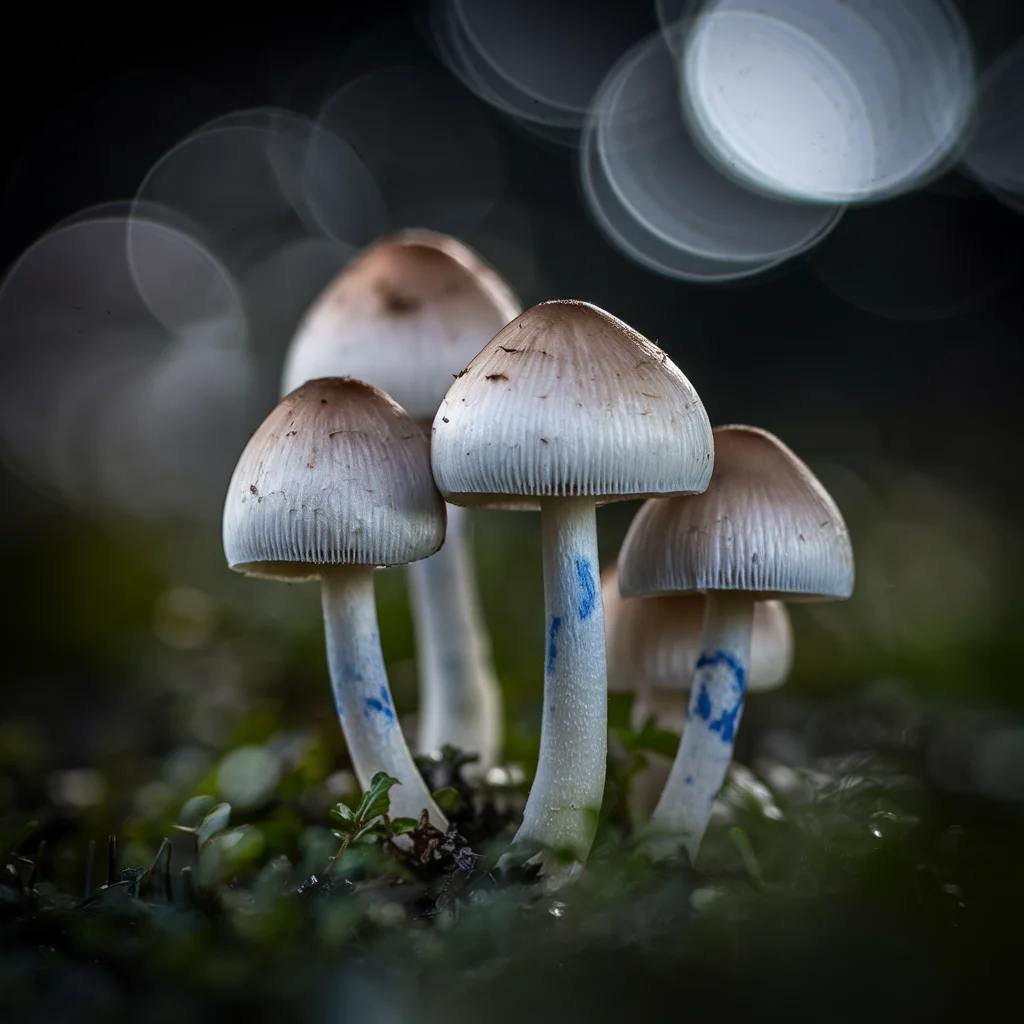
Panaeolus cyanescens (syn. Copelandia cyanescens) is a potent psilocybin-producing basidiomycete of the family Bolbitiaceae, order Agaricales, widely distributed across tropical and subtropical regions worldwide. It is characterized by a small to medium pileus (1.5–4 cm), initially hemispheric becoming broadly convex, light brown to greyish-white, with a thin, fragile stipe (7–12 cm) that bruises intensely blue. Unlike most Psilocybe species, P. cyanescens is coprophilous, fruiting on cattle and horse dung in warm, humid grasslands. It is significantly more potent than Psilocybe cubensis, with psilocybin and psilocin concentrations approximately 2–3 times higher by dry weight. Importantly, P. cyanescens should not be confused with the Psilocybe cubensis strain marketed as 'Blue Meanie' — they are entirely different species in different genera, a distinction critical for harm reduction and accurate dosing.
Blue Meanies — Panaeolus cyanescens — are a potent tropical psilocybin mushroom that grows on cattle and horse dung in warm, humid grasslands across the tropics and subtropics. They are found naturally in Hawaii, Southeast Asia, Central and South America, Australia, and parts of Africa, making them one of the most widely distributed psilocybin species on Earth. The name "Blue Meanies" refers to the intense blue bruising that occurs when the mushroom's flesh is damaged — a visual indicator of psilocybin oxidation.
A critical point of confusion must be addressed: Panaeolus cyanescens (the true Blue Meanies) is a completely different organism from the Psilocybe cubensis strain also marketed as "Blue Meanie." They belong to different genera, have different potencies, different habitats, and different appearances. True Blue Meanies (Panaeolus) are significantly more potent than any P. cubensis strain — roughly 2–3 times stronger by dry weight. Confusing the two can lead to serious dosing errors, making this distinction essential for harm reduction.
The experience produced by true Blue Meanies is described as euphoric, highly visual, and energetic compared to the often more introspective quality of P. cubensis. Users report vivid color enhancement, geometric patterns, a sense of lightness and joy, and enhanced appreciation for music and nature. The higher potency means that effects come on faster and can be more intense than expected for those accustomed to cubensis dosing. A moderate dose is typically 1–2 grams dried, compared to 2–3.5 grams for cubensis.
Blue Meanies have a long history of traditional use in tropical cultures. In Thailand, they grow abundantly on buffalo dung and have been consumed in the islands of Koh Samui and Koh Pha-Ngan for generations, both by local communities and by travelers. In Hawaii, they fruit year-round in cattle pastures and have been part of the local psychedelic culture for decades. In Bali and other parts of Southeast Asia, they are the primary wild psilocybin species encountered.
Identification of Panaeolus cyanescens requires attention to several key features: a light brown to greyish-white cap that does not typically have the golden-brown coloring of cubensis; a thin, fragile stem that bruises blue; dark black spore print (not purple-brown like Psilocybe); and growth directly on dung in tropical/subtropical grasslands. The black spore print is a critical distinguishing feature from Psilocybe species.
Blue Meanies are widely cultivated by hobbyist mycologists in jurisdictions where this is legal, as they grow readily on pasteurized dung-based substrates. They are not sold commercially as a finished product in most markets. For those in legal jurisdictions: respect the higher potency, start with a lower dose than you would with cubensis, and follow standard harm reduction practices — comfortable setting, trusted companion, clear schedule, and no mixing with other substances.
Potential Benefits
Based on available research evidence
Based on available research evidence
Based on available research evidence
Based on available research evidence
Based on available research evidence
⚠️ Important: These statements have not been evaluated by the FDA. Functional mushrooms are not intended to diagnose, treat, cure, or prevent any disease. Consult with a healthcare provider before starting any new supplement.
Key Compounds
Psilocybin
The primary psychoactive prodrug in magic mushrooms. Converted to psilocin in the body, it activates serotonin 5-HT2A receptors, producing altered perception and consciousness. Breakthrough therapy designation from FDA for treatment-resistant depression.
Psilocin
The pharmacologically active metabolite of psilocybin. Directly binds serotonin receptors to produce psychedelic effects including visual changes, emotional openness, and neuroplasticity.
Baeocystin
A psilocybin analog found in magic mushrooms. Thought to modulate the psychedelic experience, potentially contributing to the "entourage effect" of whole mushroom preparations.
Serotonin
Bioactive compound with potential health benefits. Consult scientific literature for detailed information.
Traditional Use
Blue Meanies has been used in traditional medicine systems for centuries, particularly in Traditional Chinese Medicine (TCM) and other Asian healing practices.
📖 Historical Context: Traditional use does not guarantee efficacy or safety. Modern research is ongoing to validate traditional claims and understand mechanisms of action.
Scientific Research
Blue Meanies has moderate research support with several preclinical studies and some human trials. More research is needed to confirm benefits.
Research Areas: Studies have focused on potent psilocybin source, visual enhancement, mood elevation, and other potential applications. Results are promising but more high-quality human trials are needed.
Peer-Reviewed References
The following studies have been reviewed and cited by our medical team to support the claims on this page.
Stijve, T. (1992). Psilocin, psilocybin, serotonin and urea in Panaeolus cyanescens from various origin. Persoonia, 15(1), 117-121.
This analytical study quantified the psilocybin, psilocin, and serotonin content of P. cyanescens specimens from multiple geographic origins, confirming its high potency and documenting the presence of serotonin as an additional neuroactive compound.
Allen, J. W., & Merlin, M. D. (1992). Psychoactive mushroom use in Koh Samui and Koh Pha-Ngan, Thailand. Journal of Ethnopharmacology, 35(3), 205-228.
This ethnographic study documented the traditional and contemporary use of P. cyanescens in Thai island communities, providing cultural context for one of the most widely encountered tropical psilocybin species and its role in local tourism and traditional practices.
Guzmán, G., Allen, J. W., & Gartz, J. (1998). A worldwide geographical distribution of the neurotropic fungi, an analysis and discussion. Annali del Museo Civico di Rovereto, 14, 189-280.
This comprehensive biogeographic analysis documented the global distribution of P. cyanescens across tropical and subtropical regions, establishing it as one of the most widely distributed psilocybin species and an important species for understanding the global ecology of psychoactive fungi.
📋 Methodology: References are sourced from PubMed, major mycology journals, and peer-reviewed medical literature. Each entry is reviewed by Dr. Igor I. Bussel, M.D. for accuracy and clinical relevance.
Medical Reviewer
Board-Certified Physician · Medical Reviewer
Board-certified physician affiliated with UC Irvine, the Gavin Herbert Eye Institute, and the UCI School of Medicine. Dr. Bussel reviews all mushroom encyclopedia entries for scientific accuracy, ensuring claims are supported by peer-reviewed research.
Last reviewed: February 25, 2026
Quick Facts
- Common Name
- Blue Meanies
- Scientific Name
- Panaeolus cyanescens
- Research Level
- Moderate
- Reviewed By
- Primary Benefits
- Potent Psilocybin Source Visual Enhancement Mood Elevation Creative Thinking Euphoria
- Key Compounds
- Psilocybin Psilocin Baeocystin Serotonin
- Cited References
- 3 peer-reviewed studies
Explore Other Mushrooms
Discover more functional mushroom species
Lion's Mane
Hericium erinaceus
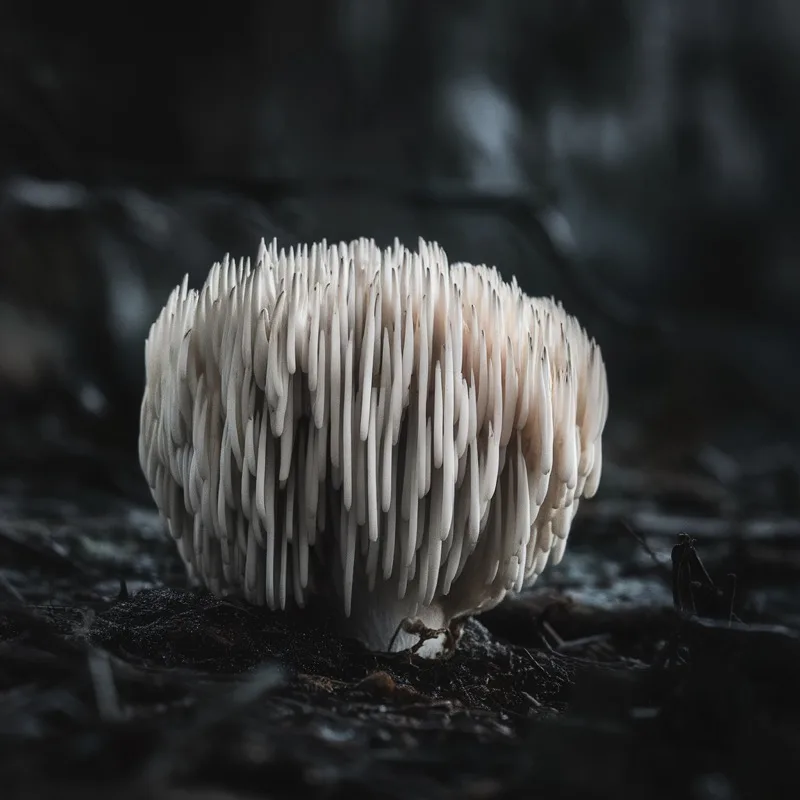
Hericium erinaceus is a saprotrophic fungus of the family Hericiaceae, commonly found on dead or wounded hardwood trees in North America, Europe, and Asia. Its morphology is characterized by a large, irregular, bulbous fruiting body with long, dangling spines, lacking a distinct cap or stipe. Key pharmacological properties are attributed to its unique bioactive compounds, including hericenones and erinacines, which have demonstrated neuroprotective and neurotrophic effects by stimulating nerve growth factor (NGF) synthesis in preclinical and clinical studies.
Reishi
Ganoderma lucidum
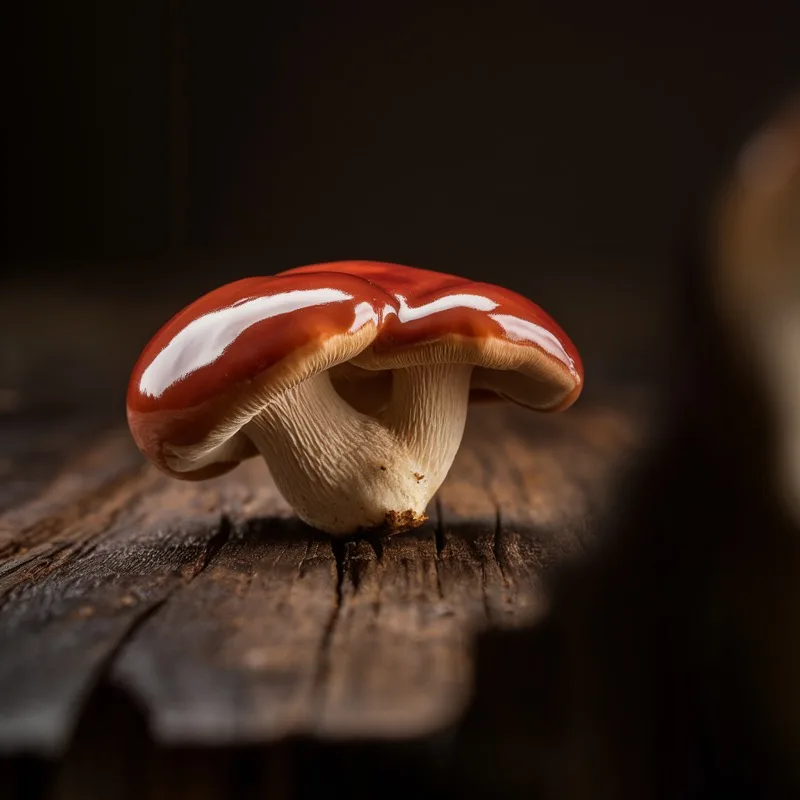
Ganoderma lucidum is a polypore basidiomycetous fungus belonging to the family Ganodermataceae, characterized by its laccate cap surface and double-walled basidiospores. This large, woody mushroom thrives in hot and humid subtropical climates, growing on decaying hardwood, and is identified by its distinct red-varnished, fan-like or kidney-shaped cap. Its key pharmacological properties include immunomodulation, hepatoprotection, and adaptogenic effects, primarily mediated by its rich content of polysaccharides and over 130 identified triterpenoid compounds.
Cordyceps
Cordyceps militaris
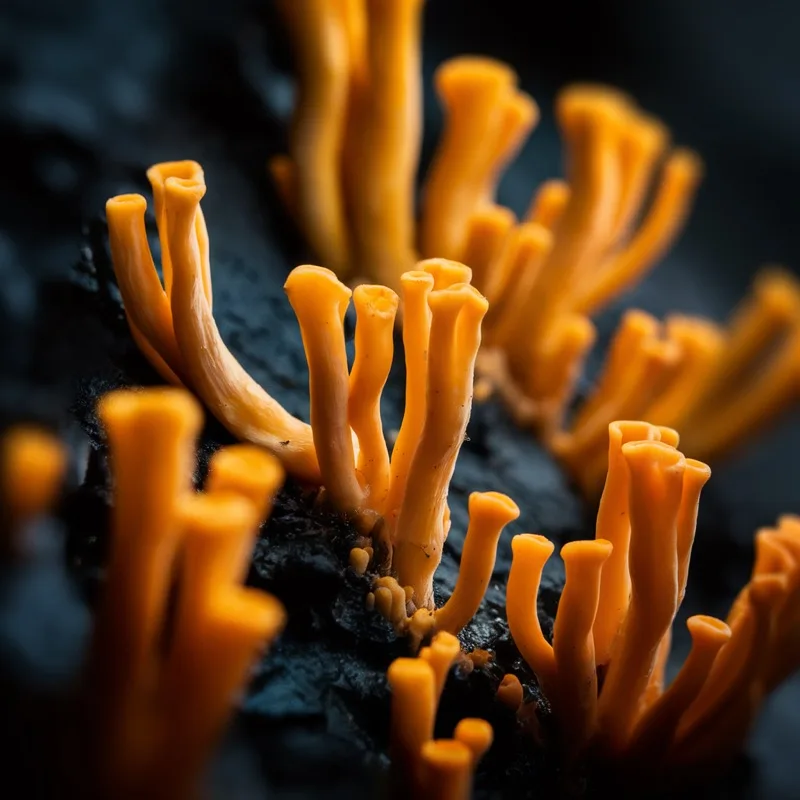
Cordyceps militaris is a parasitic ascomycete fungus belonging to the phylum Ascomycota, which primarily grows on the pupae of insects in the Northern Hemisphere. It is characterized by its bright orange-red, club-shaped fruiting body that emerges from the deceased host. This fungus is a source of several bioactive compounds, most notably cordycepin (3'-deoxyadenosine) and adenosine, which are nucleoside analogs with demonstrated effects on cellular energy metabolism, oxygen utilization, and anti-inflammatory pathways.
Click anywhere or press Escape to close