
Strongest

$22.50
View Review
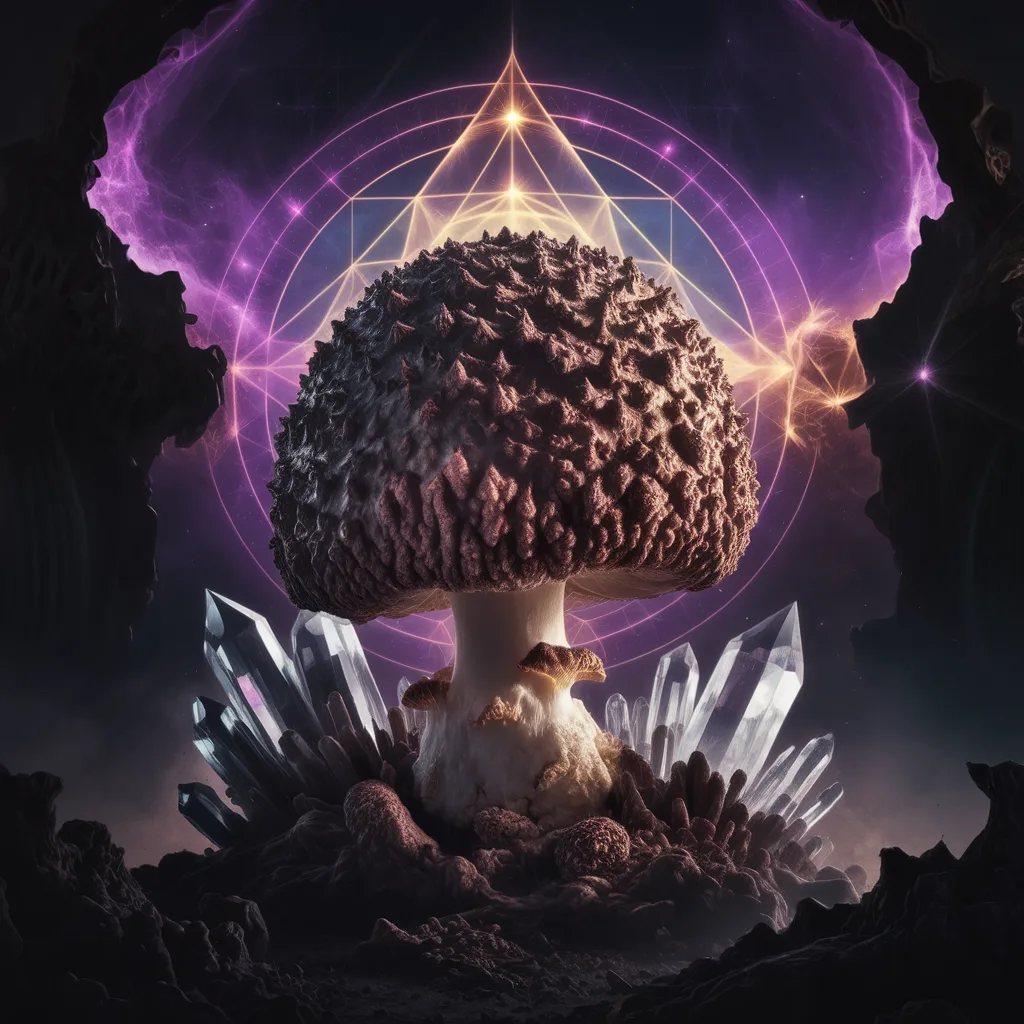
Psilocybe tampanensis (Hollandia cultivar)

Board-Certified Physician · Medical Reviewer · Last Reviewed February 21, 2026
Latin Name
Psilocybe tampanensis (Hollandia cultivar)
Research Level
Moderate
Popularity
#19 Ranked
Cited Studies
3 References
Hollandia is a commercially marketed psilocybin truffle product derived from a selectively cultivated strain of Psilocybe tampanensis, developed in the Netherlands through years of cultivation optimization to produce sclerotia with substantially elevated psilocybin content. Unlike Tampanensis, Mexicana, and Atlantis — which are distinct biological species — Hollandia is a cultivar designation used by Dutch producers to identify their highest-potency truffle product. Chemical analyses of commercially available Hollandia truffles indicate psilocybin concentrations approximately 2–3 times higher than standard Tampanensis truffles, placing them among the most potent commercially available psilocybin products in the Netherlands. The experiential profile is characterized by powerful visual phenomena, deep emotional processing, spiritual experiences including ego dissolution at full doses, and a highly psychedelic character substantially more intense than mild varieties. Hollandia is recommended only for experienced users with established familiarity with psilocybin and a carefully prepared set and setting.
Hollandia is not a separate species. It's a product name — the Dutch truffle industry's designation for its highest-potency offering, a selectively bred Psilocybe tampanensis strain that Dutch cultivators have optimized over years to produce truffles with substantially elevated psilocybin content. Think of it as the result of decades of cultivation pressure applied to an already potent species: each generation selected for denser, more chemically concentrated sclerotia, until you end up with something that tests at roughly 2–3 times the psilocybin concentration of standard Tampanensis truffles. That's Hollandia. It's Dutch engineering applied to psychedelics.
The name itself is the Latin word for Holland — a straightforward statement of origin and pride. Dutch smartshop operators developed Hollandia specifically in response to market demand from experienced users who had worked through milder varieties and wanted to go deeper. And deeper is exactly where Hollandia goes. At standard doses (15 grams, which is the typical pack size), most experienced users report that this is a genuinely challenging and profound psychedelic experience. Not "stronger Tampanensis." Something qualitatively different: more visual, more emotionally raw, more likely to produce what researchers call "mystical-type experiences" — a sense of unity, transcendence of time, sacredness, and what people often describe as the most profound thing they've ever experienced.
The visual dimension of Hollandia is significantly more developed than milder varieties. Geometric patterns appear not just at the periphery but across surfaces. Objects may take on an animated quality. The boundary between eyes-open and eyes-closed visual experience can blur. Colors are intensely saturated. At higher doses or in sensitive individuals, the visual phenomena can become fully hallucinatory. This is powerful, beautiful, and — if you're not expecting it or are in a chaotic environment — potentially frightening. Preparation is not optional with Hollandia. It's essential.
The spiritual quality that Hollandia is known for is harder to describe but consistently reported. There's an opening that occurs at higher doses that goes beyond aesthetics or mood — a sense of contact with something larger than ordinary self, a dissolution of the rigid boundary between "me" and "everything else," a perspective shift so profound that many users describe it as genuinely transformative on their life outlook. This is the category of experience that clinical researchers like Roland Griffiths at Johns Hopkins have documented in controlled settings with high-dose psilocybin: spontaneous mystical experiences that over 80% of participants rate among the most meaningful of their lives. Hollandia, taken carefully, can put you in that territory.
A word on challenging experiences: Hollandia produces them at a higher rate than mild varieties. This is not a reason to avoid it, but it is a reason to respect it. Difficult experiences with psilocybin — moments of fear, confrontation with mortality, overwhelming emotion — tend to produce the most lasting positive changes when processed well. But they require preparation, the right environment, and ideally an experienced guide or trusted friend. The research on "difficult" psychedelic experiences consistently finds they're associated with greater long-term benefit than smooth, comfortable ones — not despite their difficulty, but partly because of it.
If you're new to psilocybin: don't start with Hollandia. Work through Mexicana and Atlantis first. Understand how your nervous system responds to psilocybin, what "going deep" feels like, how to work with difficult moments rather than panic at them. Then, when you're ready — with a cleared schedule, a comfortable and familiar space, a trusted companion, no anxiety-provoking responsibilities on the horizon — Hollandia can offer something genuinely rare: a full-spectrum psychedelic experience with the potential for lasting psychological and spiritual impact. Take 15 grams, surrender to it, and remember: however intense it becomes, it will end, and you will be okay.
Verified supplements featuring Hollandia — ranked by quality and value
Based on available research evidence
Based on available research evidence
Based on available research evidence
Based on available research evidence
Based on available research evidence
⚠️ Important: These statements have not been evaluated by the FDA. Functional mushrooms are not intended to diagnose, treat, cure, or prevent any disease. Consult with a healthcare provider before starting any new supplement.
The primary psychoactive prodrug in magic mushrooms. Converted to psilocin in the body, it activates serotonin 5-HT2A receptors, producing altered perception and consciousness. Breakthrough therapy designation from FDA for treatment-resistant depression.
The pharmacologically active metabolite of psilocybin. Directly binds serotonin receptors to produce psychedelic effects including visual changes, emotional openness, and neuroplasticity.
A psilocybin analog found in magic mushrooms. Thought to modulate the psychedelic experience, potentially contributing to the "entourage effect" of whole mushroom preparations.
A demethylated analog of psilocybin. Its pharmacological role is still being studied, but it may contribute to the overall psychoactive profile of psilocybin mushrooms.
Hollandia has been used in traditional medicine systems for centuries, particularly in Traditional Chinese Medicine (TCM) and other Asian healing practices.
📖 Historical Context: Traditional use does not guarantee efficacy or safety. Modern research is ongoing to validate traditional claims and understand mechanisms of action.
Hollandia has moderate research support with several preclinical studies and some human trials. More research is needed to confirm benefits.
Research Areas: Studies have focused on intense visuals, spiritual experience, deep introspection, and other potential applications. Results are promising but more high-quality human trials are needed.
The following studies have been reviewed and cited by our medical team to support the claims on this page.
Carbonaro, T. M., & Gatch, M. B. (2016). Neuropharmacology of N,N-dimethyltryptamine. Brain Research Bulletin, 126, 74-88.
Review of the neuropharmacological mechanisms underlying intense psychedelic experiences, including the role of 5-HT2A receptor activation density in producing ego dissolution and mystical-type experiences — effects consistent with high-dose Hollandia consumption.
Barrett, F. S., Bradstreet, M. P., Leoutsakos, J. S., Johnson, M. W., & Griffiths, R. R. (2016). The Challenging Experience Questionnaire: Characterization of challenging experiences with psilocybin mushrooms. Journal of Psychopharmacology, 30(12), 1279-1295.
This study characterized difficult experiences with psilocybin, finding that challenging elements (fear, grief, death) paradoxically correlated with greater long-term positive outcomes — relevant for preparing users for the intensity of high-potency truffle varieties like Hollandia.
Griffiths, R. R., Richards, W. A., McCann, U., & Jesse, R. (2006). Psilocybin can occasion mystical-type experiences having substantial and sustained personal meaning and spiritual significance. Psychopharmacology, 187(3), 268-283.
This seminal double-blind study demonstrated that high-dose psilocybin reliably occasions mystical-type experiences rated among the most personally meaningful of participants' lives — the category of experience most associated with Hollandia at full doses.
📋 Methodology: References are sourced from PubMed, major mycology journals, and peer-reviewed medical literature. Each entry is reviewed by Dr. Igor I. Bussel, M.D. for accuracy and clinical relevance.
Board-Certified Physician · Medical Reviewer
Board-certified physician affiliated with UC Irvine, the Gavin Herbert Eye Institute, and the UCI School of Medicine. Dr. Bussel reviews all mushroom encyclopedia entries for scientific accuracy, ensuring claims are supported by peer-reviewed research.
Last reviewed: February 21, 2026
Discover more functional mushroom species
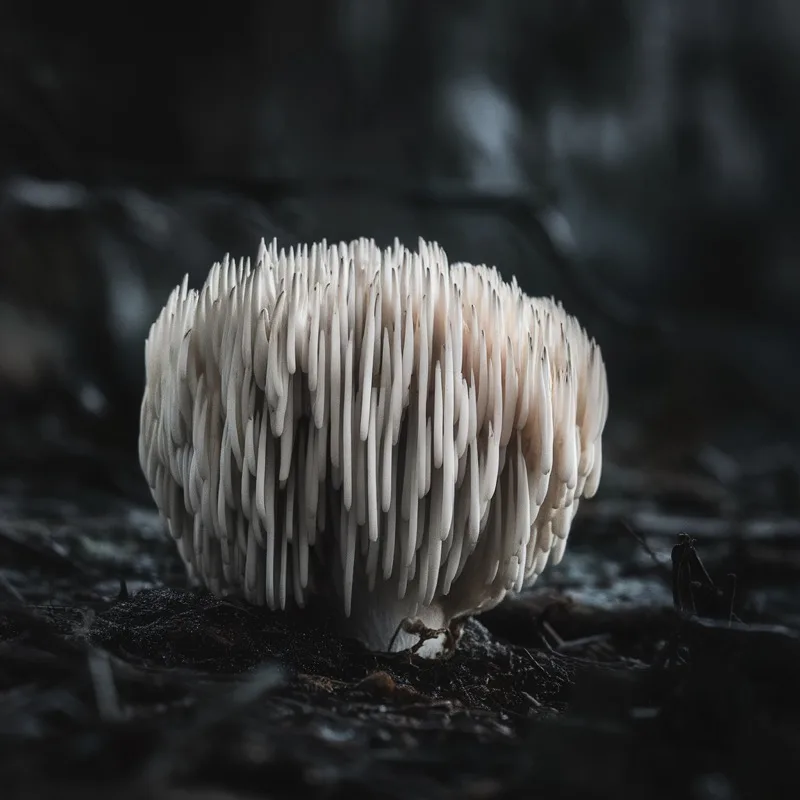
Hericium erinaceus
Hericium erinaceus is a saprotrophic fungus of the family Hericiaceae, commonly found on dead or wounded hardwood trees in North America, Europe, and Asia. Its morphology is characterized by a large, irregular, bulbous fruiting body with long, dangling spines, lacking a distinct cap or stipe. Key pharmacological properties are attributed to its unique bioactive compounds, including hericenones and erinacines, which have demonstrated neuroprotective and neurotrophic effects by stimulating nerve growth factor (NGF) synthesis in preclinical and clinical studies.
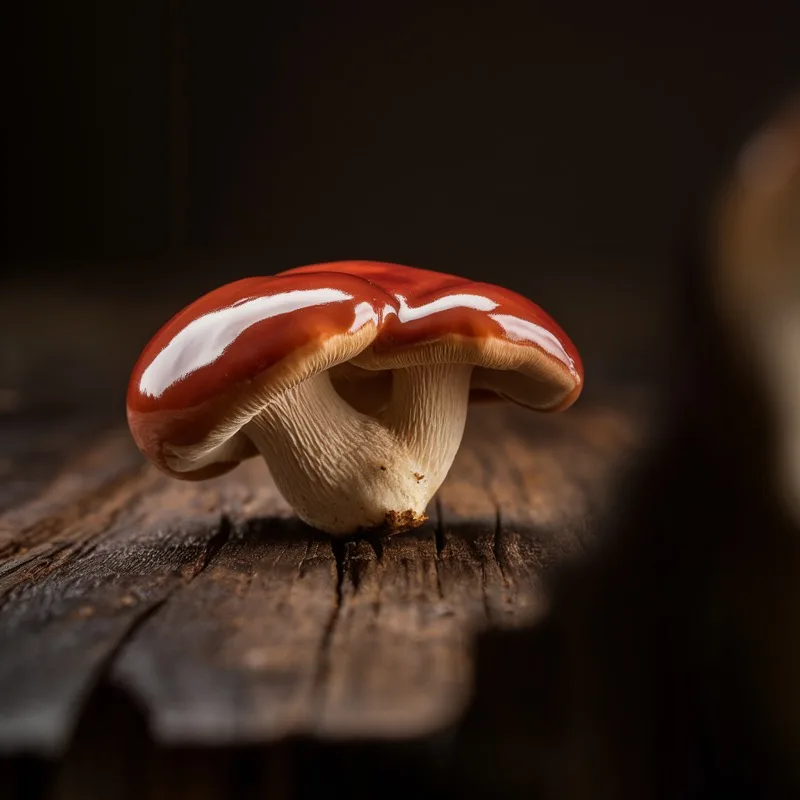
Ganoderma lucidum
Ganoderma lucidum is a polypore basidiomycetous fungus belonging to the family Ganodermataceae, characterized by its laccate cap surface and double-walled basidiospores. This large, woody mushroom thrives in hot and humid subtropical climates, growing on decaying hardwood, and is identified by its distinct red-varnished, fan-like or kidney-shaped cap. Its key pharmacological properties include immunomodulation, hepatoprotection, and adaptogenic effects, primarily mediated by its rich content of polysaccharides and over 130 identified triterpenoid compounds.
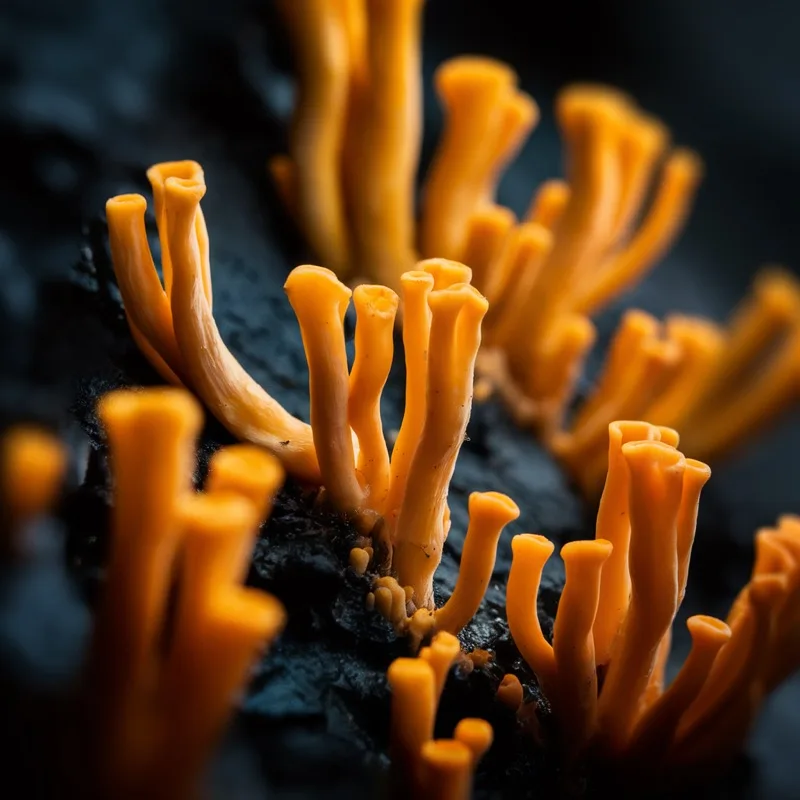
Cordyceps militaris
Cordyceps militaris is a parasitic ascomycete fungus belonging to the phylum Ascomycota, which primarily grows on the pupae of insects in the Northern Hemisphere. It is characterized by its bright orange-red, club-shaped fruiting body that emerges from the deceased host. This fungus is a source of several bioactive compounds, most notably cordycepin (3'-deoxyadenosine) and adenosine, which are nucleoside analogs with demonstrated effects on cellular energy metabolism, oxygen utilization, and anti-inflammatory pathways.
Click anywhere or press Escape to close

