

$14.95 $14.95/serving
View Review
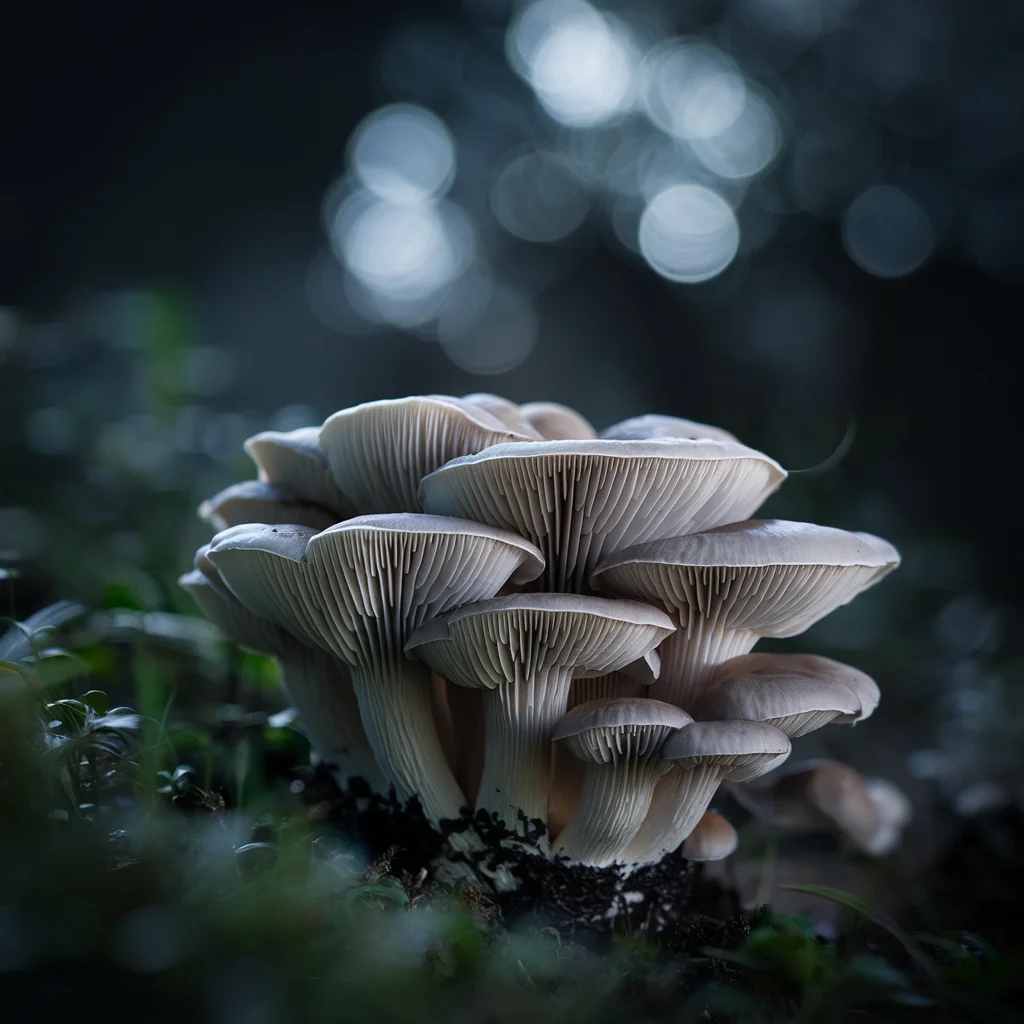
Pleurotus ostreatus

Board-Certified Physician · Medical Reviewer · Last Reviewed February 25, 2026
Latin Name
Pleurotus ostreatus
Research Level
Extensive
Popularity
#20 Ranked
Cited Studies
3 References
Pleurotus ostreatus is a saprotrophic basidiomycete fungus belonging to the family Pleurotaceae, order Agaricales. It is one of the most widely cultivated edible mushrooms globally, characterized by its broad, fan-shaped or oyster-shaped pileus (2–30 cm), which ranges in color from white to grey, tan, or brown. The gills are white, decurrent, and closely spaced, running down a short, eccentric or lateral stipe. As a white-rot fungus, it colonizes dead or dying hardwood trees and is notable for its nematophagous properties — the ability to capture and digest nematodes for nitrogen supplementation. Pharmacologically, P. ostreatus is distinguished by its naturally occurring lovastatin content (an HMG-CoA reductase inhibitor), high beta-glucan polysaccharides with demonstrated immunomodulatory activity, and significant ergothioneine concentrations, a potent cellular antioxidant. Clinical and preclinical studies have demonstrated cholesterol-lowering, anti-inflammatory, antidiabetic, and immunostimulatory properties.
The oyster mushroom is one of the most recognizable and widely eaten mushrooms in the world. Named for its broad, fan-shaped cap that resembles an oyster shell, it grows in overlapping clusters on dead or dying hardwood trees across North America, Europe, and Asia. Its color ranges from creamy white to grey or tan, and it has a mild, slightly sweet flavor that many people compare to seafood — making it one of the most popular meat substitutes in vegetarian and vegan cooking.
What makes the oyster mushroom particularly interesting from a health perspective is that it naturally contains lovastatin, the same compound found in prescription cholesterol-lowering medications. While the amounts in a serving of mushrooms are much smaller than in a pharmaceutical dose, regular consumption has been associated with modest improvements in cholesterol profiles in several studies. Beyond cholesterol, oyster mushrooms are rich in beta-glucans — complex sugars that prime the immune system to respond more effectively to threats — and ergothioneine, a powerful antioxidant that your body cannot produce on its own and must obtain from food.
Traditionally, oyster mushrooms have been used in Chinese medicine for centuries to support circulation, relax tendons, and strengthen the body. In Japan, they are known as hiratake and are a staple ingredient in soups, stir-fries, and hot pot dishes. European foragers have gathered wild oyster mushrooms from beech and oak trees for generations, and they remain one of the easiest wild mushrooms to identify safely.
In the supplement world, oyster mushroom extract is increasingly found in multi-mushroom blend capsules and powders, often combined with lion's mane, reishi, and cordyceps for a comprehensive functional mushroom formula. Standalone oyster mushroom supplements are available in capsule and powder form, with typical dosages ranging from 500 mg to 2,000 mg per day. The extract is also used in some cholesterol-support formulations alongside other heart-healthy ingredients.
When shopping for oyster mushroom supplements, look for products made from the fruiting body rather than mycelium grown on grain, as the fruiting body contains higher concentrations of lovastatin and beta-glucans. Third-party testing for heavy metals and contaminants is important, as mushrooms can accumulate environmental toxins. Organic certification and clearly stated beta-glucan percentages are good quality indicators.
Oyster mushrooms pair well with other functional mushrooms in supplement stacks. Combining them with reishi for immune and heart support, or with lion's mane for a brain-and-body wellness approach, is increasingly popular. For culinary use, they are also one of the easiest mushrooms to grow at home — many beginner grow kits use oyster mushrooms because they colonize quickly and fruit reliably, making them an excellent entry point into home mycology.
Verified supplements featuring Oyster Mushroom — ranked by quality and value


Based on available research evidence
Based on available research evidence
Based on available research evidence
Based on available research evidence
Based on available research evidence
⚠️ Important: These statements have not been evaluated by the FDA. Functional mushrooms are not intended to diagnose, treat, cure, or prevent any disease. Consult with a healthcare provider before starting any new supplement.
A naturally occurring statin that may support cardiovascular health.
Bioactive compound with potential health benefits. Consult scientific literature for detailed information.
A powerful antioxidant amino acid that may protect cells from oxidative damage.
Bioactive compound with potential health benefits. Consult scientific literature for detailed information.
Oyster Mushroom has been used in traditional medicine systems for centuries, particularly in Traditional Chinese Medicine (TCM) and other Asian healing practices.
📖 Historical Context: Traditional use does not guarantee efficacy or safety. Modern research is ongoing to validate traditional claims and understand mechanisms of action.
Oyster Mushroom has been extensively studied in both preclinical and clinical research. Multiple human trials have investigated its potential benefits.
Research Areas: Studies have focused on cholesterol support, immune function, antioxidant protection, and other potential applications. Results are promising but more high-quality human trials are needed.
The following studies have been reviewed and cited by our medical team to support the claims on this page.
Khatun, S., Islam, A., Cakilcioglu, U., & Chatterjee, N. C. (2012). Research on Mushroom as a Potential Source of Nutraceuticals: A Review on Indian Perspective. American Journal of Experimental Agriculture, 2(1), 47-73.
Comprehensive review documenting the nutraceutical properties of Pleurotus ostreatus, including its cholesterol-lowering lovastatin content, antioxidant capacity, and immunomodulatory beta-glucans that position it as a significant functional food and supplement ingredient.
Jayakumar, T., Thomas, P. A., & Geraldine, P. (2009). In-vitro antioxidant activities of an ethanolic extract of the oyster mushroom, Pleurotus ostreatus. Innovative Food Science & Emerging Technologies, 10(2), 228-234.
This study demonstrated that ethanolic extracts of P. ostreatus exhibited significant antioxidant activity through multiple mechanisms including DPPH radical scavenging, reducing power, and inhibition of lipid peroxidation, supporting its use as a natural antioxidant source.
Bobek, P., & Galbavy, S. (2001). Effect of pleuran (beta-glucan from Pleurotus ostreatus) on the antioxidant status of the organism and on dimethylhydrazine-induced precancerous lesions in rat colon. British Journal of Biomedical Science, 58(3), 164-168.
This preclinical study found that pleuran, the beta-glucan isolated from P. ostreatus, significantly enhanced antioxidant enzyme activities and reduced precancerous colonic lesions in rats, suggesting both antioxidant and chemopreventive potential.
📋 Methodology: References are sourced from PubMed, major mycology journals, and peer-reviewed medical literature. Each entry is reviewed by Dr. Igor I. Bussel, M.D. for accuracy and clinical relevance.
Board-Certified Physician · Medical Reviewer
Board-certified physician affiliated with UC Irvine, the Gavin Herbert Eye Institute, and the UCI School of Medicine. Dr. Bussel reviews all mushroom encyclopedia entries for scientific accuracy, ensuring claims are supported by peer-reviewed research.
Last reviewed: February 25, 2026
Discover more functional mushroom species
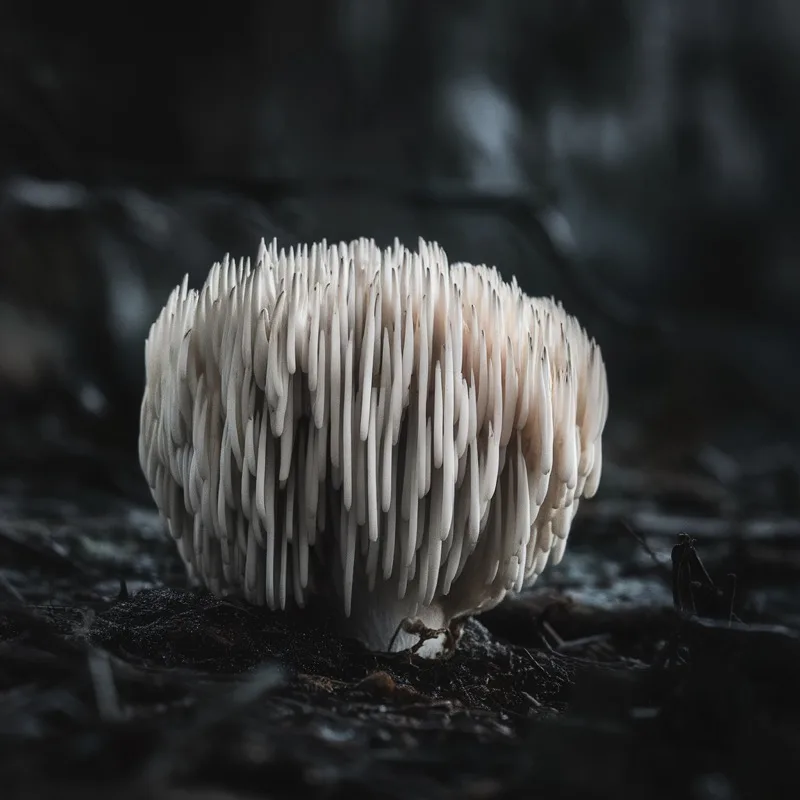
Hericium erinaceus
Hericium erinaceus is a saprotrophic fungus of the family Hericiaceae, commonly found on dead or wounded hardwood trees in North America, Europe, and Asia. Its morphology is characterized by a large, irregular, bulbous fruiting body with long, dangling spines, lacking a distinct cap or stipe. Key pharmacological properties are attributed to its unique bioactive compounds, including hericenones and erinacines, which have demonstrated neuroprotective and neurotrophic effects by stimulating nerve growth factor (NGF) synthesis in preclinical and clinical studies.
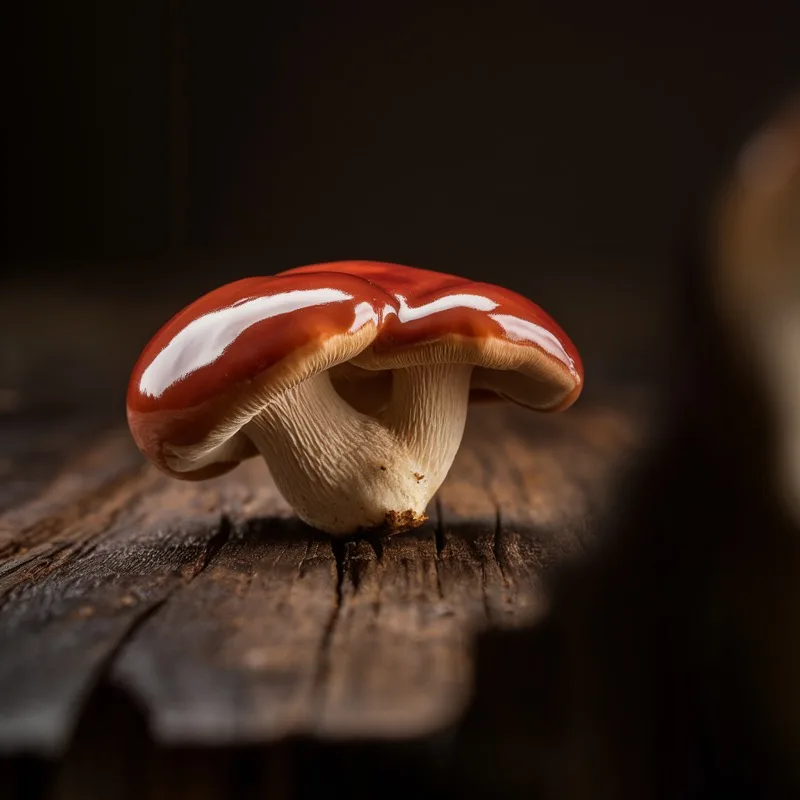
Ganoderma lucidum
Ganoderma lucidum is a polypore basidiomycetous fungus belonging to the family Ganodermataceae, characterized by its laccate cap surface and double-walled basidiospores. This large, woody mushroom thrives in hot and humid subtropical climates, growing on decaying hardwood, and is identified by its distinct red-varnished, fan-like or kidney-shaped cap. Its key pharmacological properties include immunomodulation, hepatoprotection, and adaptogenic effects, primarily mediated by its rich content of polysaccharides and over 130 identified triterpenoid compounds.
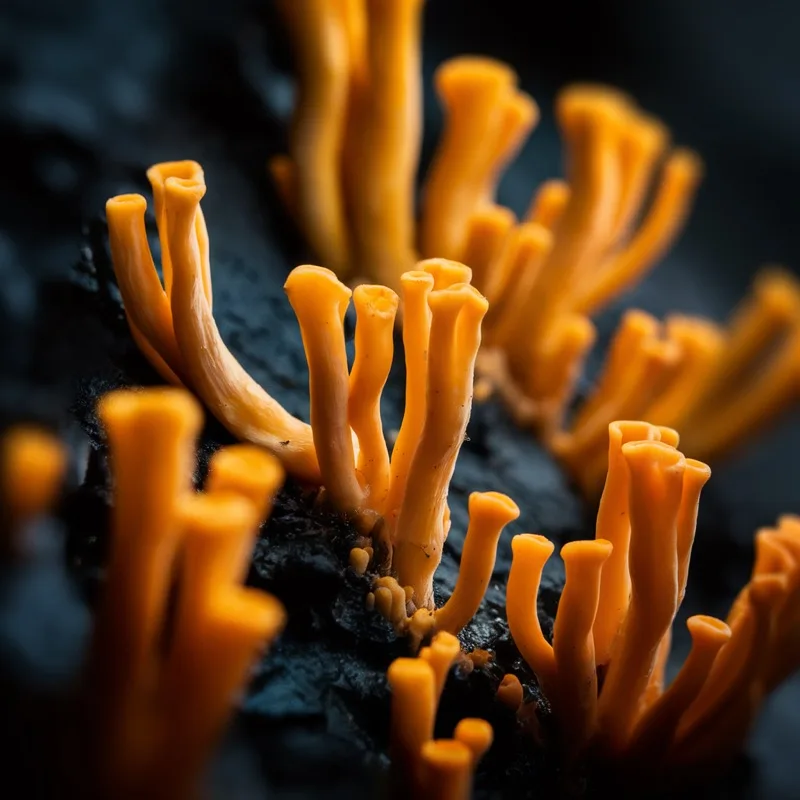
Cordyceps militaris
Cordyceps militaris is a parasitic ascomycete fungus belonging to the phylum Ascomycota, which primarily grows on the pupae of insects in the Northern Hemisphere. It is characterized by its bright orange-red, club-shaped fruiting body that emerges from the deceased host. This fungus is a source of several bioactive compounds, most notably cordycepin (3'-deoxyadenosine) and adenosine, which are nucleoside analogs with demonstrated effects on cellular energy metabolism, oxygen utilization, and anti-inflammatory pathways.
Click anywhere or press Escape to close