
Pajaritos
Psilocybe galindoi

Board-Certified Physician · Medical Reviewer · Last Reviewed February 25, 2026
Latin Name
Psilocybe galindoi
Research Level
Limited
Popularity
#34 Ranked
Cited Studies
3 References
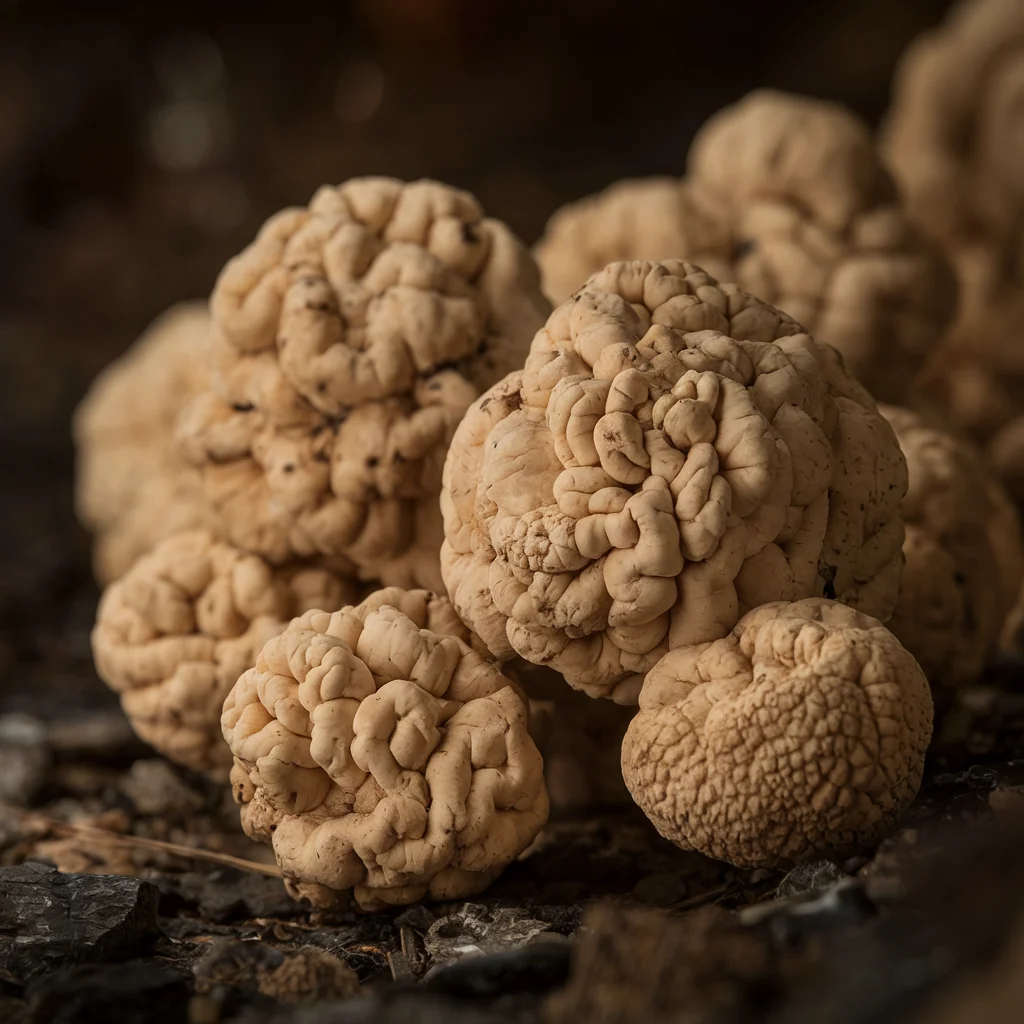
Psilocybe galindoi is a sclerotia-producing psilocybin mushroom of the family Hymenogastraceae, closely related to Psilocybe tampanensis. Native to Mexico, it was first described by Guzmán in 1983 from specimens collected in Jalisco. Like P. tampanensis, P. galindoi produces underground sclerotia (commonly marketed as 'truffles' or 'philosopher's stones') that contain psilocybin and are legally sold in Dutch smartshops under the name 'Pajaritos' (Spanish for 'little birds'). The sclerotia are small, dense, irregularly shaped masses with a dark brown exterior and lighter interior, containing moderate psilocybin concentrations that place them in the mild-to-moderate potency range — typically positioned between Mexicana (mildest) and Tampanensis in the Dutch truffle potency hierarchy. P. galindoi truffles are popular as an introductory psilocybin product for first-time users seeking a gentle, manageable experience.
Pajaritos — Spanish for "little birds" — is the commercial name for psilocybin truffles produced by Psilocybe galindoi, a Mexican species closely related to Psilocybe tampanensis. These truffles are legally sold in Dutch smartshops alongside other truffle varieties like Mexicana, Tampanensis, Atlantis, and Hollandia, filling an important niche in the potency spectrum as a mild-to-moderate option that bridges the gap between the gentlest (Mexicana) and mid-range (Tampanensis) varieties.
The Pajaritos experience is characterized by gentle mood enhancement, increased sociability, mild visual effects (color brightening, pattern recognition), and a sense of lightness and connection. At standard doses (10–15 grams of fresh truffles), most users describe a pleasant, manageable experience that enhances social interactions and creative thinking without the intensity or potential overwhelm of stronger varieties. This makes Pajaritos a popular choice for first-time users and for social settings where a full psychedelic experience is not desired.
The species itself, Psilocybe galindoi, was first described by the legendary Mexican mycologist Gastón Guzmán in 1983 from specimens collected in Jalisco, Mexico. Like its close relative P. tampanensis, it produces underground sclerotia — dense, compact masses of mycelium that serve as nutrient reserves and survival structures. These sclerotia are what Dutch producers cultivate and sell as "truffles," taking advantage of the Netherlands' legal framework that permits the sale of psilocybin-containing sclerotia while prohibiting the fruiting bodies (mushrooms) of the same species.
In the Dutch smartshop hierarchy, Pajaritos typically sit at potency level 2 out of 5, making them slightly stronger than Mexicana (level 1) but milder than Tampanensis (level 2.5) and significantly milder than Atlantis (level 3.5) or Hollandia (level 5). This positioning makes them an excellent stepping stone for users who have tried Mexicana and want to explore slightly deeper territory without jumping to a mid-range or high-potency variety.
Pajaritos truffles are typically sold in 15-gram sealed packages in Dutch smartshops. They have a nutty, slightly earthy flavor that most people find more palatable than stronger truffle varieties. Common consumption methods include eating them directly (chewing thoroughly for better absorption), brewing them into tea, or mixing them with honey or chocolate to mask the taste. Effects typically begin within 30–45 minutes and last 4–6 hours.
For those considering Pajaritos as a first psilocybin experience: they represent one of the gentlest entry points available. Start with half a package (7–8 grams) to assess your sensitivity, consume them on an empty or light stomach, choose a comfortable and familiar environment, and have a trusted friend present. The mild nature of Pajaritos means that challenging experiences are uncommon at standard doses, but basic preparation and a positive mindset will enhance the experience regardless of the variety chosen.
Potential Benefits
Based on available research evidence
Based on available research evidence
Based on available research evidence
Based on available research evidence
Based on available research evidence
⚠️ Important: These statements have not been evaluated by the FDA. Functional mushrooms are not intended to diagnose, treat, cure, or prevent any disease. Consult with a healthcare provider before starting any new supplement.
Key Compounds
Psilocybin
The primary psychoactive prodrug in magic mushrooms. Converted to psilocin in the body, it activates serotonin 5-HT2A receptors, producing altered perception and consciousness. Breakthrough therapy designation from FDA for treatment-resistant depression.
Psilocin
The pharmacologically active metabolite of psilocybin. Directly binds serotonin receptors to produce psychedelic effects including visual changes, emotional openness, and neuroplasticity.
Baeocystin
A psilocybin analog found in magic mushrooms. Thought to modulate the psychedelic experience, potentially contributing to the "entourage effect" of whole mushroom preparations.
Traditional Use
Pajaritos has been used in traditional medicine systems for centuries, particularly in Traditional Chinese Medicine (TCM) and other Asian healing practices.
📖 Historical Context: Traditional use does not guarantee efficacy or safety. Modern research is ongoing to validate traditional claims and understand mechanisms of action.
Scientific Research
Pajaritos has limited scientific research. Most evidence comes from traditional use and preliminary studies.
Research Areas: Studies have focused on gentle introduction, mood enhancement, social connection, and other potential applications. Results are promising but more high-quality human trials are needed.
Peer-Reviewed References
The following studies have been reviewed and cited by our medical team to support the claims on this page.
Guzmán, G. (1983). The Genus Psilocybe: A Systematic Revision of the Known Species Including the History, Distribution, and Chemistry of the Hallucinogenic Species. Beihefte zur Nova Hedwigia, 74.
The original taxonomic description of P. galindoi within Guzmán's comprehensive monograph on the genus Psilocybe, establishing its morphological characteristics, Mexican origin, and relationship to other sclerotia-producing species.
Guzmán, G., Jacobs, J. Q., Ramírez-Guillén, F., Murrieta, D., & Gándara, E. (2005). New hallucinogenic mushrooms in Mexico. International Journal of Medicinal Mushrooms, 7(1-2), 315-316.
This study documented additional collections and distribution data for P. galindoi in Mexico, confirming its sclerotia-producing capability and its significance as a source of psilocybin truffles in the commercial Dutch market.
van Amsterdam, J., Opperhuizen, A., & van den Brink, W. (2011). Harm potential of magic mushroom use: a review. Regulatory Toxicology and Pharmacology, 59(3), 423-429.
This harm assessment review evaluated the safety profile of psilocybin truffles including those derived from P. galindoi, concluding that the overall risk profile is favorable compared to other psychoactive substances, supporting their regulated availability in the Netherlands.
📋 Methodology: References are sourced from PubMed, major mycology journals, and peer-reviewed medical literature. Each entry is reviewed by Dr. Igor I. Bussel, M.D. for accuracy and clinical relevance.
Medical Reviewer
Board-Certified Physician · Medical Reviewer
Board-certified physician affiliated with UC Irvine, the Gavin Herbert Eye Institute, and the UCI School of Medicine. Dr. Bussel reviews all mushroom encyclopedia entries for scientific accuracy, ensuring claims are supported by peer-reviewed research.
Last reviewed: February 25, 2026
Quick Facts
- Common Name
- Pajaritos
- Scientific Name
- Psilocybe galindoi
- Research Level
- Limited
- Reviewed By
- Primary Benefits
- Gentle Introduction Mood Enhancement Social Connection Creative Thinking Mild Visuals
- Key Compounds
- Psilocybin Psilocin Baeocystin
- Cited References
- 3 peer-reviewed studies
Explore Other Mushrooms
Discover more functional mushroom species
Lion's Mane
Hericium erinaceus
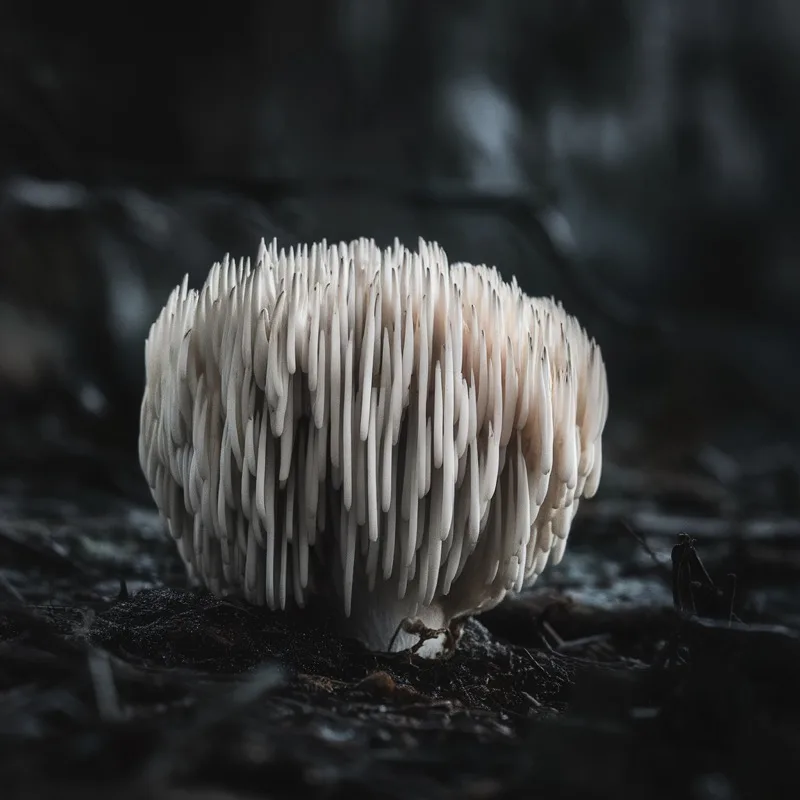
Hericium erinaceus is a saprotrophic fungus of the family Hericiaceae, commonly found on dead or wounded hardwood trees in North America, Europe, and Asia. Its morphology is characterized by a large, irregular, bulbous fruiting body with long, dangling spines, lacking a distinct cap or stipe. Key pharmacological properties are attributed to its unique bioactive compounds, including hericenones and erinacines, which have demonstrated neuroprotective and neurotrophic effects by stimulating nerve growth factor (NGF) synthesis in preclinical and clinical studies.
Reishi
Ganoderma lucidum
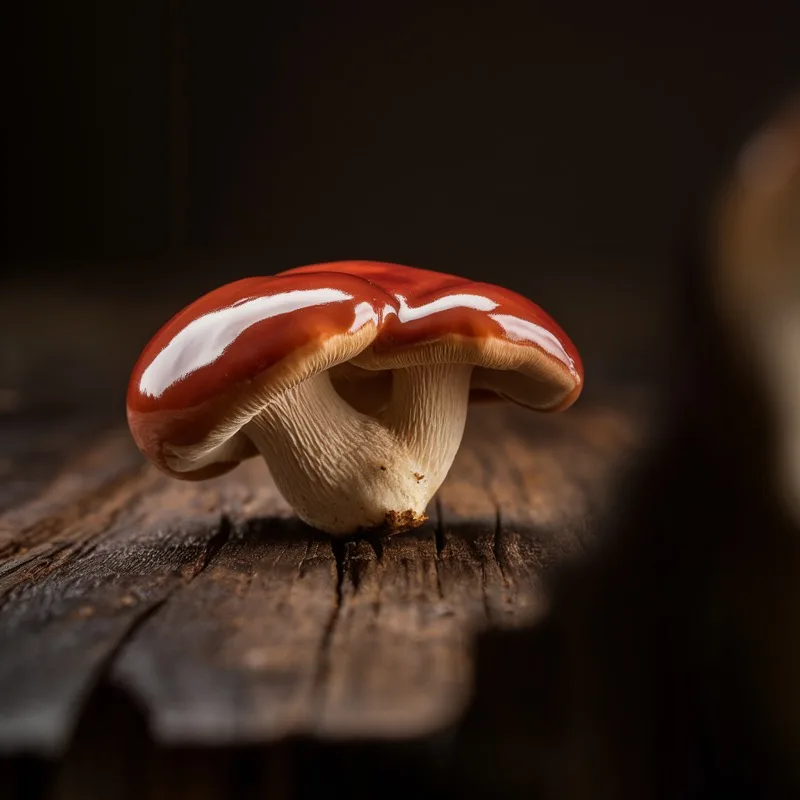
Ganoderma lucidum is a polypore basidiomycetous fungus belonging to the family Ganodermataceae, characterized by its laccate cap surface and double-walled basidiospores. This large, woody mushroom thrives in hot and humid subtropical climates, growing on decaying hardwood, and is identified by its distinct red-varnished, fan-like or kidney-shaped cap. Its key pharmacological properties include immunomodulation, hepatoprotection, and adaptogenic effects, primarily mediated by its rich content of polysaccharides and over 130 identified triterpenoid compounds.
Cordyceps
Cordyceps militaris
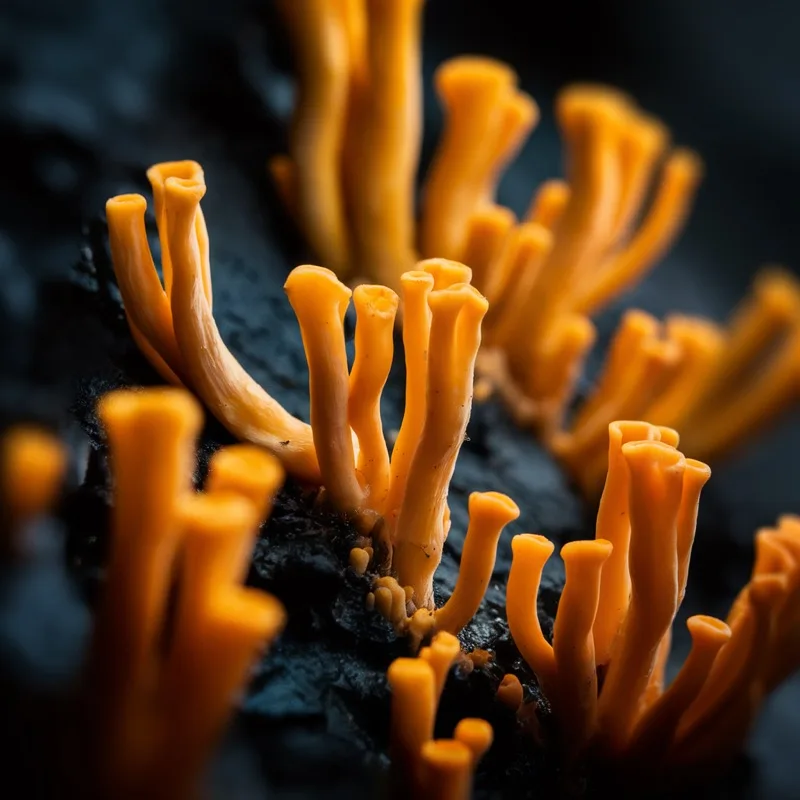
Cordyceps militaris is a parasitic ascomycete fungus belonging to the phylum Ascomycota, which primarily grows on the pupae of insects in the Northern Hemisphere. It is characterized by its bright orange-red, club-shaped fruiting body that emerges from the deceased host. This fungus is a source of several bioactive compounds, most notably cordycepin (3'-deoxyadenosine) and adenosine, which are nucleoside analogs with demonstrated effects on cellular energy metabolism, oxygen utilization, and anti-inflammatory pathways.
Click anywhere or press Escape to close