
Beginner Friendly

$14.95
View Review
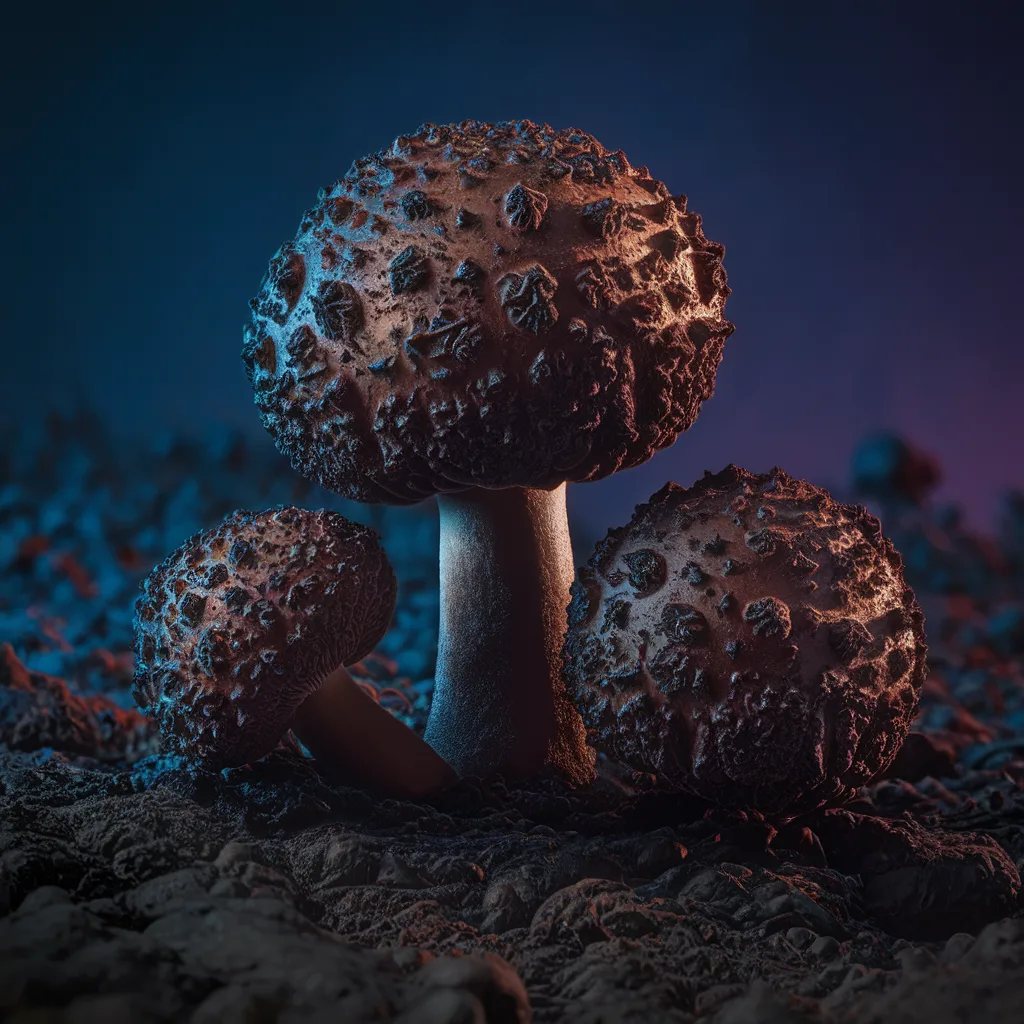
Psilocybe tampanensis

Board-Certified Physician · Medical Reviewer · Last Reviewed February 21, 2026
Latin Name
Psilocybe tampanensis
Research Level
Moderate
Popularity
#16 Ranked
Cited Studies
3 References
Psilocybe tampanensis is a rare psilocybin-containing fungus first collected in Tampa, Florida in 1977 by mycologist Steven Pollock during a single collection event. Unusually, it produces sclerotia — dense, rock-like underground storage organs colloquially called 'Philosopher's Stones' or 'magic truffles' — in addition to standard fruiting bodies. These sclerotia contain psilocybin and psilocin in concentrations comparable to or slightly lower than Psilocybe cubensis, making Tampanensis one of the mildest commercially available psilocybin truffle varieties. The species gained cultural prominence through the Dutch smartshop industry, where its sclerotia are legally cultivated and sold as a regulated product under Netherlands drug policy. Clinically, psilocybin research at institutions including Johns Hopkins and Imperial College London has demonstrated therapeutic potential for depression, anxiety, and addiction — findings that apply broadly to psilocybin-containing species regardless of cultivar.
Tampanensis is the gentlest of the psilocybin truffle family — the one most often recommended for first-timers and for people who want a reflective, manageable experience rather than an overwhelming one. Its nickname, the "Philosopher's Stone," wasn't chosen by accident. People consistently describe Tampanensis trips as contemplative and introspective: you find yourself turning inward, examining your thoughts, your relationships, your place in the world — but without feeling swept away. It's philosophical in the literal sense. You sit with questions rather than being blasted by answers.
The backstory of this mushroom is actually fascinating. It was discovered only once in the wild, in 1977, by mycologist Steven Pollock in Tampa, Florida — hence the name. Pollock, a physician and psychedelic researcher who would later become a controversial figure, recognized something unusual about this fungus: it produced sclerotia, the dense underground truffle-like structures that most Psilocybe species don't develop. From that single wild collection, virtually all of today's commercially cultivated Tampanensis stock descends. The species has never been reliably found in the wild again.
Those sclerotia — the "philosopher's stones" — are what gets sold in Dutch smartshops. They're brown, irregular, often described as resembling walnut pieces or small rocks. Unlike mushroom fruiting bodies, they have a slightly nutty, earthy flavor and a denser texture. The truffle form made them commercially ideal: they're easier to store, don't degrade as quickly as fresh mushrooms, and are legally sold in the Netherlands under a post-2008 regulatory framework that permits psilocybin-containing truffles while prohibiting dried mushroom fruiting bodies.
Effects typically begin 30–60 minutes after ingestion, building gradually over 2–3 hours to a peak, then tapering over another 2–3 hours. At standard doses (7–10 grams fresh weight), most people experience mild euphoria, a sense of warmth and connectedness, heightened sensitivity to music and art, some visual brightening (colors appear more vivid, edges more defined), and above all, a reflective, contemplative mental state. At higher doses (15+ grams), visuals can intensify to include geometric patterns and perceptual shifts, and the introspective quality deepens into territory that can feel genuinely profound — or, if you're unprepared, disorienting.
Tampanensis is often described as "heart-opening" rather than "mind-blowing" — a distinction that matters. Many users report that it surfaces emotions gently, making it popular for therapeutic self-exploration and couples' experiences. It's less likely than stronger varieties like Hollandia to produce ego dissolution or overwhelming visuals at common doses. For most people, it's simply a pleasant, thoughtful experience that leaves them feeling clear-headed and emotionally refreshed the next day.
If you're buying from a Dutch smartshop, expect Tampanensis truffles in foil packs of 10–15 grams fresh weight. Store in the fridge, eat them fresh (don't dry them — you'll lose potency and they'll taste terrible), and consider chewing thoroughly or making a tea if you're sensitive to nausea. Start with a half-dose if it's your first time. Set aside 5–6 hours, choose a comfortable, familiar environment, and — as with all psychedelics — your mindset and setting matter far more than the specific variety you chose.
Verified supplements featuring Tampanensis — ranked by quality and value
Based on available research evidence
Based on available research evidence
Based on available research evidence
Based on available research evidence
Based on available research evidence
⚠️ Important: These statements have not been evaluated by the FDA. Functional mushrooms are not intended to diagnose, treat, cure, or prevent any disease. Consult with a healthcare provider before starting any new supplement.
The primary psychoactive prodrug in magic mushrooms. Converted to psilocin in the body, it activates serotonin 5-HT2A receptors, producing altered perception and consciousness. Breakthrough therapy designation from FDA for treatment-resistant depression.
The pharmacologically active metabolite of psilocybin. Directly binds serotonin receptors to produce psychedelic effects including visual changes, emotional openness, and neuroplasticity.
A psilocybin analog found in magic mushrooms. Thought to modulate the psychedelic experience, potentially contributing to the "entourage effect" of whole mushroom preparations.
Tampanensis has been used in traditional medicine systems for centuries, particularly in Traditional Chinese Medicine (TCM) and other Asian healing practices.
📖 Historical Context: Traditional use does not guarantee efficacy or safety. Modern research is ongoing to validate traditional claims and understand mechanisms of action.
Tampanensis has moderate research support with several preclinical studies and some human trials. More research is needed to confirm benefits.
Research Areas: Studies have focused on introspection, mild euphoria, philosophical insight, and other potential applications. Results are promising but more high-quality human trials are needed.
The following studies have been reviewed and cited by our medical team to support the claims on this page.
Pollock, S. H. (1976). A novel experience with Panaeolus: a case study from Hawaii. Journal of Psychedelic Drugs, 8(3), 237-239.
Early documentation by the discoverer of P. tampanensis of unusual psilocybin mushroom experiences and identification methodology that guided subsequent species discovery.
Guzmán, G., Allen, J. W., & Gartz, J. (1998). A worldwide geographical distribution of the neurotropic fungi, an analysis and discussion. Annali del Museo Civico di Rovereto, 14, 189-280.
This comprehensive survey documented the global distribution of psychoactive fungi including P. tampanensis, noting its rarity in nature and its emergence as a commercially cultivated truffle variety in the Netherlands.
Davis, A. K., Barrett, F. S., May, D. G., et al. (2021). Effects of psilocybin-assisted therapy on major depressive disorder. JAMA Psychiatry, 78(5), 481-489.
In this landmark open-label trial, psilocybin-assisted therapy produced large, rapid, and sustained antidepressant effects in patients with major depressive disorder, with benefits persisting at one-year follow-up.
📋 Methodology: References are sourced from PubMed, major mycology journals, and peer-reviewed medical literature. Each entry is reviewed by Dr. Igor I. Bussel, M.D. for accuracy and clinical relevance.
Board-Certified Physician · Medical Reviewer
Board-certified physician affiliated with UC Irvine, the Gavin Herbert Eye Institute, and the UCI School of Medicine. Dr. Bussel reviews all mushroom encyclopedia entries for scientific accuracy, ensuring claims are supported by peer-reviewed research.
Last reviewed: February 21, 2026
Discover more functional mushroom species
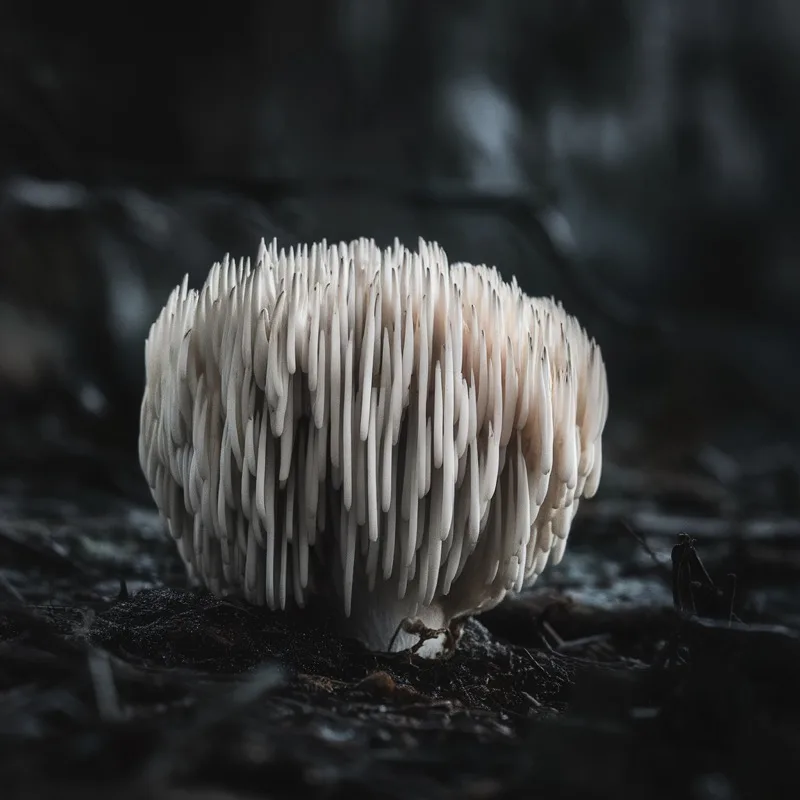
Hericium erinaceus
Hericium erinaceus is a saprotrophic fungus of the family Hericiaceae, commonly found on dead or wounded hardwood trees in North America, Europe, and Asia. Its morphology is characterized by a large, irregular, bulbous fruiting body with long, dangling spines, lacking a distinct cap or stipe. Key pharmacological properties are attributed to its unique bioactive compounds, including hericenones and erinacines, which have demonstrated neuroprotective and neurotrophic effects by stimulating nerve growth factor (NGF) synthesis in preclinical and clinical studies.
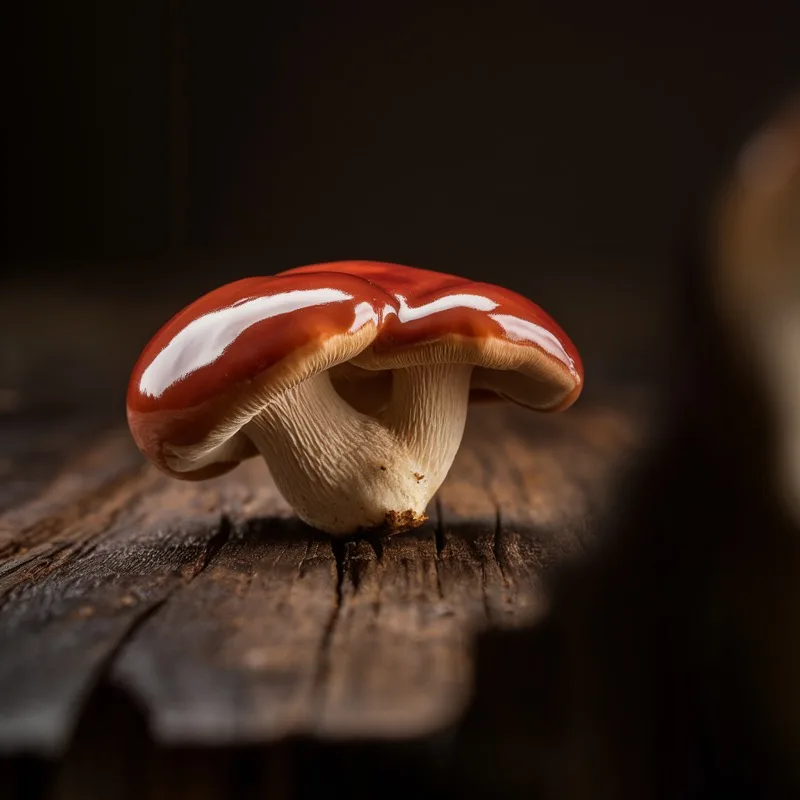
Ganoderma lucidum
Ganoderma lucidum is a polypore basidiomycetous fungus belonging to the family Ganodermataceae, characterized by its laccate cap surface and double-walled basidiospores. This large, woody mushroom thrives in hot and humid subtropical climates, growing on decaying hardwood, and is identified by its distinct red-varnished, fan-like or kidney-shaped cap. Its key pharmacological properties include immunomodulation, hepatoprotection, and adaptogenic effects, primarily mediated by its rich content of polysaccharides and over 130 identified triterpenoid compounds.
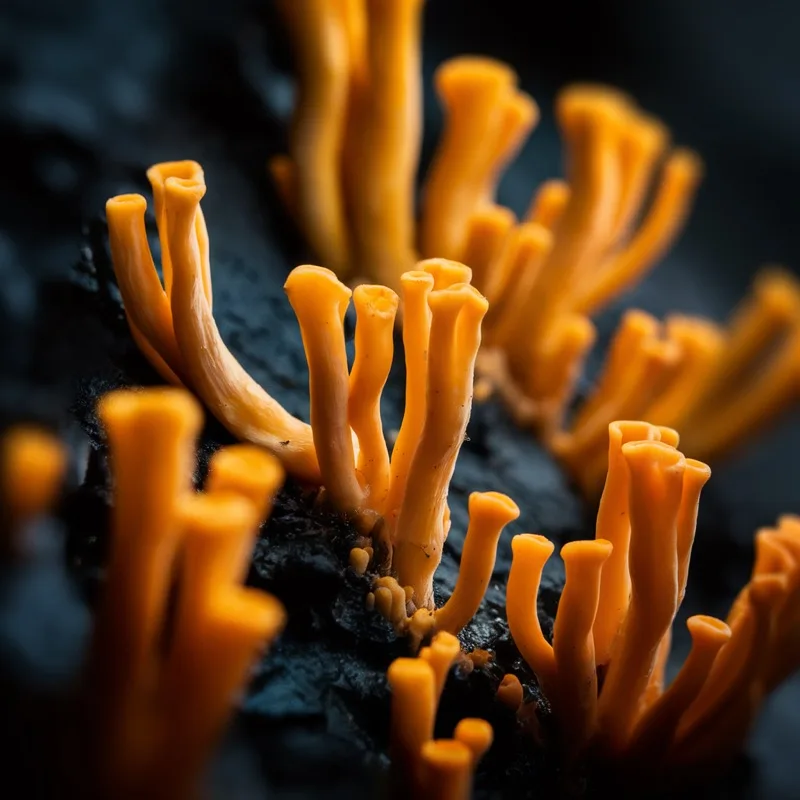
Cordyceps militaris
Cordyceps militaris is a parasitic ascomycete fungus belonging to the phylum Ascomycota, which primarily grows on the pupae of insects in the Northern Hemisphere. It is characterized by its bright orange-red, club-shaped fruiting body that emerges from the deceased host. This fungus is a source of several bioactive compounds, most notably cordycepin (3'-deoxyadenosine) and adenosine, which are nucleoside analogs with demonstrated effects on cellular energy metabolism, oxygen utilization, and anti-inflammatory pathways.
Click anywhere or press Escape to close


