
Utopia
Psilocybe tampanensis (Utopia cultivar)

Board-Certified Physician · Medical Reviewer · Last Reviewed February 25, 2026
Latin Name
Psilocybe tampanensis (Utopia cultivar)
Research Level
Limited
Popularity
#35 Ranked
Cited Studies
3 References
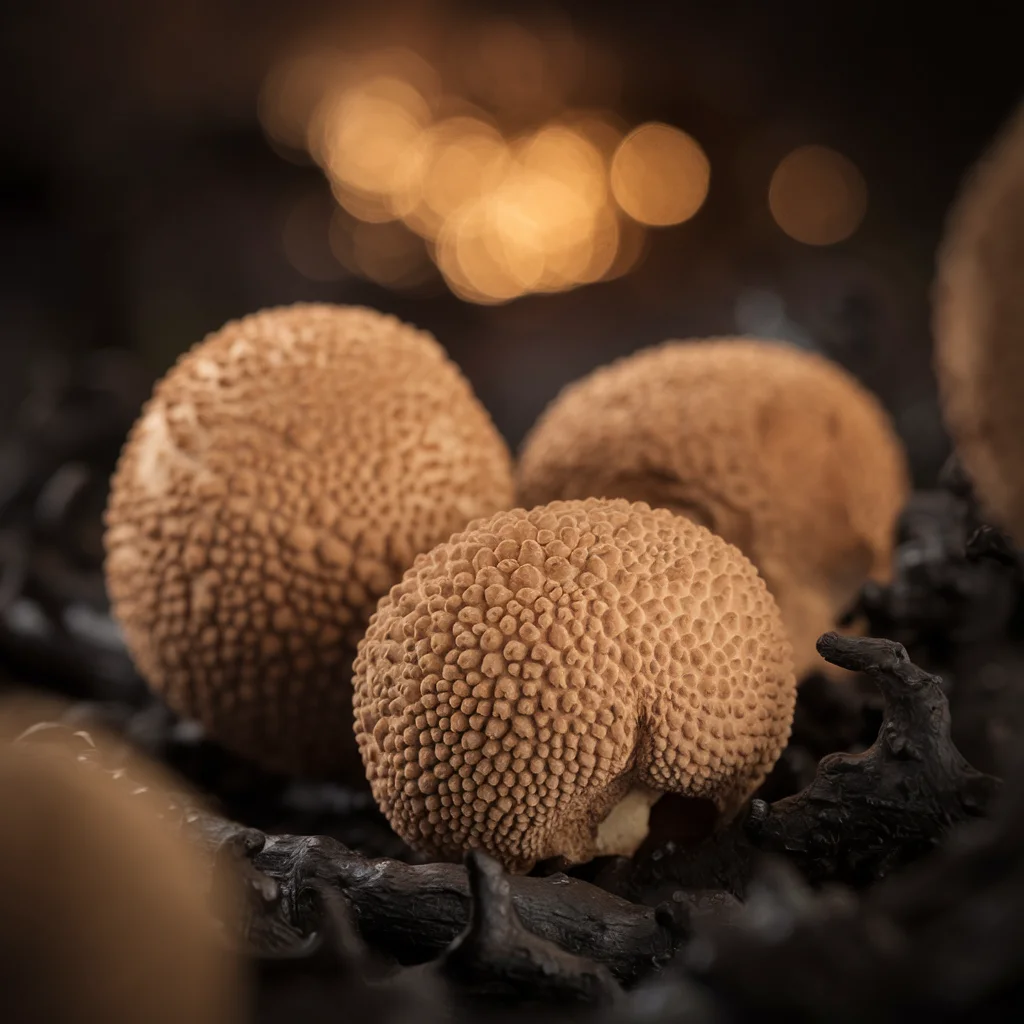
Utopia is a commercially marketed high-potency psilocybin truffle cultivar derived from selectively bred Psilocybe tampanensis, developed by Dutch truffle producers to occupy the upper-mid potency range in the smartshop truffle hierarchy. Positioned between Atlantis (strong) and Hollandia (strongest) in potency, Utopia truffles are produced through selective cultivation pressure to yield sclerotia with elevated psilocybin concentrations relative to standard Tampanensis. The experiential profile is characterized by pronounced visual effects, euphoric mood enhancement, philosophical and introspective thinking, and a more immersive psychedelic character than mid-range varieties. Utopia is sold by major Dutch smartshop brands including Zamnesia, Wholecelium, and others, typically in 15-gram sealed packages, and is recommended for users with prior psilocybin experience who seek a strong but not overwhelming experience.
Utopia is a high-potency psilocybin truffle cultivar sold in Dutch smartshops, positioned in the upper tier of the truffle potency spectrum — stronger than Atlantis but not quite reaching the intensity of Hollandia. Like Hollandia, Utopia is not a separate species but rather a selectively bred strain of Psilocybe tampanensis, cultivated over multiple generations to produce sclerotia with elevated psilocybin content. The name evokes the idealized, transcendent quality of the experience it aims to deliver.
The Utopia experience is characterized by strong visual effects, deep euphoria, and a pronounced philosophical or introspective quality. Users commonly report vivid color enhancement, flowing geometric patterns, a sense of profound connection to their surroundings, and insights into personal relationships and life direction. At full doses (15 grams), the experience is genuinely psychedelic — not just a mood lift or mild visual enhancement, but a full immersion into altered consciousness that can be both beautiful and challenging.
In the Dutch smartshop potency hierarchy, Utopia typically sits at level 4 out of 5, making it a strong choice that is recommended for experienced users. The progression for most users would be: Mexicana (level 1) → Pajaritos (level 2) → Tampanensis (level 2.5) → Atlantis (level 3.5) → Utopia (level 4) → Hollandia (level 5). This graduated approach allows users to build familiarity with psilocybin's effects before encountering the more intense varieties.
Utopia truffles are sold by major Dutch smartshop brands including Zamnesia, Wholecelium, Tatanka, and others — many of which are already represented in the Shroomaps brand database. They are typically packaged in 15-gram sealed containers with clear potency ratings and dosing guidance. The truffles have a nutty, earthy flavor and a firm, slightly chewy texture.
For consumption, Utopia truffles can be eaten directly (chewing thoroughly), brewed into tea (which may reduce nausea and speed onset), or processed into lemon tek (soaking in lemon juice for 20 minutes before consuming, which can intensify and shorten the experience). Effects typically begin within 30–45 minutes and last 5–7 hours, with the peak occurring 2–3 hours after ingestion.
If you are considering Utopia, ensure you have prior experience with milder truffle varieties. Prepare your set and setting carefully: clear your schedule for the day, choose a comfortable and familiar environment, have a trusted companion present, and approach the experience with a positive but open mindset. Utopia can deliver genuinely profound experiences — the kind that clinical researchers have documented as producing lasting positive changes in mood, outlook, and sense of meaning. But that depth requires respect, preparation, and the willingness to surrender to whatever the experience brings.
Potential Benefits
Based on available research evidence
Based on available research evidence
Based on available research evidence
Based on available research evidence
Based on available research evidence
⚠️ Important: These statements have not been evaluated by the FDA. Functional mushrooms are not intended to diagnose, treat, cure, or prevent any disease. Consult with a healthcare provider before starting any new supplement.
Key Compounds
Psilocybin
The primary psychoactive prodrug in magic mushrooms. Converted to psilocin in the body, it activates serotonin 5-HT2A receptors, producing altered perception and consciousness. Breakthrough therapy designation from FDA for treatment-resistant depression.
Psilocin
The pharmacologically active metabolite of psilocybin. Directly binds serotonin receptors to produce psychedelic effects including visual changes, emotional openness, and neuroplasticity.
Baeocystin
A psilocybin analog found in magic mushrooms. Thought to modulate the psychedelic experience, potentially contributing to the "entourage effect" of whole mushroom preparations.
Norbaeocystin
A demethylated analog of psilocybin. Its pharmacological role is still being studied, but it may contribute to the overall psychoactive profile of psilocybin mushrooms.
Traditional Use
Utopia has been used in traditional medicine systems for centuries, particularly in Traditional Chinese Medicine (TCM) and other Asian healing practices.
📖 Historical Context: Traditional use does not guarantee efficacy or safety. Modern research is ongoing to validate traditional claims and understand mechanisms of action.
Scientific Research
Utopia has limited scientific research. Most evidence comes from traditional use and preliminary studies.
Research Areas: Studies have focused on strong visuals, euphoria, philosophical insight, and other potential applications. Results are promising but more high-quality human trials are needed.
Peer-Reviewed References
The following studies have been reviewed and cited by our medical team to support the claims on this page.
Griffiths, R. R., Johnson, M. W., Carducci, M. A., Umbricht, A., Richards, W. A., Richards, B. D., Cosimano, M. P., & Klinedinst, M. A. (2016). Psilocybin produces substantial and sustained decreases in depression and anxiety in patients with life-threatening cancer: A randomized double-blind trial. Journal of Psychopharmacology, 30(12), 1181-1197.
This landmark clinical trial demonstrated that high-dose psilocybin produced substantial and sustained improvements in depression and anxiety in cancer patients — the category of profound therapeutic experience that strong truffle varieties like Utopia can facilitate in appropriate settings.
Kuypers, K. P., Ng, L., Erritzoe, D., Knudsen, G. M., Nichols, C. D., Nichols, D. E., Pani, L., Soula, A., & Nutt, D. (2019). Microdosing psychedelics: More questions than answers? An overview and suggestions for future research. Journal of Psychopharmacology, 33(9), 1039-1057.
This review discussed the spectrum of psilocybin dosing from microdose to full dose, contextualizing where strong truffle varieties like Utopia fit in the dosing landscape and the distinct experiential and potential therapeutic profiles at different dose levels.
Mason, N. L., Mischler, E., Uthaug, M. V., & Kuypers, K. P. (2019). Sub-Acute Effects of Psilocybin on Empathy, Creative Thinking, and Subjective Well-Being. Journal of Psychoactive Drugs, 51(2), 123-134.
This study conducted at a Dutch psilocybin retreat using truffle preparations found that psilocybin enhanced empathy, creative thinking, and subjective well-being in the days following the experience, demonstrating the therapeutic potential of truffle-based psilocybin sessions.
📋 Methodology: References are sourced from PubMed, major mycology journals, and peer-reviewed medical literature. Each entry is reviewed by Dr. Igor I. Bussel, M.D. for accuracy and clinical relevance.
Medical Reviewer
Board-Certified Physician · Medical Reviewer
Board-certified physician affiliated with UC Irvine, the Gavin Herbert Eye Institute, and the UCI School of Medicine. Dr. Bussel reviews all mushroom encyclopedia entries for scientific accuracy, ensuring claims are supported by peer-reviewed research.
Last reviewed: February 25, 2026
Quick Facts
- Common Name
- Utopia
- Scientific Name
- Psilocybe tampanensis (Utopia cultivar)
- Research Level
- Limited
- Reviewed By
- Primary Benefits
- Strong Visuals Euphoria Philosophical Insight Emotional Depth Creative Exploration
- Key Compounds
- Psilocybin Psilocin Baeocystin Norbaeocystin
- Cited References
- 3 peer-reviewed studies
Explore Other Mushrooms
Discover more functional mushroom species
Lion's Mane
Hericium erinaceus
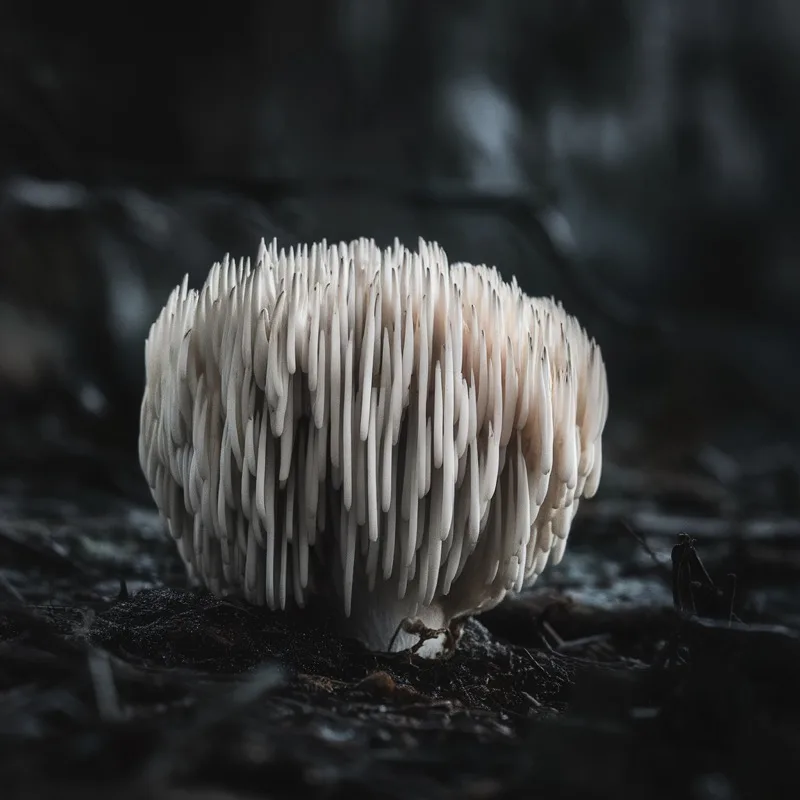
Hericium erinaceus is a saprotrophic fungus of the family Hericiaceae, commonly found on dead or wounded hardwood trees in North America, Europe, and Asia. Its morphology is characterized by a large, irregular, bulbous fruiting body with long, dangling spines, lacking a distinct cap or stipe. Key pharmacological properties are attributed to its unique bioactive compounds, including hericenones and erinacines, which have demonstrated neuroprotective and neurotrophic effects by stimulating nerve growth factor (NGF) synthesis in preclinical and clinical studies.
Reishi
Ganoderma lucidum
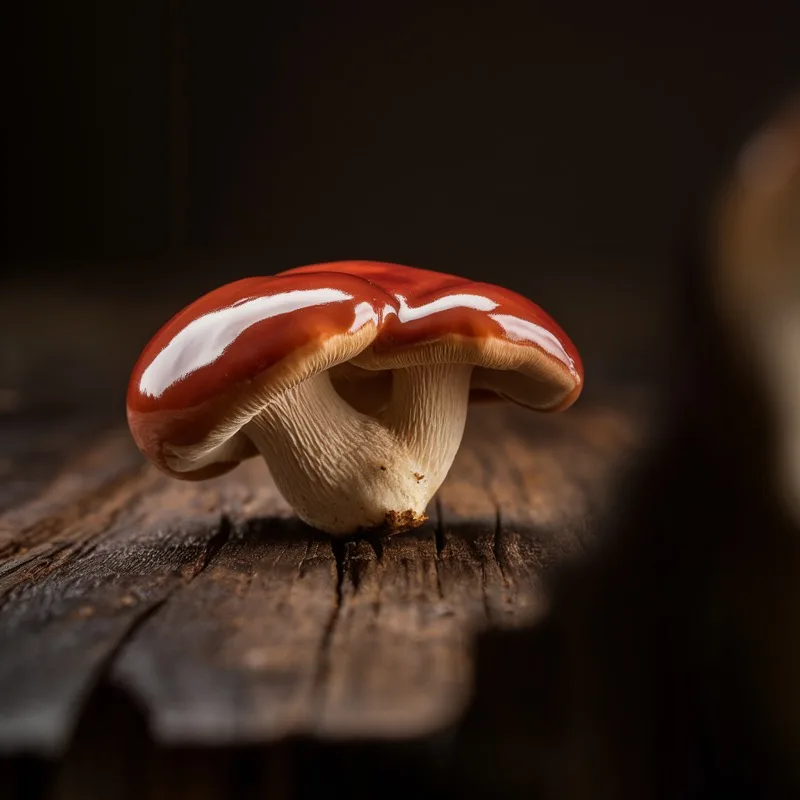
Ganoderma lucidum is a polypore basidiomycetous fungus belonging to the family Ganodermataceae, characterized by its laccate cap surface and double-walled basidiospores. This large, woody mushroom thrives in hot and humid subtropical climates, growing on decaying hardwood, and is identified by its distinct red-varnished, fan-like or kidney-shaped cap. Its key pharmacological properties include immunomodulation, hepatoprotection, and adaptogenic effects, primarily mediated by its rich content of polysaccharides and over 130 identified triterpenoid compounds.
Cordyceps
Cordyceps militaris
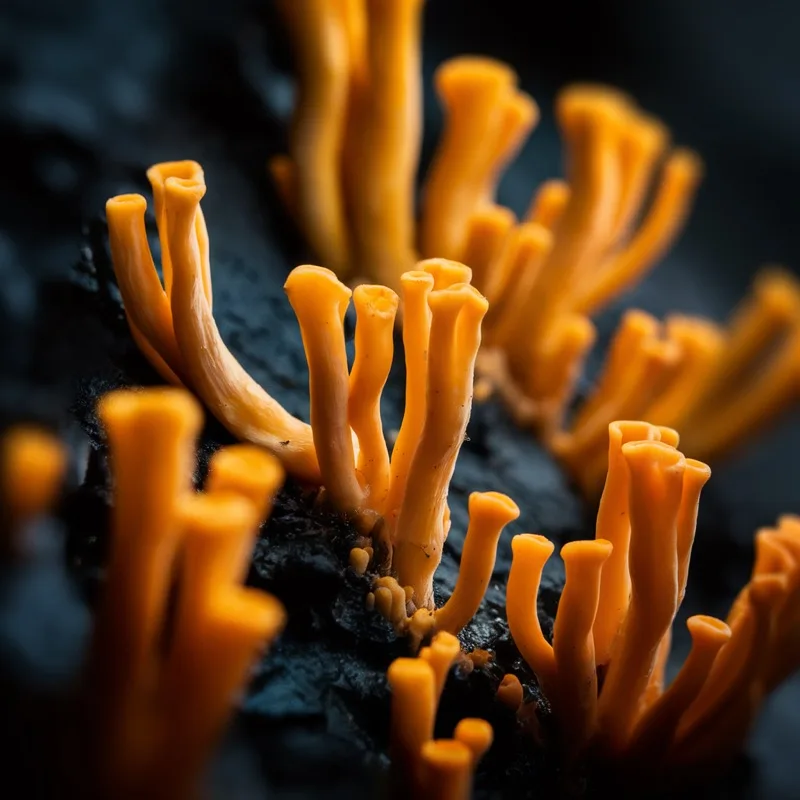
Cordyceps militaris is a parasitic ascomycete fungus belonging to the phylum Ascomycota, which primarily grows on the pupae of insects in the Northern Hemisphere. It is characterized by its bright orange-red, club-shaped fruiting body that emerges from the deceased host. This fungus is a source of several bioactive compounds, most notably cordycepin (3'-deoxyadenosine) and adenosine, which are nucleoside analogs with demonstrated effects on cellular energy metabolism, oxygen utilization, and anti-inflammatory pathways.
Click anywhere or press Escape to close