

$19.99 $19.99/serving
View Review
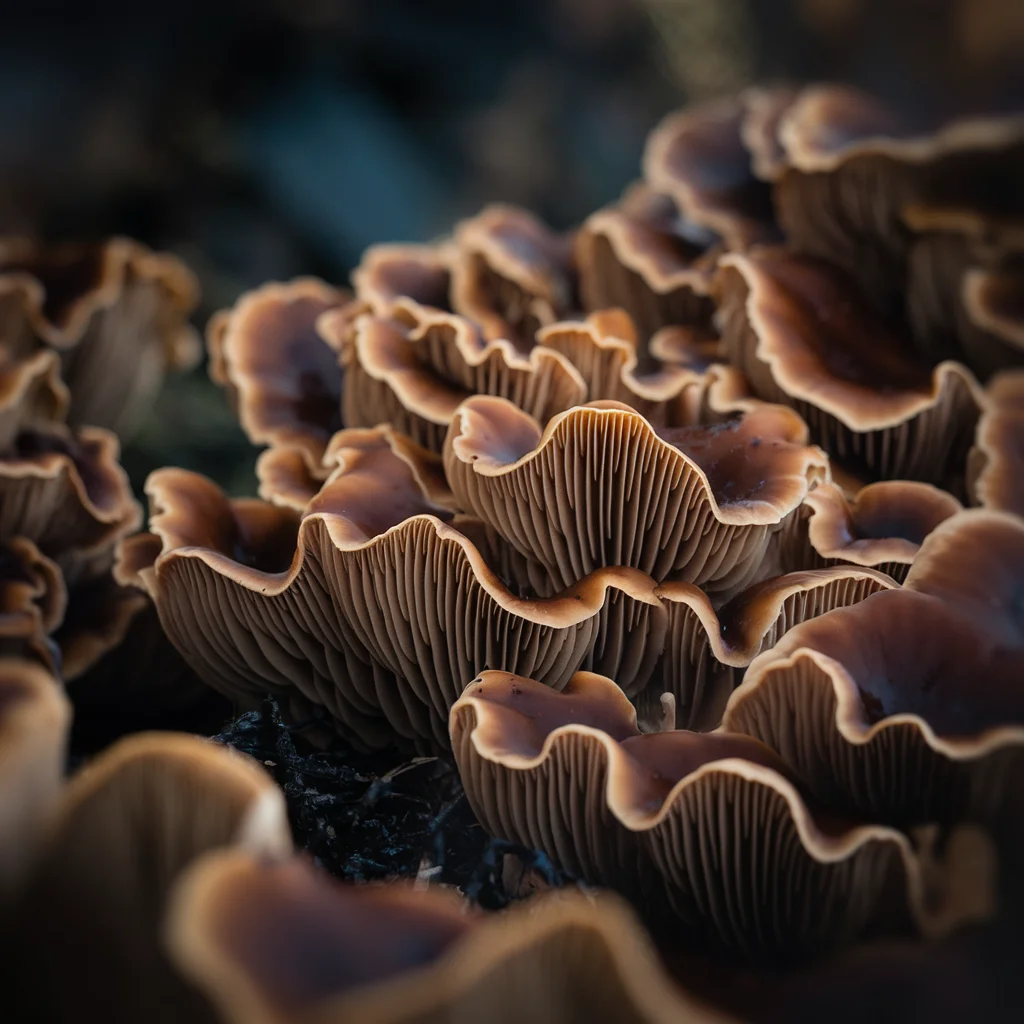
Psilocybe cyanescens

Board-Certified Physician · Medical Reviewer · Last Reviewed February 25, 2026
Latin Name
Psilocybe cyanescens
Research Level
Moderate
Popularity
#31 Ranked
Cited Studies
3 References
Psilocybe cyanescens is a potent psilocybin-containing basidiomycete of the family Hymenogastraceae, distinguished by its characteristically undulating (wavy) cap margin. The pileus is 2–5 cm in diameter, caramel to chestnut brown when moist, fading to pale buff when dry (hygrophanous), with a distinctive wavy or rippled edge at maturity. The stipe is 3–8 cm, white, and bruises strongly blue — a hallmark of psilocybin oxidation. P. cyanescens is a wood-decomposing saprotroph that fruits prolifically on lignin-rich substrates, particularly wood chip mulch, in the Pacific Northwest of North America and increasingly in urban and suburban landscapes across Europe, Australia, and New Zealand. It contains psilocybin at concentrations of 0.85–1.96% dry weight, making it significantly more potent than P. cubensis. Its spread via wood chip mulch in landscaping has made it one of the most commonly encountered potent psilocybin species in temperate urban environments.
Wavy Caps — Psilocybe cyanescens — are among the most potent commonly encountered psilocybin mushrooms in the world. Named for the distinctive wavy, undulating edge of their caps at maturity, they are a wood-loving species that has spread globally through the use of wood chip mulch in landscaping. Originally native to the Pacific Northwest of North America, they are now found in urban and suburban environments across Europe, Australia, and New Zealand, often fruiting in spectacular quantities in garden beds, parks, and along paths mulched with hardwood chips.
The potency of Wavy Caps is significantly higher than the more commonly known Psilocybe cubensis. With psilocybin concentrations reaching nearly 2% of dry weight, they can be roughly twice as potent as typical cubensis specimens. This means that dosing requires particular care — what might be a moderate dose of cubensis could produce an intense experience with cyanescens. A typical moderate dose is 1–2 grams dried, compared to 2–3.5 grams for cubensis.
Wavy Caps fruit in autumn and early winter, typically after the first cold rains, in temperatures between 2–13°C. They grow in dense clusters on wood chip mulch, particularly alder, birch, and other hardwood chips. The fruiting body features a caramel-brown cap that fades to pale buff as it dries, white gills that darken to purple-brown with spore maturity, and a white stem that bruises intensely blue when handled — one of the most reliable identification features.
The ecological story of Wavy Caps is remarkable. Paul Stamets, the renowned mycologist who has championed their documentation, has described how the species has essentially hitchhiked around the world via the wood chip mulch trade. Landscaping companies spread wood chips in parks and gardens, and P. cyanescens spores colonize this substrate, establishing new populations far from the species' original range. This has made them one of the most successful invasive fungi in urban environments.
For identification purposes, key features include: wavy cap margin (especially at maturity), caramel-brown hygrophanous cap, intense blue bruising on the stem and cap margin, purple-brown spore print, and growth on wood chips (never in grass or on dung). Important lookalikes to distinguish include Galerina marginata (deadly poisonous, also grows on wood) — the key difference is that Galerina has a rusty-brown spore print versus the purple-brown of Psilocybe.
Wavy Caps are not commercially available and are illegal to possess in most jurisdictions. This information is provided for educational and harm reduction purposes. If encountered in a jurisdiction where psilocybin is legal or decriminalized, the same principles of responsible use apply: accurate identification is critical, start with a low dose given the high potency, ensure a safe and comfortable setting, and have a trusted companion present. The intensity of the Wavy Cap experience can be surprising even for those experienced with other psilocybin species.
Verified supplements featuring Wavy Caps — ranked by quality and value
Based on available research evidence
Based on available research evidence
Based on available research evidence
Based on available research evidence
Based on available research evidence
⚠️ Important: These statements have not been evaluated by the FDA. Functional mushrooms are not intended to diagnose, treat, cure, or prevent any disease. Consult with a healthcare provider before starting any new supplement.
The primary psychoactive prodrug in magic mushrooms. Converted to psilocin in the body, it activates serotonin 5-HT2A receptors, producing altered perception and consciousness. Breakthrough therapy designation from FDA for treatment-resistant depression.
The pharmacologically active metabolite of psilocybin. Directly binds serotonin receptors to produce psychedelic effects including visual changes, emotional openness, and neuroplasticity.
A psilocybin analog found in magic mushrooms. Thought to modulate the psychedelic experience, potentially contributing to the "entourage effect" of whole mushroom preparations.
A demethylated analog of psilocybin. Its pharmacological role is still being studied, but it may contribute to the overall psychoactive profile of psilocybin mushrooms.
Wavy Caps has been used in traditional medicine systems for centuries, particularly in Traditional Chinese Medicine (TCM) and other Asian healing practices.
📖 Historical Context: Traditional use does not guarantee efficacy or safety. Modern research is ongoing to validate traditional claims and understand mechanisms of action.
Wavy Caps has moderate research support with several preclinical studies and some human trials. More research is needed to confirm benefits.
Research Areas: Studies have focused on potent psilocybin source, visual experience, emotional processing, and other potential applications. Results are promising but more high-quality human trials are needed.
The following studies have been reviewed and cited by our medical team to support the claims on this page.
Stamets, P. (1996). Psilocybin Mushrooms of the World: An Identification Guide. Ten Speed Press.
Paul Stamets' definitive field guide documented P. cyanescens as one of the most potent and widespread wood-loving Psilocybe species, detailing its identification features, habitat preferences, and the ecological factors driving its global spread through wood chip mulch.
Stijve, T., & Kuyper, T. W. (1985). Occurrence of psilocybin in various higher fungi from several European countries. Planta Medica, 51(5), 385-387.
This analytical study quantified psilocybin and psilocin concentrations in European P. cyanescens specimens, establishing its potency profile and confirming its status as one of the more potent psilocybin species encountered in European habitats.
Borovička, J., Noordeloos, M. E., Gryndler, M., & Oborník, M. (2011). Molecular phylogeny of Psilocybe cyanescens complex in Europe, with reference to the position of the secotioid Weraroa novae-zelandiae. Mycological Progress, 10(2), 149-155.
This molecular phylogenetic study clarified the taxonomy of the P. cyanescens species complex in Europe, confirming the identity of European populations and their relationship to Pacific Northwest populations, important for accurate identification and harm reduction.
📋 Methodology: References are sourced from PubMed, major mycology journals, and peer-reviewed medical literature. Each entry is reviewed by Dr. Igor I. Bussel, M.D. for accuracy and clinical relevance.
Board-Certified Physician · Medical Reviewer
Board-certified physician affiliated with UC Irvine, the Gavin Herbert Eye Institute, and the UCI School of Medicine. Dr. Bussel reviews all mushroom encyclopedia entries for scientific accuracy, ensuring claims are supported by peer-reviewed research.
Last reviewed: February 25, 2026
Discover more functional mushroom species
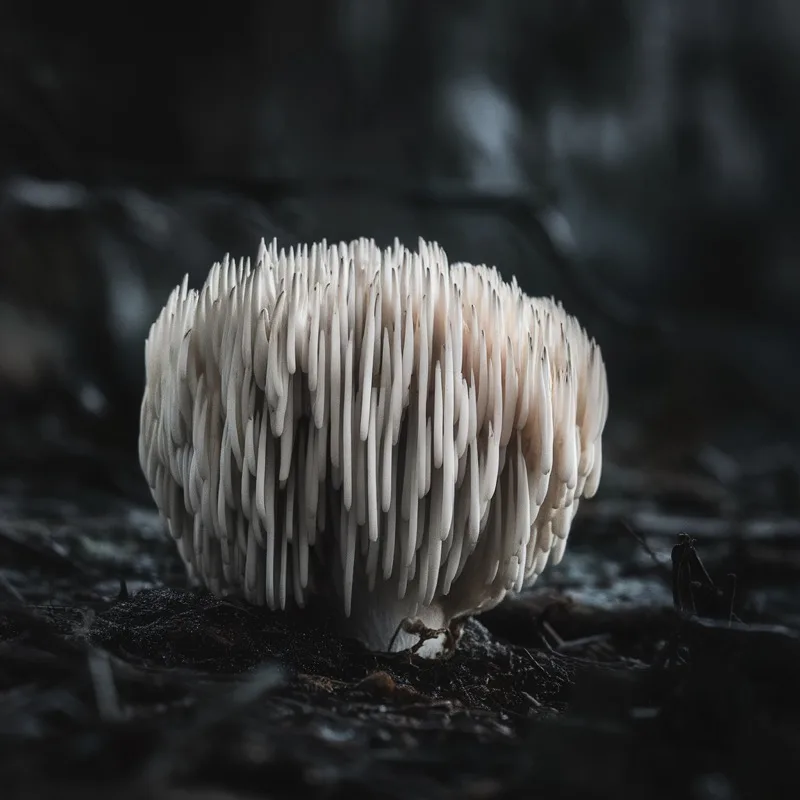
Hericium erinaceus
Hericium erinaceus is a saprotrophic fungus of the family Hericiaceae, commonly found on dead or wounded hardwood trees in North America, Europe, and Asia. Its morphology is characterized by a large, irregular, bulbous fruiting body with long, dangling spines, lacking a distinct cap or stipe. Key pharmacological properties are attributed to its unique bioactive compounds, including hericenones and erinacines, which have demonstrated neuroprotective and neurotrophic effects by stimulating nerve growth factor (NGF) synthesis in preclinical and clinical studies.
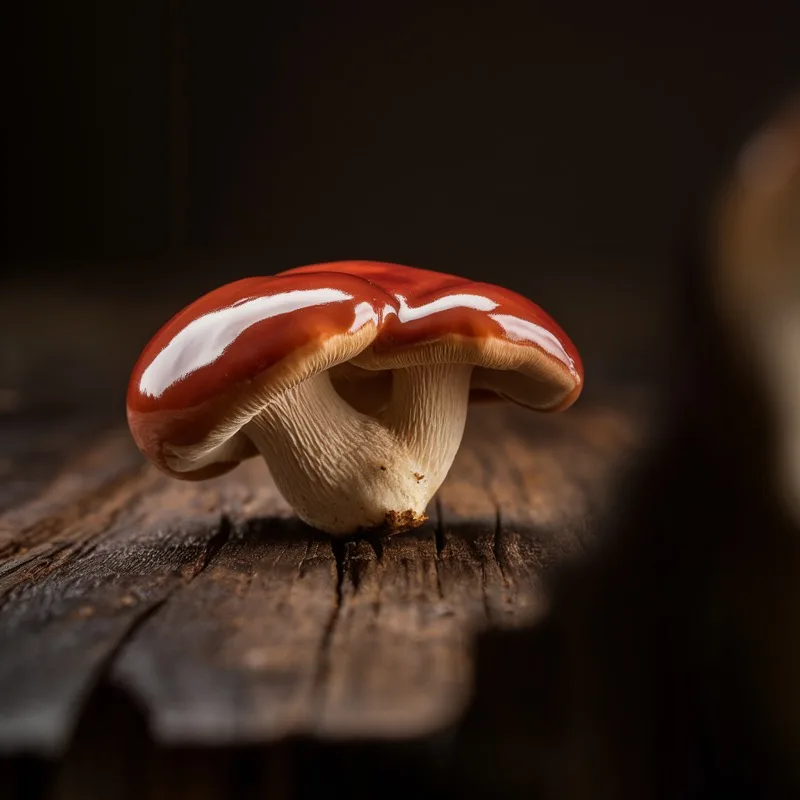
Ganoderma lucidum
Ganoderma lucidum is a polypore basidiomycetous fungus belonging to the family Ganodermataceae, characterized by its laccate cap surface and double-walled basidiospores. This large, woody mushroom thrives in hot and humid subtropical climates, growing on decaying hardwood, and is identified by its distinct red-varnished, fan-like or kidney-shaped cap. Its key pharmacological properties include immunomodulation, hepatoprotection, and adaptogenic effects, primarily mediated by its rich content of polysaccharides and over 130 identified triterpenoid compounds.
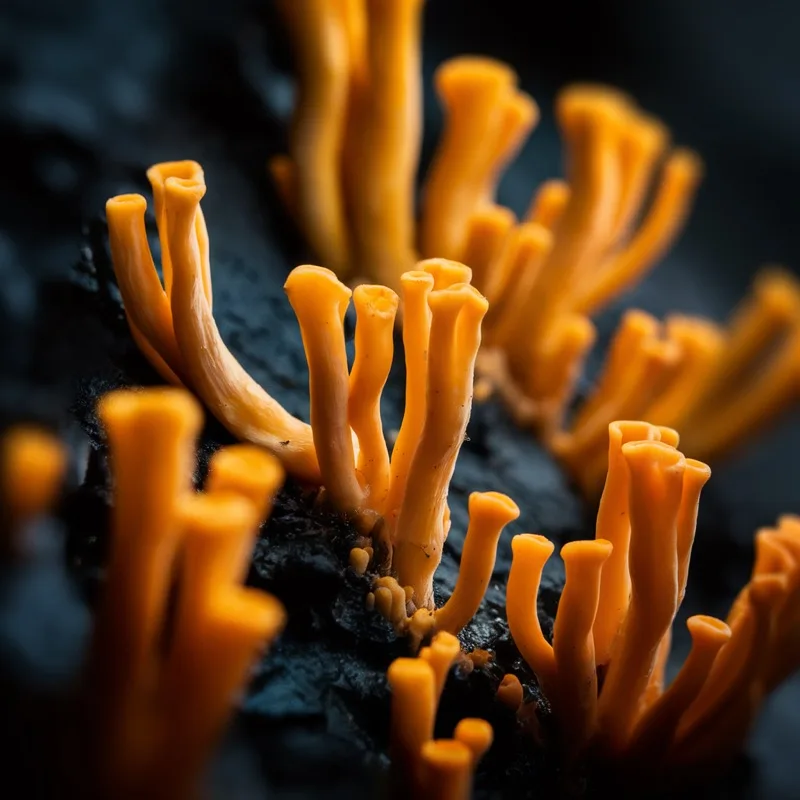
Cordyceps militaris
Cordyceps militaris is a parasitic ascomycete fungus belonging to the phylum Ascomycota, which primarily grows on the pupae of insects in the Northern Hemisphere. It is characterized by its bright orange-red, club-shaped fruiting body that emerges from the deceased host. This fungus is a source of several bioactive compounds, most notably cordycepin (3'-deoxyadenosine) and adenosine, which are nucleoside analogs with demonstrated effects on cellular energy metabolism, oxygen utilization, and anti-inflammatory pathways.
Click anywhere or press Escape to close