
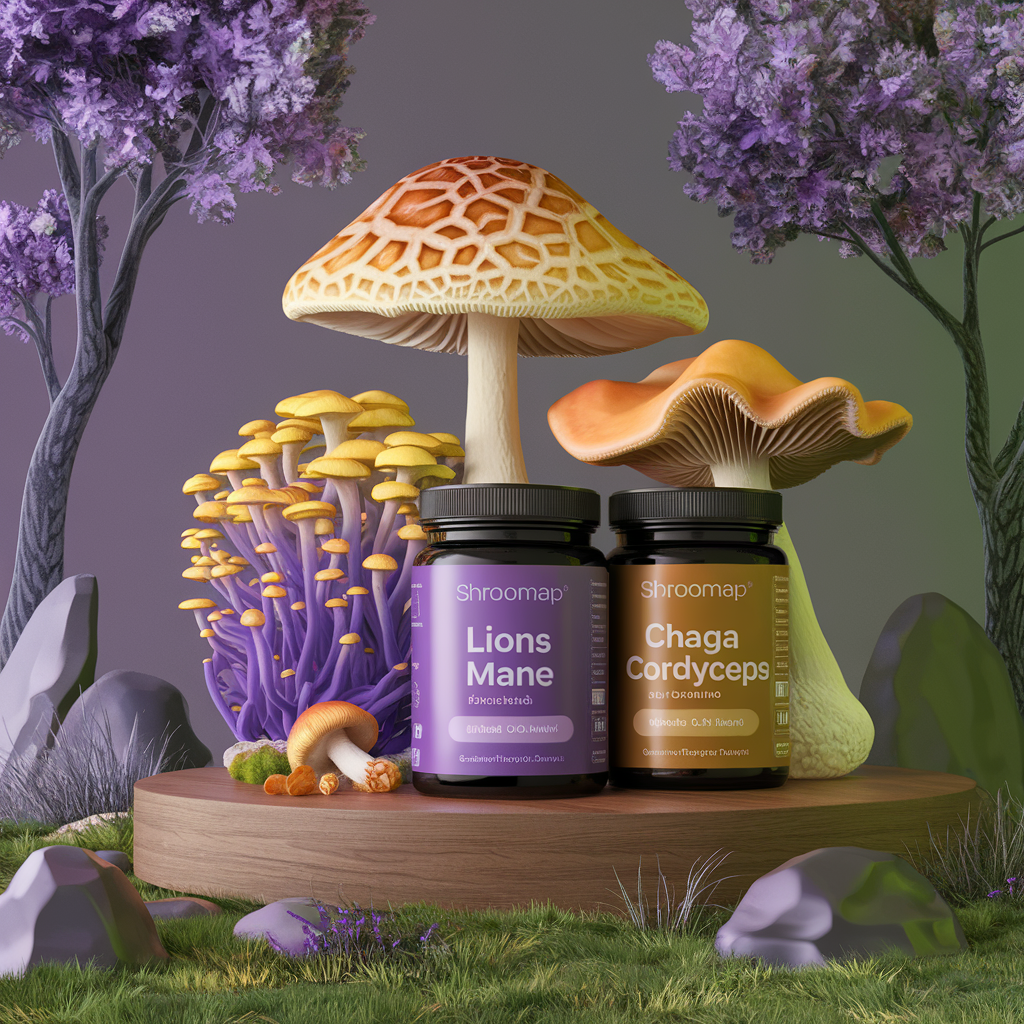

01Why I Started Thinking About Lion's Mane Differently
When patients ask me about Lion's Mane (Hericium erinaceus), they almost always frame it as a "brain supplement." And that's fair — the research on nerve growth factor (NGF) stimulation and cognitive support is legitimately compelling. But over the past few years I've been increasingly struck by a parallel body of literature that doesn't get nearly as much attention: the effect of Lion's Mane on gut health.
Given how tightly the gut and brain are coupled — through the vagus nerve, the enteric nervous system, and a web of immune and hormonal signals we're still mapping — this maybe shouldn't be surprising. If you improve one end of the axis, you tend to move the needle at the other. Still, the specific mechanisms here are worth unpacking. Let me walk you through what we know.
02The Active Players: Beta-Glucans and Polysaccharides
Before diving into the gut data, it helps to understand what's actually doing the work. Lion's Mane contains two classes of bioactive compounds that get most of the scientific attention:
- Hericenones — small molecules found in the fruiting body that can cross the blood-brain barrier and stimulate NGF synthesis.
- Erinacines — found primarily in the mycelium, also NGF-stimulating but with slightly different targets.
- Beta-glucan polysaccharides — large carbohydrate chains that largely do not get absorbed in the small intestine. They travel to the colon intact, where they interact directly with your gut microbiota.
That last point is key. The polysaccharides in Lion's Mane behave essentially as prebiotic fiber — food for beneficial bacteria. And a 2025 review in the International Journal of Biological Macromolecules (PMID: 40339863) specifically documented the gastrointestinal and microbiota effects of these compounds, finding that they influence microbial composition in ways that extend well beyond what you'd expect from generic dietary fiber.
03What the Studies Show
1. Modulating the Microbiome
A 2021 study in Carbohydrate Polymers (Yang et al., PMID: 33838836) examined the immunoregulatory polysaccharides of Lion's Mane and their effect on gut microbiota. The researchers found that supplementation increased the relative abundance of beneficial genera including Bifidobacterium and Lactobacillus, while reducing populations of potentially harmful bacteria. This kind of microbiota remodeling is associated with reduced systemic inflammation and improved gut barrier function.
A follow-up study by Tian et al. (2023, PMID: 36546454) published in the Journal of the Science of Food and Agriculture extended these findings to an immunocompromised mouse model. Animals treated with cyclophosphamide (a chemotherapy agent notorious for wrecking gut flora) showed significant microbiome recovery when given Lion's Mane polysaccharides — suggesting the mushroom's prebiotic effects may be particularly relevant for people whose gut ecology has been disrupted by illness or medication.
2. Ulcerative Colitis and Intestinal Inflammation
One of the most clinically relevant studies in this space was published in Molecular Nutrition & Food Research by Ren et al. (2023, PMID: 36443636). The team used a cynomolgus monkey model of ulcerative colitis — a notably translatable species for gut research — and treated them with mycelium-derived polysaccharides from Lion's Mane. The results showed significant reduction in colonic inflammation, improved mucosal integrity, and favorable shifts in the gut microbiota profile.
Now, I'll be honest: monkey data doesn't automatically translate to humans, and we don't yet have large-scale randomized controlled trials in patients with IBD. But the mechanistic picture is coherent. Lion's Mane polysaccharides appear to reduce pro-inflammatory cytokines (particularly TNF-α and IL-6), strengthen tight junction proteins that keep the gut lining sealed, and selectively feed bacteria that produce short-chain fatty acids (SCFAs) — the metabolites that colonocytes depend on for energy.
3. The Gut-Brain Axis Connection
Here's where things get genuinely exciting for me as a clinician. A 2025 study in the Journal of Ethnopharmacology (Koszła et al., PMID: 39848413) looked at ex vivo gut-brain axis modulation in humans using a combination of Lion's Mane and Reishi. While the combination design makes it harder to isolate Lion's Mane specifically, the study found measurable effects on mood-related neurochemical markers that the researchers attributed at least partly to gut microbial biotransformation of the polysaccharides.
A complementary piece came from Priori et al. (2023, PMID: 38248449) in Biology (Basel), who examined the gut-neuroinflammaging-cognitive axis in elderly mice. "Neuroinflammaging" — neuroinflammation driven by the aging process — is increasingly understood as a gut-mediated phenomenon. Older mice treated with Lion's Mane extract showed improvements in both gut microbiome composition and markers of neuroinflammation, along with better cognitive performance on maze tests. The authors proposed that the gut-driven anti-inflammatory effects were a meaningful contributor to the cognitive benefits.
04How This Works: A Plain-English Mechanism
Here's my simplified model of what Lion's Mane appears to do in the gut:
- Arrives intact in the colon. The large polysaccharide chains resist digestion in the small intestine and reach the colon where they encounter the microbiota.
- Selectively feeds beneficial bacteria. Species like Bifidobacterium and Lactobacillus can ferment these polysaccharides, giving them a competitive advantage over less-favorable species.
- Boosts SCFA production. The fermentation process generates short-chain fatty acids (butyrate, propionate, acetate) that nourish colonocytes, tighten the gut lining, and reduce local inflammation.
- Reduces systemic inflammation. A healthier gut barrier means fewer bacterial components (like lipopolysaccharide, or LPS) leaking into the bloodstream. LPS is a potent driver of systemic and neuroinflammation.
- Signals up the vagus nerve. The improved gut environment sends different signals to the brain via the vagus nerve — less "danger" signaling, potentially more serotonin precursor availability (roughly 90% of the body's serotonin is made in the gut).
None of these steps are unique to Lion's Mane — this is basically the prebiotic pathway that a lot of functional fibers use. What appears to distinguish Lion's Mane is the specificity of its polysaccharide structures, which seem to have particularly pronounced effects on immune-modulating bacterial populations compared to more generic fibers like inulin.
05Who Might Benefit Most?
Based on the available evidence, I think the clearest candidates for gut-focused Lion's Mane supplementation are:
| Profile | Rationale | Evidence Level |
|---|---|---|
| Post-antibiotic gut dysbiosis | Prebiotic effect may accelerate microbiome recovery | Moderate (animal models) |
| Mild IBD / IBS with inflammation | Anti-inflammatory effect on gut mucosa | Moderate (animal + in vitro) |
| Older adults concerned about cognitive decline | Gut-brain axis may be one mechanism behind cognitive benefits | Emerging (elderly mouse models) |
| High psychological stress | Stress disrupts microbiome; improving gut ecology may buffer stress response | Preliminary |
| Anyone interested in long-term brain health | Reducing neuroinflammation via gut pathway is a plausible preventive strategy | Theoretical / emerging |
I want to be careful not to oversell this. We're still largely in the preclinical phase for gut-specific Lion's Mane claims. The cognitive benefits have more human trial support at this point. But the mechanistic case is solid enough that I don't think it's unreasonable to consider gut health a genuine secondary benefit of quality Lion's Mane supplementation.
06Dosing and Form Considerations
If you're taking Lion's Mane specifically for gut benefits, a few things are worth knowing:
Fruiting body vs. mycelium
The polysaccharide profile differs between fruiting body and mycelium extracts. Erinacines (the NGF-stimulating compounds) are more concentrated in mycelium. For gut effects, the polysaccharide content is what matters most, and this tends to be higher in fruiting body extracts — particularly those standardized to beta-glucan content. Be skeptical of any supplement that doesn't list beta-glucan percentage; grain-based mycelium products often have more starch than active polysaccharides.
Dose
Most of the human studies on Lion's Mane cognitive effects have used 500–3,000 mg per day of standardized extract. For gut-specific effects, similar ranges appear in the preclinical literature. I generally suggest starting at 500–1,000 mg of a standardized fruiting body extract and adjusting from there.
Timing
Since the gut benefits operate through a prebiotic mechanism, timing relative to meals matters less than it does for supplements targeting acute blood levels. Consistency over weeks to months is what moves the microbiome needle — don't expect dramatic changes in the first week.
Pairing
There's a reasonable case for combining Lion's Mane with a diverse dietary fiber intake. The polysaccharides from Lion's Mane work alongside — not instead of — the fermentable fibers you get from vegetables, legumes, and whole grains. If your diet is already high in diverse plant fibers, you may see more modest additional benefit from Lion's Mane on the gut front.
07What We Still Don't Know
Honest medicine requires acknowledging the gaps. Here's what's missing from the evidence base:
- Large-scale human RCTs specifically targeting gut outcomes. Most studies are animal or in vitro. The human trials we have are primarily focused on cognitive endpoints.
- Optimal polysaccharide structures. The 2025 review flagged "structure-function correlation" as an open question — we don't yet know exactly which molecular architectures within Lion's Mane polysaccharides drive which specific microbiome effects.
- Long-term safety in IBD. While the anti-inflammatory signals are promising for conditions like ulcerative colitis, I'd want to see proper clinical trials before recommending Lion's Mane as an adjunct therapy for anyone with active inflammatory bowel disease. It's not a replacement for established treatment.
- Bioavailability variation. As with all polysaccharide-based supplements, individual variation in gut microbial composition affects how effectively these compounds are fermented. Someone who already has a robust Bifidobacterium population will likely respond differently than someone with a depleted microbiome.
08My Practical Take
I think Lion's Mane is one of the more scientifically interesting functional mushrooms available, and the gut health data — while not yet definitive — adds a legitimate dimension to its appeal. It's not a probiotic, it's not a treatment for IBS or Crohn's, and it won't undo a poor diet. But as a complement to a fiber-rich eating pattern, quality supplementation appears to offer a meaningful prebiotic benefit with a good safety profile.
For patients who ask me about it: if you're taking Lion's Mane for brain health anyway, the gut benefits are a reasonable bonus to expect. If you're specifically trying to support gut health and haven't considered it, it's worth discussing with your physician — particularly if you've recently completed a course of antibiotics or are managing mild gut inflammation.
Just make sure you're buying a product made from actual fruiting body extract with documented beta-glucan content. The supplement space for functional mushrooms still has more than its share of underdosed or mislabeled products, and that matters a lot when the active ingredient is the polysaccharide fraction.
09Frequently Asked Questions
Can Lion's Mane help with IBS?
There's promising preclinical evidence that Lion's Mane polysaccharides reduce gut inflammation and improve the microbiome balance that's often disrupted in IBS. However, we don't yet have randomized controlled trials in IBS patients specifically. If you have IBS, I'd treat Lion's Mane as a potentially supportive complement to established dietary interventions (like a low-FODMAP approach if indicated) rather than a primary treatment. Talk to your gastroenterologist before adding any new supplement.
How long does it take to see gut health benefits?
Because the mechanism is prebiotic — essentially reshaping your microbiome over time — expect a minimum of 4–8 weeks of consistent use before assessing gut-related effects. Microbiome changes are measured in weeks to months, not days. This is different from, say, taking a probiotic for acute traveler's diarrhea. Patience is part of the protocol here.
Is there a difference between Lion's Mane powder and capsules for gut health?
The form matters less than the source and standardization. Whether you take a capsule or dissolve a powder, what counts is the total beta-glucan content reaching your colon. That said, powders dissolved in hot water may partially hydrolyze some polysaccharides, potentially altering their fermentation profile — though the clinical significance of this is unclear. If gut health is your primary goal, a standardized extract capsule with a documented polysaccharide percentage is probably your most reliable option.
Tags
Frequently Asked Questions
What does this article about "Lion's Mane and Gut Health: What the Research Actually Shows" cover?
A physician's evidence-based look at how Lion's Mane mushroom polysaccharides support gut microbiota, reduce intestinal inflammation, and may strengthen the gut-brain axis.
Who reviewed this article?
This article was medically reviewed by Dr. Blane Schilling, MD, Family Medicine Physician and Integrative Wellness Specialist.
What topics are related to this article?
This article covers topics including lion's mane, gut health, microbiome, brain-gut axis, polysaccharides. Explore our blog for more articles on these subjects.


