
One of the occupational hazards of following the functional mushroom literature is discovering that some of the best-researched species are almost completely unknown to Western supplement consumers. Phellinus linteus — called Mesima in Korea (메시마) and Sanghuang in Chinese medicine — is a textbook example. This dark, bracket-shaped polypore fungus has been used medicinally in East Asia for over two thousand years, and as of 2022 it has a randomized, double-blinded, placebo-controlled clinical trial demonstrating immune enhancement in humans.
And yet, if you walk into a typical supplement shop in the United States, the odds are slim you'll find it on the shelf.
That gap between evidence and market penetration is worth examining. In this piece I'll walk through what Phellinus linteus actually does, what the research shows, and whether it deserves a place in your supplement regimen — particularly if immune function is a priority.
01What Is Phellinus linteus?
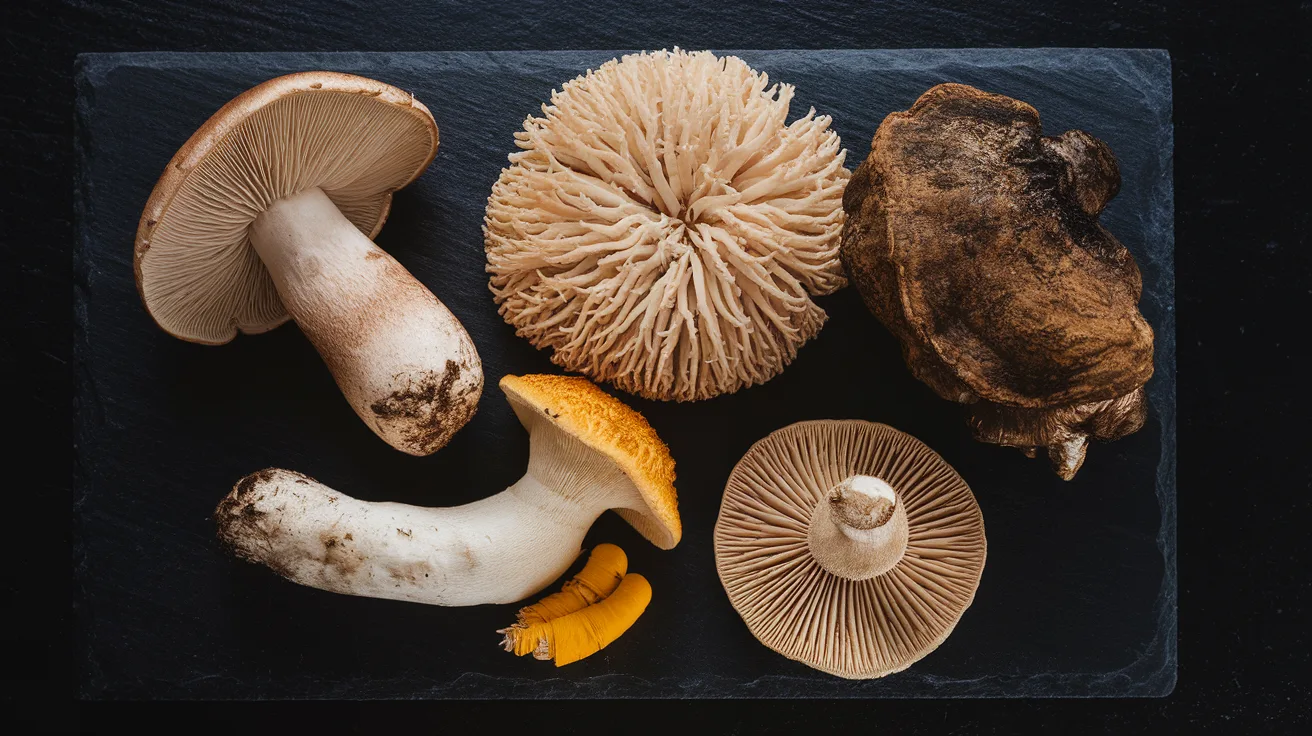
Phellinus linteus (recently reclassified as Tropicoporus linteus in some taxonomic systems, though the old name remains dominant in the literature) is a wood-rotting bracket fungus in the Hymenochaetaceae family. It grows primarily on mulberry trees throughout East Asia and parts of Central America. Unlike the soft-capped mushrooms you'd recognize from a grocery store, Phellinus forms a hard, hoof-shaped conk with a dark brown to black exterior and a yellow-orange underside.
In traditional Korean medicine, Mesima is classified as one of the nine "divine mushrooms" historically used for conditions ranging from digestive disorders to cancer. It isn't edible in the culinary sense — you wouldn't cook with it — but extracts from the fruiting body and mycelium have been prepared as teas, decoctions, and more recently as standardized supplements.
02Key Bioactives: What Makes Phellinus linteus Different
Hispolon — The Signature Compound
Hispolon is a yellow pigment and polyphenol unique to Phellinus species. It's drawn significant pharmacological attention for its combination of anti-inflammatory, antioxidant, anticancer, and antidiabetic properties — which is a lot to ask of one molecule, but the data is genuinely compelling.
Based on articles retrieved from PubMed, a 2022 study in Pharmaceutics by Lee et al. (DOI: 10.3390/pharmaceutics14071423) systematically examined hispolon's immunomodulatory mechanisms. In LPS-stimulated macrophages (the standard in vitro model for acute inflammatory signaling), hispolon:
- Significantly inhibited production of IL-6 and TNF-α — two of the most clinically relevant pro-inflammatory cytokines in chronic disease
- Suppressed NF-κB activation, the master switch for inflammatory gene expression
- Inhibited STAT3 signaling, a pathway implicated in both inflammation and tumor survival
- Scavenged reactive oxygen and nitrogen species (ROS/RNS), demonstrating direct antioxidant activity
Crucially, hispolon also decreased lymphocyte proliferation and modulated Th1/Th2 cytokine balance in immune cell studies — suggesting it acts more as a modulator than a simple stimulant. This bidirectional immune regulation is a pattern we see in the best-studied medicinal mushrooms, and it's generally what we want from a supplement: nuanced calibration, not a blunt immune "boost."
Beta-Glucan Polysaccharides
Like other medicinal fungi, Phellinus linteus is rich in beta-1,3 and beta-1,6-glucan polysaccharides that interact with immune receptors — particularly Dectin-1, TLR2, and complement receptor CR3 — on the surface of macrophages, dendritic cells, and natural killer cells. These interactions trigger downstream immune priming that enhances the body's ability to identify and respond to pathogens and aberrant cells.
The polysaccharide fraction of Phellinus is the primary driver of the immune effects measured in clinical trials, though hispolon likely acts synergistically when whole extracts are consumed.
Other Notable Compounds
Phellinus linteus also contains inoscavin, davallialactone, interfungins, and various sterols including ergosterol (a vitamin D precursor). The full phytochemical picture is complex, which is part of why whole extracts tend to outperform isolated compounds in both preclinical and clinical research.
03The Clinical Trial: RCT Evidence for Immune Enhancement
This is where Phellinus linteus distinguishes itself. Most functional mushrooms have preclinical data (cell cultures and animal models) or population-level observational data. Very few have been through the gold standard: a randomized, double-blinded, placebo-controlled trial in humans.
According to PubMed, Ku et al. published exactly that in 2022 in the journal Medicine (DOI: 10.1097/MD.0000000000030226). The CONSORT-compliant trial enrolled 98 subjects and randomly assigned them to receive either 1,000 mg of Phellinus linteus extract or a matched dextrin placebo — administered as one capsule twice daily — for eight weeks.
The primary outcome was natural killer (NK) cell activity, measured by a lactate dehydrogenase cytotoxicity assay (the same assay used by the Korean Ministry of Food and Drug Safety to approve functional ingredients). Secondary outcomes included a panel of cytokines: TNF-α, IFN-γ, IL-1β, IL-2, IL-6, IL-12, IgG1, IgG2, and IgM.
Results: NK cell activity was significantly increased in the Phellinus linteus group compared to placebo (p < .05). There was a non-significant trend toward improvement in the cytokine panel. Importantly, no adverse effects on liver function or renal function were observed — addressing a safety concern that sometimes comes up with novel mushroom supplements.
NK cells are the immune system's first-line assassins — they patrol tissues looking for virus-infected cells and early-stage cancer cells, killing on contact without requiring prior "training" by antigen presentation. Enhancing NK cell activity is one of the most meaningful immune endpoints you can measure, and it's directly relevant to real-world outcomes including cancer surveillance and viral defense.
04Anti-Cancer Research: Animal and In Vitro Data
The preclinical anticancer literature on Phellinus linteus is extensive — more so than most Western supplement consumers realize. Studies have demonstrated:
- Inhibition of tumor growth in implanted sarcoma mouse models
- Suppression of chemically-induced colon cancer (azoxymethane/DSS model) and breast cancer (DMBA model) in rodents
- Selective cytotoxicity — cancer cells showed 2–3 times greater sensitivity to Phellinus extract than normal cells in vitro
- Synergistic effects when combined with standard chemotherapy drugs in animal tumor models
A 2020 study in Nutrients by Fang et al. (DOI: 10.3390/nu12082279) examined a combination extract of Phellinus linteus, Chaga, and bamboo leaf (marketed as MeshimaMax) in multiple tumor models. In each case, treatment significantly inhibited tumor incidence or growth compared to controls, with macrophage phagocytosis measurably activated as a proposed mechanism. The combination also improved outcomes when used alongside chemotherapy.
I want to be appropriately careful here. Animal models of cancer do not reliably predict human outcomes — the history of oncology is littered with compounds that cured mice and failed in people. This is not evidence that Phellinus linteus treats human cancer. It is evidence of a plausible mechanism and a rationale for further clinical investigation.
05How Does It Compare to Turkey Tail and Reishi?
If you're already familiar with the evidence base for functional mushrooms, you'll naturally want to know where Phellinus linteus fits relative to the better-known immune species.
| Mushroom | Strongest Clinical Evidence | Key Immune Mechanism | Unique Compound |
|---|---|---|---|
| Turkey Tail (T. versicolor) | Cancer adjunct (PSK approved in Japan); gut microbiome | Th1 polarization via PSK/PSP | Polysaccharide-K (PSK) |
| Reishi (G. lucidum) | Immune modulation, fatigue, sleep quality | NF-κB inhibition; NK enhancement | Triterpene ganoderic acids |
| Phellinus linteus | NK cell enhancement (RCT 2022); NF-κB/STAT3 inhibition | NK activation; macrophage priming; hispolon anti-inflammatory | Hispolon |
| Shiitake (L. edodes) | Cancer adjunct (lentinan approved); immune modulation | Dectin-1/NK/T-cell activation | Lentinan, eritadenine |
The honest answer is that turkey tail has more human clinical data — particularly the large trials supporting PSK as an oncology adjunct in Japan. But Phellinus linteus now has its own RCT, hispolon has a distinct mechanism not shared by other mushrooms, and the combination of NK enhancement plus NF-κB/STAT3 suppression represents a genuinely useful immunological profile.
For immune stack builders: these mushrooms are complementary rather than competitive. Turkey tail dominates the gut-microbiome/Th1 lane. Reishi handles the stress-adaptation and sleep-quality lane. Phellinus linteus brings hispolon's anti-inflammatory specificity and measurable NK enhancement. There's no known interaction between them at standard supplement doses.
06Supplementation Guidance
The clinical trial used 1,000 mg of standardized Phellinus linteus extract twice daily (2,000 mg/day total) for eight weeks. This is a reasonable starting point for therapeutic intent. For general immune maintenance, some practitioners use 500–1,000 mg/day.
As with all medicinal mushrooms, extraction method matters significantly:
- Hot water extract favors polysaccharide (beta-glucan) content — the primary immune-active fraction
- Ethanol or dual extract captures hispolon and other fat-soluble phenolics in addition to polysaccharides
- Raw fruiting body powder has lower bioavailability due to intact chitin cell walls and is generally the least efficient form
Look for products that specify fruiting body (not mycelium-on-grain), state a beta-glucan percentage (ideally 20–30%+), and have a certificate of analysis from an independent laboratory. Phellinus linteus is not yet as widely quality-tested as lion's mane or reishi, so brand diligence matters more than usual — not less.
07Safety Profile
The RCT found no adverse effects on liver or renal function at 1,000 mg/day for eight weeks. The long history of traditional use in East Asia without significant reported toxicity further supports the safety profile.
Standard precautions apply:
- Individuals on immunosuppressant medications should consult their prescribing physician before adding any immune-modulating supplement
- Cancer patients undergoing active treatment should discuss with their oncologist — not because Phellinus is harmful, but because the interaction with specific immunotherapy protocols is unstudied
- Pregnant and breastfeeding individuals should err on the side of caution in the absence of specific safety data for these populations
08The Sourcing Challenge
I'll be direct: finding a quality Phellinus linteus supplement in the Western market is harder than finding lion's mane or reishi. The species is more expensive to cultivate than many common culinary mushrooms, and the market is smaller. Some products labeled as "Phellinus" may contain related species (P. igniarius, P. robustus) with different compound profiles.
This is one area where verifying species identity through a supplier's documentation — or choosing brands that have undergone third-party testing — is especially important. The Korean regulatory system has been more rigorous in standardizing Phellinus linteus products than most Western regulators, so products originating from Korean GMP-certified manufacturers tend to be more reliable.
09Frequently Asked Questions
Is Phellinus linteus the same as Meshima?
Yes. Mesima (sometimes spelled Meshima) is the Korean name for Phellinus linteus, and it's the name most commonly used in Korean supplement contexts. Sanghuang is the Chinese name for the same species (though in China "Sanghuang" can sometimes refer to related Phellinus species). The Latin binomial Phellinus linteus (or its newer taxonomic name Tropicoporus linteus) is the most precise identifier for research purposes.
Can I take Phellinus linteus every day long-term?
The RCT ran eight weeks without safety signals. Long-term daily use beyond that hasn't been formally studied, though traditional use suggests reasonable tolerability. I typically suggest a cyclical approach — 8–12 weeks on, 2–4 weeks off — not because there's evidence of harm from continuous use, but because it's a reasonable precautionary framework in the absence of longer trials. That said, the risk profile of this mushroom at standard doses is genuinely low.
How does Phellinus linteus taste, and can I make tea from it?
The raw fruiting body is woody, bitter, and not palatable in the way culinary mushrooms are. Traditional preparations involve long decoctions (simmering the dried conk in water for hours) to extract the active compounds into a dark, bitter tea. This is one application where supplement capsules offer a genuine convenience advantage over whole-mushroom preparation — the decoction method works but requires time, fresh material, and tolerance for a very assertive flavor. If you're committed to the tea route, a 30–60 minute simmer of dried Phellinus pieces is a reasonable starting point, with the resulting liquid consumed 2–3 times daily.
10The Bottom Line
Phellinus linteus may be the most underappreciated immune-supporting mushroom in the functional supplement world. It has a randomized controlled trial showing NK cell enhancement in healthy adults, compelling mechanistic data on hispolon's anti-inflammatory and anti-proliferative activity, and a traditional use history spanning millennia. It is not as widely available as lion's mane or reishi, and sourcing a quality product requires more due diligence — but the evidence-to-hype ratio is exceptionally good, precisely because so few people in the West have heard of it.
If you're building a serious immune stack and you're already sorted on turkey tail and reishi, Phellinus linteus is the next item I'd examine. The clinical data is real, the mechanism is distinct, and the compound story — especially hispolon's dual role as anti-inflammatory and immune modulator — is genuinely interesting for anyone who follows this space.
— Dr. Blane Schilling, MD, Family Medicine Physician and Integrative Wellness Specialist
Tags
Frequently Asked Questions
What does this article about "Phellinus linteus (Mesima): The Overlooked Immune Mushroom With an RCT to Its Name" cover?
Most people have never heard of Phellinus linteus (Mesima). A physician breaks down the randomized controlled trial data, key bioactives like hispolon, and why this bracket fungus deserves a spot in any serious immune stack.
Who reviewed this article?
This article was medically reviewed by Dr. Blane Schilling, MD, Family Medicine Physician and Integrative Wellness Specialist.
What topics are related to this article?
This article covers topics including phellinus linteus, mesima, sanghuang, NK cells, hispolon. Explore our blog for more articles on these subjects.