
Head-to-Head · April 2026
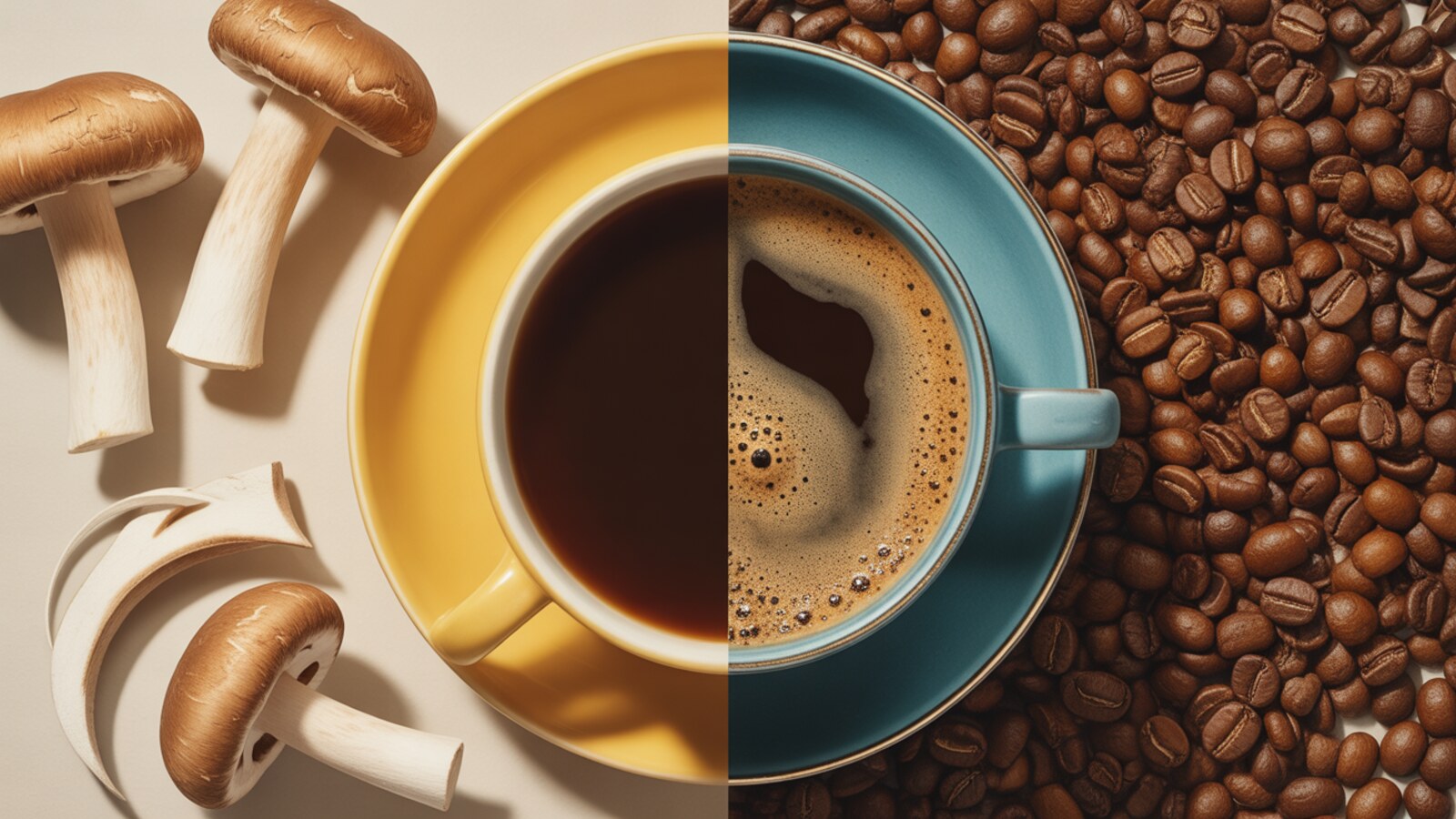
Mushroom Coffee vs Regular Coffee — The Honest Comparison
Mushroom coffee wins on reduced caffeine, adaptogenic benefits, and cognitive additives. Regular coffee wins on cost, acute stimulation, and taste familiarity. Neither is "better" for everyone — your coffee habit determines which is right.
Published 2026-04-23
| Attribute | Mushroom Coffee | Regular Coffee |
|---|---|---|
| Caffeine per cup | 40-75mg (most brands) | 95-180mg (drip, espresso) |
| Mushroom benefits | Yes — Lion's Mane, Reishi, Cordyceps | None |
| Polyphenols/antioxidants | Lower (less coffee content) | Higher — significant source |
| Cost per serving | $1.00-2.00+ | $0.15-1.00 |
| Taste | Milder, often cacao/chicory notes | Full coffee acidity + bitterness |
| Jitter/crash risk | Low (reduced caffeine + adaptogens) | Higher at multiple cups |
| Cognitive support | Yes (Lion's Mane) + caffeine | Caffeine-driven only |
| Availability | DTC, specialty retailers | Every grocery store + coffee shop |
Who should pick mushroom coffee
- You get jitters or afternoon crashes from regular coffee
- You want cognitive support beyond caffeine (Lion's Mane specifically)
- You value reduced cortisol reactivity for stress-heavy workdays
- You'd otherwise be supplementing mushroom capsules anyway
- You're not a heavy (3+ cup) coffee drinker
Who should stick with regular coffee
- You're budget-constrained — regular coffee is 3-10x cheaper
- You need high caffeine (>150mg per cup) for endurance sports or demanding schedules
- You love black coffee flavour and taste is non-negotiable
- You've never had caffeine anxiety and don't need adaptogenic support
- You already supplement Lion's Mane / Reishi separately
The pragmatic middle path
Many users we talk to end up doing both: mushroom coffee in the morning (for the adaptogenic base + moderate caffeine), regular coffee mid-morning if they need additional stimulation, and occasional mushroom elixirs in the evening if stress is high. The either/or framing is usually a false choice — your morning cup and your afternoon cup don't need to be the same drink.
Related reading
Frequently Asked Questions
Is mushroom coffee healthier than regular coffee?
For most users, yes — modestly. Mushroom coffee runs lower caffeine (40-75mg vs 95mg+), adds adaptogenic compounds (reduces cortisol reactivity from the caffeine dose), and includes functional mushroom benefits (Lion's Mane cognition, Reishi calm, Cordyceps energy) that regular coffee lacks. Regular coffee has more antioxidants per cup by virtue of higher coffee content. Net: mushroom coffee wins for caffeine-sensitive users and anyone prioritizing functional add-ons; regular coffee wins for budget and stronger acute stimulation.
Does mushroom coffee taste like regular coffee?
Depends on the brand and blend. Coffee-based blends (RYZE, Four Sigmatic) taste like mild low-acid coffee with subtle earthy undertones. Chicory or cacao-based blends (MUD\WTR Rise) taste more like mocha or chai — intentionally un-coffee-like. If you love black coffee, RYZE is the closest switch; if you already drink lattes, MUD\WTR Rise is smooth. Try single-serve packets before committing to a tub.
Is mushroom coffee better for anxiety than regular coffee?
Yes for most users. Two mechanisms: (1) less caffeine = less acute caffeine-induced anxiety; (2) Reishi content (if present) actively modulates cortisol and reduces stress reactivity. Users who specifically quit regular coffee because of jitters almost universally tolerate mushroom coffee. If anxiety is severe, consider caffeine-free mushroom elixirs (MUD\WTR :Balance, Four Sigmatic Reishi Hot Cocoa) instead.
Will mushroom coffee keep me awake like regular coffee?
Less so — and that's usually the point. 40-75mg caffeine is enough for most users to feel focused without the full stimulation of 95-150mg regular coffee. If you're a heavy coffee drinker (2+ cups/day at full caffeine), you may feel under-stimulated on a single mushroom coffee cup. Options: drink 2 cups, add a shot of espresso on top, or pick a dual-caffeine blend like Everyday Dose (~95mg caffeine).
Is mushroom coffee safe every day?
Yes. Daily use is the intended pattern. Functional mushrooms work cumulatively — consistency matters more than any individual cup. Caffeine limits apply normally (FDA advises ≤400mg total daily for healthy adults). Mushroom coffee cannot 'build up' negative effects. Rotate blends occasionally to diversify mushroom species intake.
Can I replace all my coffee with mushroom coffee?
Yes, functionally. The practical test: can you drink 1-2 cups of mushroom coffee and feel the stimulation you need? If yes, you're good. If you need 200mg+ caffeine to function, full replacement may leave you under-caffeinated — stack mushroom coffee in the morning with regular coffee mid-morning, or pick higher-caffeine mushroom coffee blends (Everyday Dose, Laird Superfood).
Does mushroom coffee have side effects that regular coffee doesn't?
Rarely. Possible mushroom-coffee-specific side effects: (1) mild GI upset in the first week as beta-glucans activate gut-associated lymphoid tissue — resolves; (2) mild dream intensification (Reishi effect) — harmless; (3) in rare users, mild allergic reaction to specific mushroom species. Regular coffee side effects (jitters, crashes, cortisol spike) are typically LESS pronounced with mushroom coffee due to lower caffeine.
Is mushroom coffee more expensive than regular coffee?
Yes — meaningfully. Budget mushroom coffee runs $1.00-1.70 per serving at subscription. Premium runs $2+. Typical supermarket coffee runs $0.15-0.40 per cup. Specialty coffee (blue bottle, single-origin pour-over) runs $0.50-1.00. Mushroom coffee is 2-10x the cost of regular coffee. The premium is for the mushroom content and brand operations — not the coffee quality itself. Whether it's worth it depends on whether you'd supplement Lion's Mane / Reishi / Cordyceps separately anyway.