
Before adding Huitlacoche to your routine
This is a legal, non-psychoactive functional mushroom guide. Talk with your clinician first if you take blood thinners, diabetes medications, immune-modulating drugs, or are in cancer treatment.
Best supplement form
Cooked fresh, frozen, or canned huitlacoche as food
Compare products that match the form most often recommended for Huitlacoche.
Evidence summary
Emerging research
2 cited references reviewed for the Huitlacoche guide.
For healthy aging
Nutritional Density, Essential Amino Acids, Antioxidant Protection
See how Huitlacoche compares with Reishi, Chaga, and Turkey Tail for older adults.
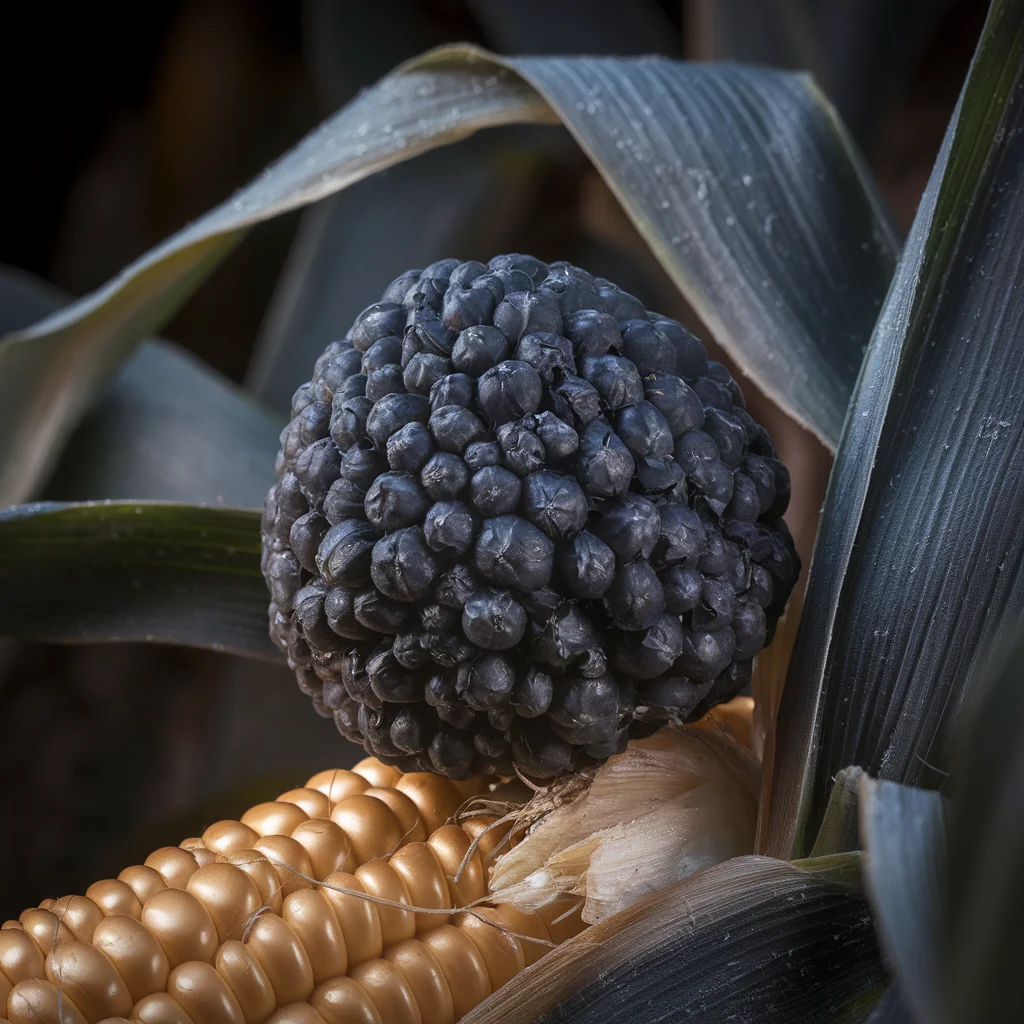
Ustilago maydis is a biotrophic pathogenic basidiomycete fungus of the order Ustilaginales that infects Zea mays (corn), inducing the formation of large, tumor-like galls (2–15 cm) on ears, stalks, and tassels. These galls, known as huitlacoche (from Nahuatl: cuitlacochtli) or Mexican truffle, are filled with blue-black teliospores and are considered a culinary delicacy in Mexican cuisine, commanding premium prices in gourmet markets. Nutritionally, huitlacoche is remarkable: it contains significantly higher protein content than uninfected corn (up to 12% vs. 3.5%), elevated levels of the essential amino acid lysine (typically deficient in corn), essential fatty acids including oleic and linoleic acid, beta-glucans, and various phenolic compounds with antioxidant activity. The fungus has been consumed in Mesoamerica since pre-Columbian times and is increasingly recognized as a functional food with emerging superfood status.
#26
Popularity Rank
Emerging
Research Level
2
References
5
Key Compounds
Lysine
Independent Research Review · Last Reviewed May 3, 2026
Key Takeaway
Huitlacoche (Ustilago maydis) is a functional mushroom with a emerging level of scientific research supporting its use. Its primary bioactive compounds - Lysine, Beta-Glucans, Ustilagic Acid, and 2 others - have been studied for benefits including nutritional density, essential amino acids, antioxidant protection, immune support. Current evidence is primarily based on preclinical research and traditional use, with human clinical trials still emerging. Huitlacoche is ranked #26 in popularity among functional mushroom species, with 2 cited research references in our database. The most commonly recommended form is cooked fresh, frozen, or canned huitlacoche as food. Typical supplemental dosages range from 500 mg to 3,000 mg per day depending on extract concentration and intended use.
Buyer decision guide
Huitlacoche evidence, forms, and safety
Use this section to compare evidence strength, active compounds, researched forms, and safety limits for huitlacoche.
Evidence snapshot
Huitlacoche provides protein (11.5-16.4% dry basis), lysine (6.3-7.3 g/100g protein), essential fatty acids like oleic and linoleic, minerals including phosphorus (342 mg/kg) and magnesium (263 mg/kg), beta-glucans (20-120 mg/100g), phenolics (113 mg GAE/kg), and vitamins A, B9, C. Preclinical studies show antioxidant, anti-inflammatory, and antimicrobial effects; human clinical evidence is lacking.
Active-compound check
Lysine supports collagen and calcium absorption; beta-glucans act as prebiotics with antidiabetic potential in preclinical models; ustilagic acid contributes to antimicrobial properties; oleic/linoleic acids are essential fatty acid precursors; phenolics and flavonoids provide antioxidant activity per compositional analyses in peer-reviewed studies.
Best researched form
Fresh or cooked galls from corn ears, as traditionally consumed in Mexican cuisine, are the primary researched form. Nutritional profiles from raw and cooked samples confirm retention of proteins, amino acids, fibers, minerals, and vitamins; no human trials on extracts or supplements identified.
Safety limits
Generally safe as a culinary fungus when fresh and properly cooked. Traditional Mexican use reports no major adverse effects; preclinical data supports low toxicity. Lacks formal human safety trials; source from clean corn to avoid contaminants. Consult healthcare provider for allergies or digestive sensitivities.
SCIENCE OVERVIEW.
Evidence Grade: D
Huitlacoche is an emerging area of research with growing scientific interest. Early studies show promise but more research is needed.
Key Insight
Huitlacoche — pronounced "wee-tlah-KOH-cheh" — is one of the most unusual and culturally fascinating entries in the mushroom world. It is not a mushroom in the traditional sense but rather a fungus...
Traditional Use
Huitlacoche has been used in traditional medicine systems for centuries, particularly in Traditional Chinese Medicine (TCM) and other Asian healing practices.
Historical Context: Traditional use does not guarantee efficacy or safety. Modern research is ongoing to validate traditional claims.
Huitlacoche — pronounced "wee-tlah-KOH-cheh" — is one of the most unusual and culturally fascinating entries in the mushroom world. It is not a mushroom in the traditional sense but rather a fungus (Ustilago maydis) that infects corn, transforming the kernels into swollen, silvery-grey to blue-black galls filled with spores. While American and European farmers have historically considered it a crop disease called "corn smut," Mexican cuisine has treasured it as a delicacy for thousands of years, earning it the nickname "Mexican truffle" and "the food of the gods."
Nutritionally, huitlacoche is remarkably superior to the corn it replaces. The fungal transformation dramatically increases the protein content (from about 3.5% to 12%), adds the essential amino acid lysine (which corn normally lacks), and introduces essential fatty acids, beta-glucans, and antioxidant compounds. This unique nutritional profile has attracted attention from food scientists and nutritionists who see huitlacoche as a potential superfood — a natural way to enhance the nutritional value of one of the world's most important staple crops.
The culinary history of huitlacoche stretches back to the Aztec Empire and beyond. Pre-Columbian Mesoamerican peoples harvested it from corn fields and prepared it in quesadillas, tamales, soups, and sauces. Today, it remains a prized ingredient in Mexican haute cuisine, featured in upscale restaurants from Mexico City to New York. Its flavor is complex — earthy, smoky, slightly sweet, with notes of mushroom and corn — and it has a soft, almost creamy texture when cooked.
Huitlacoche is available fresh (in season, typically summer), canned, and frozen from specialty food retailers and Mexican grocery stores. As a supplement ingredient, it is still emerging, though some companies are beginning to explore huitlacoche extract for its beta-glucan and antioxidant content. Fresh huitlacoche should be used within a few days of harvest, while canned versions offer year-round availability.
For those interested in trying huitlacoche, the simplest preparation is sautéing it with onions, garlic, and epazote (a Mexican herb), then using it as a filling for quesadillas or tacos. It can also be blended into sauces, added to risotto, or used as a sophisticated pizza topping. The flavor is accessible to most palates and pairs well with cheese, cream, and fresh herbs.
From a wellness perspective, huitlacoche represents the growing intersection of culinary tradition and functional food science. Its unique amino acid profile, beta-glucan content, and antioxidant properties make it a nutritionally dense food that also happens to be delicious. As interest in traditional and indigenous foods continues to grow, huitlacoche is poised to gain wider recognition as both a gourmet ingredient and a functional food with genuine health benefits.
Find Your Ideal Huitlacoche Dose
Personalized dosage recommendations based on your experience level, body weight, and goals.
SIMILAR SPECIES.
Editorial Reviewer
Independent Research Review
The editorial team reviews mushroom encyclopedia entries for sourcing, clarity, safety caveats, and citation support.
Last reviewed: May 3, 2026
Click anywhere or press Escape to close