$19.99 $0.50/serving
View Profile You must be at least 21 years old to enter this site.
This is a legal, non-psychoactive functional mushroom guide. Talk with your clinician first if you take blood thinners, diabetes medications, immune-modulating drugs, or are in cancer treatment.
Best supplement form
Compare products that match the form most often recommended for Royal Sun.
Evidence summary
2 cited references reviewed for the Royal Sun guide.
For healthy aging
See how Royal Sun compares with Reishi, Chaga, and Turkey Tail for older adults.
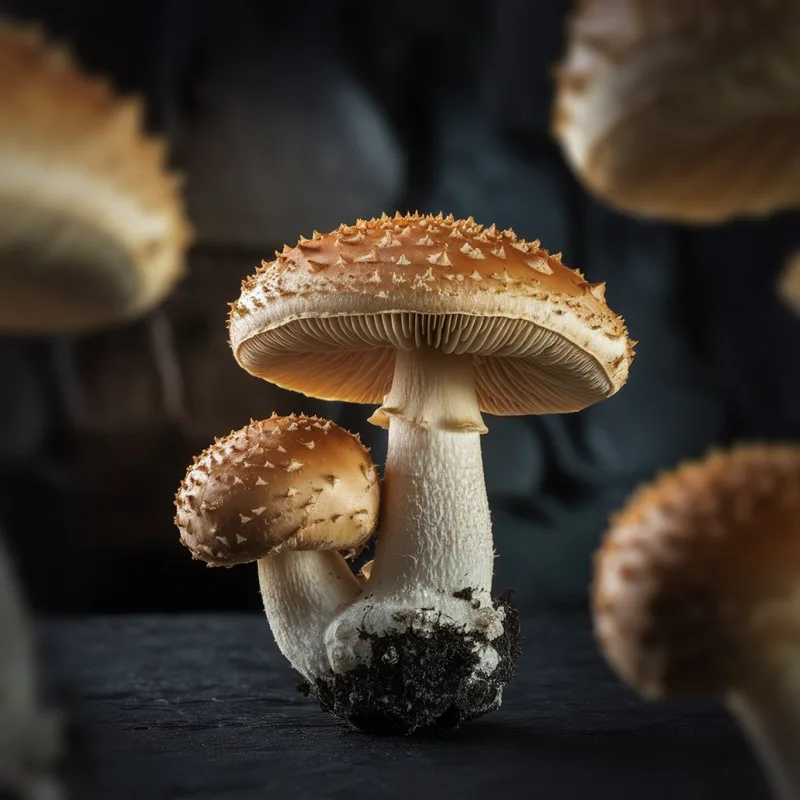
Agaricus subrufescens (syn. Agaricus blazei Murill) is a basidiomycete fungus belonging to the family Agaricaceae, native to the Atlantic forest highlands of Brazil. This saprophytic species thrives in humus-rich soils, characterized by a large, fleshy, brownish-gold convex cap, a short, stout stipe, and free lamellae that transition from pinkish to dark chocolate-brown as its smooth basidiospores mature. Key pharmacological properties are attributed to its rich composition of polysaccharides, particularly beta-glucans, which are responsible for its well-documented immunomodulatory, anti-inflammatory, and anti-tumor activities in both preclinical and clinical settings.
#13
Popularity Rank
Moderate
Research Level
2
References
3
Key Compounds
Independent Research Review · Last Reviewed May 3, 2026
Royal Sun (Agaricus blazei) is a functional mushroom with a moderate level of scientific research supporting its use. Its primary bioactive compounds - Beta-Glucans, Polysaccharides, Ergosterol - have been studied for benefits including immunity, antioxidants, overall wellness. Several preclinical studies and initial human trials support these uses, though additional clinical research is ongoing. Royal Sun is ranked #13 in popularity among functional mushroom species, with 2 cited research references in our database. The most commonly recommended form is hot-water agaricus subrufescens extract with beta-glucan testing. Typical supplemental dosages range from 500 mg to 3,000 mg per day depending on extract concentration and intended use.
Buyer decision guide
Use this section to compare evidence strength, active compounds, researched forms, and safety limits for royal sun.
Preclinical studies show Agaricus blazei contains beta-glucans that modulate immune cells like macrophages and NK cells (Hetland et al., 2011; da Silva et al., 2013). Limited human trials suggest potential immunomodulatory effects, such as reduced allergy symptoms when combined with standard treatments (2019 birch pollen study). No robust evidence supports claims for cancer, diabetes, or cardiovascular benefits. Further clinical trials needed.
Agaricus blazei contains beta-glucans and polysaccharides linked to immune modulation in preclinical models (da Silva et al., 2013; Györfi et al., 2010). Ergosterol acts as a vitamin D2 precursor with antioxidant properties. Also includes minerals like potassium, magnesium, and zinc. Bioactive levels vary by cultivation; human bioavailability data limited (Wiley review, 2013).
Most studies use hot-water extracts of Agaricus blazei, highlighting polysaccharides and beta-glucans for immune effects (Hetland et al., 2011; da Silva et al., 2013). Culinary use as edible mushroom provides dietary fiber and minerals (Györfi et al., 2010). Human trials often employ oral extracts; no superior form established due to sparse clinical data (BYU review).
Agaricus blazei is generally well-tolerated in short-term use per limited human studies, but contains agaritine, a potential carcinogen in high doses (noted in radianthealthproject.org). No established safe intake levels; avoid in pregnancy, autoimmune conditions, or with immunosuppressants due to immune-modulating effects. Consult physician; product contamination risks exist.
Royal Sun has moderate research support with several preclinical studies and some human trials. More research is needed to confirm benefits.
In plain English, Royal Sun (also known as Himematsutake, God's Mushroom, or Cogumelo do Sol) is a stout, handsome mushroom with a golden-brown cap and thick white stem that's native to the Atlantic...
Royal Sun has been used in traditional medicine systems for centuries, particularly in Traditional Chinese Medicine (TCM) and other Asian healing practices.
Historical Context: Traditional use does not guarantee efficacy or safety. Modern research is ongoing to validate traditional claims.
In plain English, Royal Sun (also known as Himematsutake, God's Mushroom, or Cogumelo do Sol) is a stout, handsome mushroom with a golden-brown cap and thick white stem that's native to the Atlantic rainforests of Brazil. It was relatively unknown outside of South America until Japanese researchers visiting Brazil in the 1960s noticed that communities consuming this mushroom regularly seemed to have remarkably low rates of certain diseases. That observation kicked off decades of research, particularly in Japan and Brazil, that established Royal Sun as one of the most studied medicinal mushrooms for immune support.
What sets Royal Sun apart is its exceptionally high beta-glucan content — some of the highest measured in any mushroom species. Beta-glucans are complex sugars that act as biological response modifiers, essentially training your immune system to be more alert and responsive. The research on Royal Sun's immunomodulatory effects is substantial, with multiple human clinical trials demonstrating its ability to enhance natural killer cell activity and modulate immune responses. In Japan, it became one of the most popular health supplements in the early 2000s, with annual sales reaching hundreds of millions of dollars.
Royal Sun has a pleasant almond-like aroma and a sweet, mild flavor — quite different from the earthy or bitter profiles of many other medicinal mushrooms. In Brazil, it's traditionally consumed in cooking, added to soups and stews, or brewed into teas. The Japanese developed more concentrated supplement forms and extensively studied its effects on immune function, allergy response, and overall vitality. Some clinical trials have also explored its potential to support liver health and blood sugar regulation.
You'll find Royal Sun in capsule form, as a dried powder, and occasionally as a tea. It's less widely available than mainstream mushrooms like Reishi or Lion's Mane, but quality products can be found from specialized functional mushroom brands. Typical dosages range from 1,000 mg to 3,000 mg per day of extract. Some people prefer whole dried Royal Sun mushrooms, which can be added to soups or rehydrated and cooked into various dishes.
When shopping for Royal Sun supplements, look for products that use the fruiting body and specify beta-glucan content. Hot water extraction is important for liberating the immune-active polysaccharides. Brazilian and Japanese manufacturers generally have the most experience cultivating this species, so products sourced from these regions may offer superior quality. Third-party testing is especially important given the higher price point of Royal Sun compared to more common mushroom supplements.
Royal Sun pairs well with other immune-supporting mushrooms in blended formulas — combining it with Turkey Tail, Maitake, and Reishi creates a comprehensive immune support stack. It's a particularly good choice for those specifically looking to support healthy immune function and who want a mushroom with a strong clinical research backing in that area.
Products containing Agaricus blazei extracts, with emphasis on verification, format, and practical daily use.

Auri Nutrition


Personalized dosage recommendations based on your experience level, body weight, and goals.
Independent Research Review
The editorial team reviews mushroom encyclopedia entries for sourcing, clarity, safety caveats, and citation support.
Last reviewed: May 3, 2026
Click anywhere or press Escape to close