🏆 Editor's Pick 🏆

Lab VerifiedThis product has been independently lab tested with full COA results available. Beta-glucan content, heavy metals, microbials, and potency have been verified.
$55.00 $1.83/serving
View Review
Grifola frondosa
Medically reviewed by Dr. Irvine Russell, M.D.
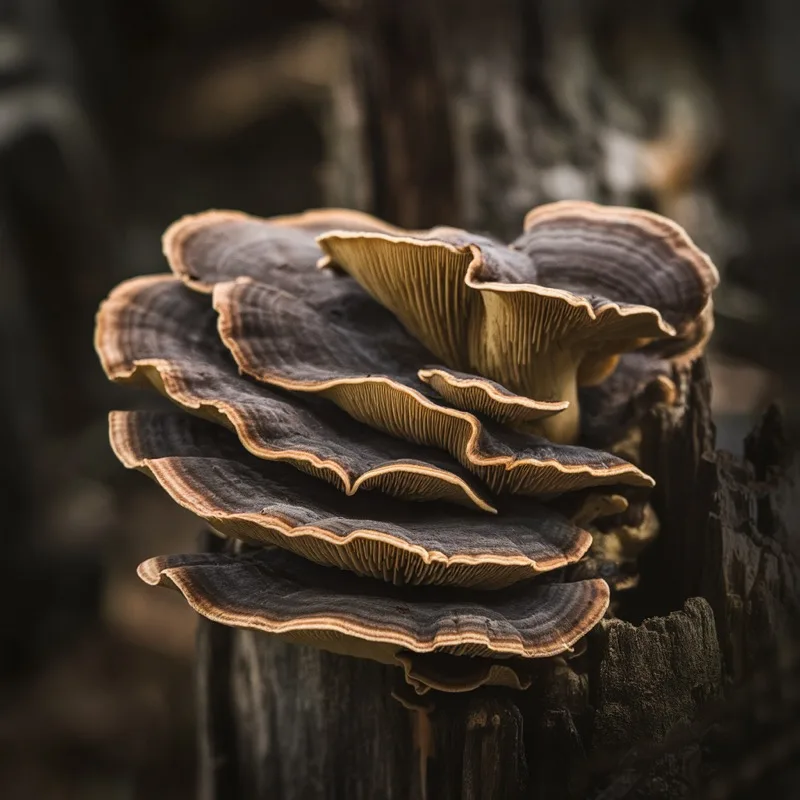
Grifola frondosa is a polypore mushroom belonging to the Meripilaceae family, found at the base of trees, especially oaks and maples, in China, Europe, and North America. Its morphology is characterized by large clusters of grayish-brown, spoon-shaped caps with wavy margins and a branched, cream-colored stipe. Key pharmacological properties include immunomodulation, blood sugar regulation, and potential anti-tumor effects, largely attributed to its polysaccharide constituents — particularly beta-glucans and the D-fraction, a purified beta-glucan extract with demonstrated immunostimulatory activity in clinical studies.
#7
Popularity Rank
Moderate
Research Level
6
References
3
Key Compounds

Board-Certified Physician · Medical Reviewer · Last Reviewed February 12, 2026
Maitake (Grifola frondosa) is a functional mushroom with a moderate level of scientific research supporting its use. Its primary bioactive compounds — Beta-Glucans, Polysaccharides, D-Fraction — have been studied for benefits including immunity, heart health, blood sugar support, weight management. Several preclinical studies and initial human trials support these uses, though additional clinical research is ongoing. Maitake is ranked #7 in popularity among functional mushroom species, with 6 cited research references in our database. The most commonly recommended form is d-fraction liquid extract. Typical supplemental dosages range from 500 mg to 3,000 mg per day depending on extract concentration and intended use.
Maitake has moderate research support with several preclinical studies and some human trials. More research is needed to confirm benefits.
In the 1990s, Japanese pharmacologist Hiroaki Nanba isolated a specific beta-glucan fraction from Maitake and ran it through immunological assays. The fraction — D-fraction — activated natural killer...
Maitake has been used in traditional medicine systems for centuries, particularly in Traditional Chinese Medicine (TCM) and other Asian healing practices.
Historical Context: Traditional use does not guarantee efficacy or safety. Modern research is ongoing to validate traditional claims.
In the 1990s, Japanese pharmacologist Hiroaki Nanba isolated a specific beta-glucan fraction from Maitake and ran it through immunological assays. The fraction — D-fraction — activated natural killer cells and macrophages at rates substantially higher than beta-glucans from shiitake or other well-studied mushrooms. When tested alongside standard cancer treatments in mice, tumor growth dropped significantly. Nanba spent the next two decades building the clinical evidence that made Maitake D-fraction one of the most studied natural immunological agents in the world.
Maitake (Grifola frondosa) is a dramatic mushroom that fruits at the base of oak trees in clusters weighing up to 50 kg in exceptional cases. Its Japanese name means "dancing mushroom" — allegedly reflecting the joy of foragers who discovered these enormous, prized clusters. It forms overlapping rosettes of fan-shaped gray-brown caps arising from a shared base, resembling a ruffled hen — hence "Hen of the Woods."
Maitake grows in deciduous forests of Japan, China, and North America, fruiting September through November. Wild Maitake is so prized in Japan that productive patch locations are closely guarded family secrets. In traditional medicine, it was used as an adaptogenic tonic for spleen and stomach disorders and to regulate what TCM calls "dampness" — a concept overlapping with modern metabolic syndrome and blood sugar dysregulation.
⚡ Key Fact
Maitake D-fraction is a 1,6-branched beta-1,3-glucan whose specific branching pattern optimizes binding to dectin-1 receptors on immune cells — making it more potent than standard beta-glucans from oats, yeast, or other mushroom species at equivalent doses.
D-fraction's unusual potency relates to its specific branching pattern and molecular weight, optimizing binding affinity for dectin-1 receptors on macrophages and dendritic cells. This triggers NF-κB and MAPK signaling, activating phagocytosis, cytokine production (IL-12, TNF-α, IFN-γ), and NK cell activation. The Kodama 2003 study demonstrated measurable NK cell activity increases in cancer patients receiving oral D-fraction.
The metabolic effects operate through different mechanisms. The SX-fraction improves insulin sensitivity by increasing GLUT4 glucose transporter expression on muscle cells and reducing hepatic glucose output. The Xiao 2021 study found Maitake GF5000 fraction reduced fasting glucose and improved insulin resistance in diabetic rats through gut microbiome modulation — specifically increasing SCFA-producing bacteria that enhance peripheral insulin sensitivity.
💊 Recommended Dosage
1,000–3,000 mg/day of whole Maitake extract, or 0.5–1 mg/day of concentrated D-fraction liquid. For metabolic applications, take with meals. The Kodama NK cell study used ~2,000–3,000 mg/day equivalent. Also excellent as food — sear at high heat until deeply golden for exceptional flavor alongside medicinal benefits.
Top products containing verified Grifola frondosa extracts.


Personalized dosage recommendations based on your experience level, body weight, and goals.
Board-Certified Physician · Medical Reviewer
Board-certified physician affiliated with UC Irvine, the Gavin Herbert Eye Institute, and the UCI School of Medicine. Dr. Russell reviews all mushroom encyclopedia entries for scientific accuracy, ensuring claims are supported by peer-reviewed research.
Last reviewed: February 12, 2026
Click anywhere or press Escape to close