$29.99 $0.50/serving
View Review
Ustilago maydis
Revisto clinicamente por Dr. Irvine Russell, M.D.
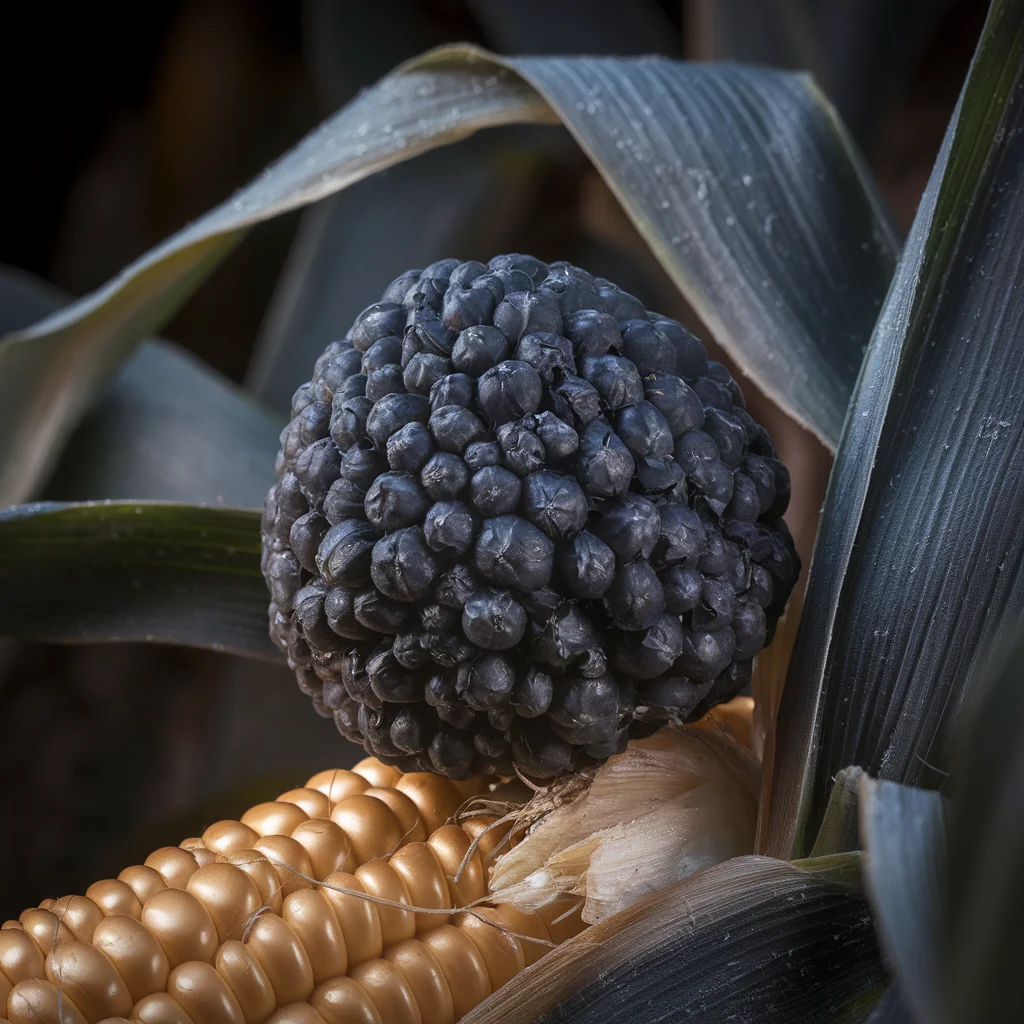
Ustilago maydis is a biotrophic pathogenic basidiomycete fungus of the order Ustilaginales that infects Zea mays (corn), inducing the formation of large, tumor-like galls (2–15 cm) on ears, stalks, and tassels. These galls, known as huitlacoche (from Nahuatl: cuitlacochtli) or Mexican truffle, are filled with blue-black teliospores and are considered a culinary delicacy in Mexican cuisine, commanding premium prices in gourmet markets. Nutritionally, huitlacoche is remarkable: it contains significantly higher protein content than uninfected corn (up to 12% vs. 3.5%), elevated levels of the essential amino acid lysine (typically deficient in corn), essential fatty acids including oleic and linoleic acid, beta-glucans, and various phenolic compounds with antioxidant activity. The fungus has been consumed in Mesoamerica since pre-Columbian times and is increasingly recognized as a functional food with emerging superfood status.
#26
Classificação de popularidade
Emerging
Nível de investigação
3
Referências
5
Compostos-chave

Board-Certified Physician · Medical Reviewer · Última revisão 25 de fevereiro de 2026
Huitlacoche é uma área de investigação emergente com crescente interesse científico. Estudos iniciais mostram resultados promissores, mas é necessária mais investigação.
Huitlacoche — pronounced "wee-tlah-KOH-cheh" — is one of the most unusual and culturally fascinating entries in the mushroom world. It is not a mushroom in the traditional sense but rather a fungus...
Huitlacoche tem sido utilizado em sistemas de medicina tradicional durante séculos, particularmente na Medicina Tradicional Chinesa (MTC) e noutras práticas curativas asiáticas.
Contexto histórico: O uso tradicional não garante eficácia ou segurança. A investigação moderna está em curso para validar as alegações tradicionais.
Huitlacoche — pronounced "wee-tlah-KOH-cheh" — is one of the most unusual and culturally fascinating entries in the mushroom world. It is not a mushroom in the traditional sense but rather a fungus (Ustilago maydis) that infects corn, transforming the kernels into swollen, silvery-grey to blue-black galls filled with spores. While American and European farmers have historically considered it a crop disease called "corn smut," Mexican cuisine has treasured it as a delicacy for thousands of years, earning it the nickname "Mexican truffle" and "the food of the gods."
Nutritionally, huitlacoche is remarkably superior to the corn it replaces. The fungal transformation dramatically increases the protein content (from about 3.5% to 12%), adds the essential amino acid lysine (which corn normally lacks), and introduces essential fatty acids, beta-glucans, and antioxidant compounds. This unique nutritional profile has attracted attention from food scientists and nutritionists who see huitlacoche as a potential superfood — a natural way to enhance the nutritional value of one of the world's most important staple crops.
The culinary history of huitlacoche stretches back to the Aztec Empire and beyond. Pre-Columbian Mesoamerican peoples harvested it from corn fields and prepared it in quesadillas, tamales, soups, and sauces. Today, it remains a prized ingredient in Mexican haute cuisine, featured in upscale restaurants from Mexico City to New York. Its flavor is complex — earthy, smoky, slightly sweet, with notes of mushroom and corn — and it has a soft, almost creamy texture when cooked.
Huitlacoche is available fresh (in season, typically summer), canned, and frozen from specialty food retailers and Mexican grocery stores. As a supplement ingredient, it is still emerging, though some companies are beginning to explore huitlacoche extract for its beta-glucan and antioxidant content. Fresh huitlacoche should be used within a few days of harvest, while canned versions offer year-round availability.
For those interested in trying huitlacoche, the simplest preparation is sautéing it with onions, garlic, and epazote (a Mexican herb), then using it as a filling for quesadillas or tacos. It can also be blended into sauces, added to risotto, or used as a sophisticated pizza topping. The flavor is accessible to most palates and pairs well with cheese, cream, and fresh herbs.
From a wellness perspective, huitlacoche represents the growing intersection of culinary tradition and functional food science. Its unique amino acid profile, beta-glucan content, and antioxidant properties make it a nutritionally dense food that also happens to be delicious. As interest in traditional and indigenous foods continues to grow, huitlacoche is poised to gain wider recognition as both a gourmet ingredient and a functional food with genuine health benefits.
Melhores produtos com extratos verificados de Ustilago maydis extratos.
Esta informação destina-se apenas a fins educativos e não deve substituir aconselhamento médico profissional. Consulte sempre um profissional de saúde qualificado.
Board-Certified Physician · Medical Reviewer
Board-certified physician affiliated with UC Irvine, the Gavin Herbert Eye Institute, and the UCI School of Medicine. Dr. Russell reviews all mushroom encyclopedia entries for scientific accuracy, ensuring claims are supported by peer-reviewed research.
Última revisão: 25 de fevereiro de 2026
Click anywhere or press Escape to close