🏆 Editor's Pick 🏆

Lab VerifiedThis product has been independently lab tested with full COA results available. Beta-glucan content, heavy metals, microbials, and potency have been verified.
$55.00 $1.83/serving
View Review
Hericium erinaceus
Medically reviewed by Dr. Irvine Russell, M.D.
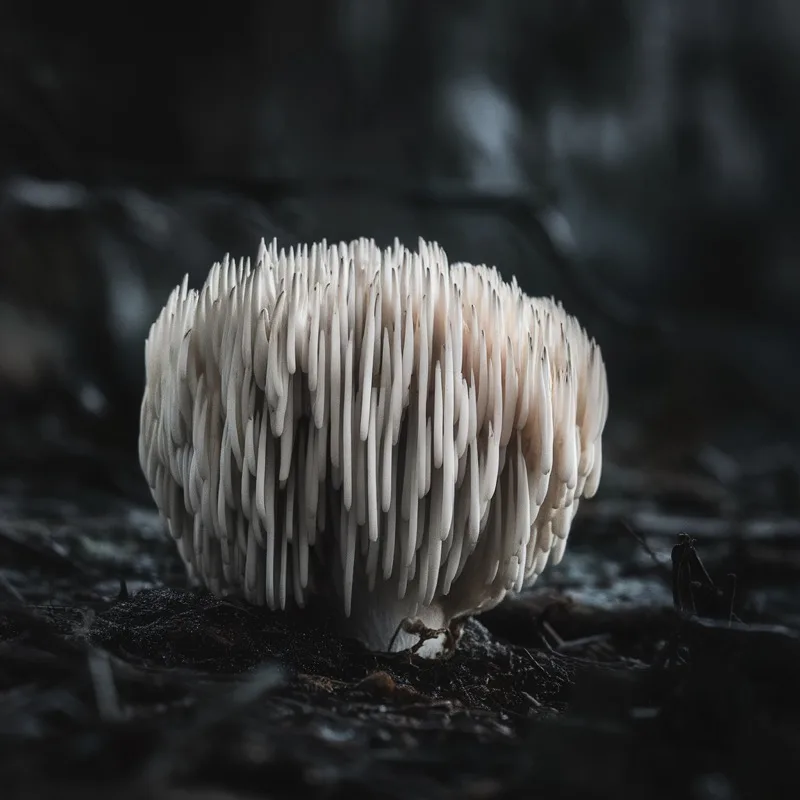
Hericium erinaceus is a saprotrophic fungus of the family Hericiaceae, commonly found on dead or wounded hardwood trees in North America, Europe, and Asia. Its morphology is characterized by a large, irregular, bulbous fruiting body with long, dangling spines, lacking a distinct cap or stipe. Key pharmacological properties are attributed to its unique bioactive compounds, including hericenones and erinacines, which have demonstrated neuroprotective and neurotrophic effects by stimulating nerve growth factor (NGF) synthesis in preclinical and clinical studies.
#1
Popularity Rank
Extensive
Research Level
6
References
3
Key Compounds

Board-Certified Physician · Medical Reviewer · Last Reviewed February 12, 2026
Lion's Mane (Hericium erinaceus) is a functional mushroom with a extensive level of scientific research supporting its use. Its primary bioactive compounds — Hericenones, Erinacines, Beta-Glucans — have been studied for benefits including focus, memory, cognitive function, brain health. Multiple human clinical trials have investigated Lion's Mane, making it one of the most evidence-backed functional mushrooms available. Lion's Mane is ranked #1 in popularity among functional mushroom species, with 6 cited research references in our database. The most commonly recommended form is fruiting body extract. Typical supplemental dosages range from 500 mg to 3,000 mg per day depending on extract concentration and intended use.
Lion's Mane has been extensively studied in both preclinical and clinical research. Multiple human trials have investigated its potential benefits.
In a 2009 randomized controlled trial, Japanese researchers gave older adults with mild cognitive impairment an extract of Hericium erinaceus for 16 weeks — and watched their test scores climb. Then...
Lion's Mane has been used in traditional medicine systems for centuries, particularly in Traditional Chinese Medicine (TCM) and other Asian healing practices.
Historical Context: Traditional use does not guarantee efficacy or safety. Modern research is ongoing to validate traditional claims.
In a 2009 randomized controlled trial, Japanese researchers gave older adults with mild cognitive impairment an extract of Hericium erinaceus for 16 weeks — and watched their test scores climb. Then they took the supplement away. Within four weeks, the scores fell back toward baseline. That reversibility finding is significant: it suggests Lion's Mane isn't producing a placebo effect or a one-time boost, but rather an ongoing biological intervention that requires continued use to maintain its effects.
Lion's Mane (Hericium erinaceus) is one of the most visually distinctive fungi on Earth. Rather than the classic cap-and-stem form, it grows as a cascading mass of long, white, needle-like spines hanging from a central mass attached to dead or wounded hardwood trees — oaks, beeches, and walnuts across North America, Europe, and Asia. A mature specimen can reach the size of a basketball.
In Traditional Chinese Medicine, Lion's Mane has been documented for at least two millennia under the name "Houtou" (monkey head mushroom), regarded as a tonic for the five organs. The Japanese name "Yamabushitake" connects it to ascetic mountain monks who incorporated the mushroom into meditation practices. As a culinary ingredient, its firm texture closely mimics lobster or crab when sautéed in butter — making it a star of vegetarian cooking. But it's the neurological potential that has made Lion's Mane the best-selling functional mushroom in North America.
⚡ Key Fact
Lion's Mane is the only known food source of hericenones and erinacines — compounds that cross the blood-brain barrier and directly stimulate Nerve Growth Factor (NGF) synthesis in the brain. No other food or herb does this.
The neurological activity of Lion's Mane is driven by two families of bioactive compounds found almost exclusively in this species: hericenones (in the fruiting body) and erinacines (in the mycelium). Hericenones stimulate synthesis of Nerve Growth Factor (NGF) — a signaling protein neurons depend on for growth, maintenance, and new synaptic connections. Erinacines are small, lipophilic molecules capable of crossing the blood-brain barrier, allowing them to directly stimulate NGF synthesis within the central nervous system.
A 2019 study by Saitsu et al. in Biomedical Research found that 12 weeks of H. erinaceus extract (3g/day) significantly improved MMSE scores in older adults with mild cognitive impairment. A 2023 study by Martínez-Mármol et al. identified novel hericerin derivatives activating a "pan-neurotrophic pathway" in hippocampal neurons — meaning Lion's Mane may activate multiple overlapping neuroprotective pathways simultaneously. Most recently, Docherty et al. (2023) found that even a single acute dose significantly improved processing speed on the Stroop task in healthy young adults.
💊 Recommended Dosage
1,000–3,000 mg/day of standardized fruiting body extract. The Saitsu cognitive trial used 3,000 mg/day divided into three doses. Start at 500–1,000 mg/day and increase after 4–6 weeks if needed. Budget at least 4 weeks before evaluating, 8–12 weeks for a fair assessment. Look for products with ≥25% beta-glucan content and specified "fruiting body" on the label.
Top products containing verified Hericium erinaceus extracts.


Personalized dosage recommendations based on your experience level, body weight, and goals.
Board-Certified Physician · Medical Reviewer
Board-certified physician affiliated with UC Irvine, the Gavin Herbert Eye Institute, and the UCI School of Medicine. Dr. Russell reviews all mushroom encyclopedia entries for scientific accuracy, ensuring claims are supported by peer-reviewed research.
Last reviewed: February 12, 2026
Click anywhere or press Escape to close